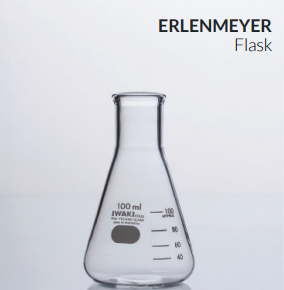
The Iwaki PA 4980FK glass Erlenmeyer flask is a conical flask with a narrow neck. It is one of the most basic and widely used pieces of laboratory glassware. The flask is wide at the base and tapers toward the top, so solutions can be mixed by swirling with little risk of spilling. Laboratories use Erlenmeyer flasks for titration, mixing, gentle heating, temporary storage of solutions and microbial culture. This small-volume variant, available from 10 ml to 50 ml, is well suited to micro-scale and semi-micro-scale work where only small quantities of liquid are handled.
Iwaki is a Japanese brand of laboratory glassware known for clear glass of consistent quality. Laboratories choose glass Erlenmeyer flasks because they resist most chemicals, are easy to clean and can be reused many times. The clear walls also let analysts see what is in the flask, such as the indicator colour change during a titration. The small size has its own benefits: each procedure uses less reagent, produces less waste and takes up less space on the bench, inside an incubator or on a shaker platform. That makes these flasks practical for routine work where economy and organisation matter.
In Indonesia, small Erlenmeyer flasks are in steady demand from educational laboratories in senior high schools (SMA) and vocational schools (SMK). They are also common in university teaching laboratories, research groups and quality control laboratories that run routine analyses. In teaching settings, small flasks let many students carry out titrations and simple reactions with modest amounts of chemicals. In research and testing laboratories, they are used for small-volume preparations, small microbial cultures and the short-term holding of solutions between analytical steps.
- Titration: the conical shape lets the analyst swirl the solution continuously while adding titrant, and the clear glass makes the indicator colour change easy to see at the endpoint.
- Mixing solutions: the wide base and narrow neck allow reagents to be combined by swirling without spills, which helps when preparing small batches of solutions for micro-scale experiments.
- Gentle heating: the glass flask can hold small volumes of liquid during light heating, and the narrow neck helps reduce splashing and loss of contents while the solution warms.
- Microbial culture: small flasks suit small-volume cultures in an incubator or on a shaker, where their compact size saves space and less culture medium is needed per flask.
- Temporary storage of solutions: the flask can briefly hold prepared solutions between analytical steps, and its chemically resistant, easy-to-clean glass supports repeated use in routine laboratory work.
| Brand | Iwaki |
|---|---|
| CAS number | — |
| Molecular formula | — |
| Purity | — |
| Category | Erlenmeyer flask |
| Pack sizes | — |
| Physical form | conical glass flask with a narrow neck |
| Storage | store clean and dry in a stable cabinet or on a shelf, protected from impact |
- Product: Iwaki PA 4980FK glass Erlenmeyer flask
- Available sizes: small variants from 10 ml to 50 ml
Store the flasks clean and fully dry in a closed cabinet or on a stable shelf, away from edges where they could be knocked over. Keep them in their original packaging or in divided racks so the glass pieces do not touch each other. Before each use, check every flask for cracks, chips or scratches, and take damaged glassware out of service. Avoid sudden temperature changes during heating and cooling. Handle hot flasks with suitable tongs or heat-resistant gloves. Clean flasks soon after use with appropriate detergents, then rinse thoroughly. Follow standard laboratory safety practice, including eye protection, when working with glassware and chemicals.
—
Produk Terkait
-
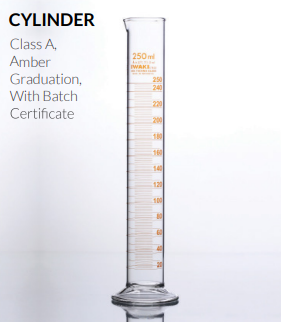
Gelas Ukur Kelas A Skala Amber Iwaki PA 3022
Regular price From Rp 119.000,00Regular price -
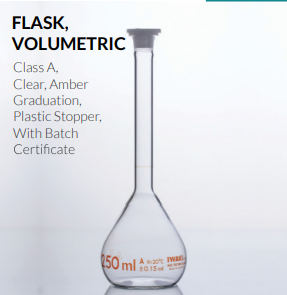
Labu Ukur Kelas A Tutup Plastik Iwaki PA 5645
Regular price From Rp 135.000,00Regular price -
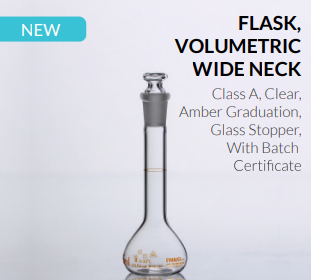
Labu Ukur Kelas A Leher Lebar Tutup Kaca Iwaki PA 5640
Regular price From Rp 218.000,00Regular price -
Timbangan Analitik 0,1 mg Joan Lab FA-4
Regular price From Rp 7.514.850,00Regular price -
Pompa Vakum Joan Lab VP
Regular price From Rp 3.585.750,00Regular price -
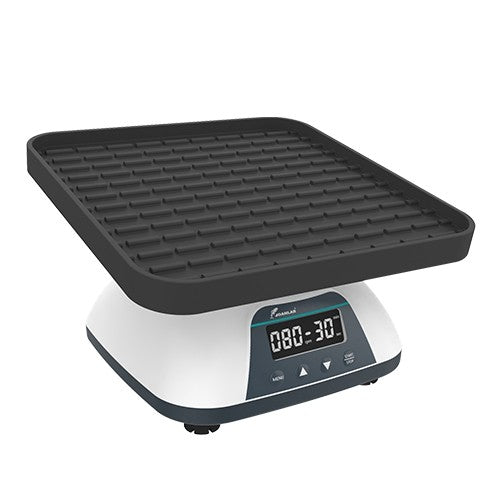
Shaker Osilasi 3D Joan Lab SK-3D
Regular price Rp 8.655.150,00Regular price -
Dispenser Botol 5 ml Joan Lab DA-5ML
Regular price Rp 7.228.200,00Regular price -
Pengaduk Magnetik Mini Layar Digital Joan Lab MS5S
Regular price Rp 2.145.150,00Regular price