Aniline (62-53-3) is an organic chemical compound with an aromatic amine structure, widely used in laboratory settings for its versatile chemical properties. As a fundamental building block in organic chemistry, it plays a crucial role in the synthesis of complex molecules through substitution and condensation reactions. This compound is essential in various chemical processes, serving as a precursor or intermediate in the production of pharmaceuticals, dyes, and other industrial chemicals. Its reactivity and ability to participate in multiple reaction types make it a valuable resource for researchers and chemists.
Aniline is known for its weak basic properties and its ability to react with acids, halides, and other reactive compounds. These characteristics make it a preferred choice for chemists seeking to manipulate molecular structures in controlled environments. Its chemical reactivity also allows it to be involved in oxidation and reduction reactions, expanding its utility in synthetic pathways. The compound's ability to form derivatives and its compatibility with a wide range of reagents contribute to its popularity in both academic and industrial research.
In Indonesian laboratories, aniline is commonly used in organic chemistry research, particularly in pharmaceutical and chemical industries. It is a key component in the development of new compounds and is frequently employed in academic institutions and research centers. Despite its usefulness, aniline requires careful handling due to its toxic and irritating nature, making it a material that demands both expertise and appropriate safety measures.
TCI brochures (PDF)
- Colloidal Quantum Dot (QD) Research Reagents 2026-05-21 · p. 8
Related TCI products
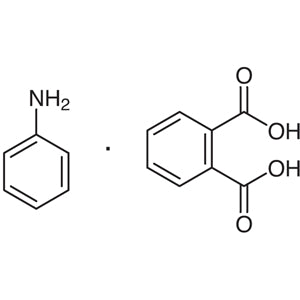
- TCI P0284 50930-79-5 Aniline Hydrogen Phthalate
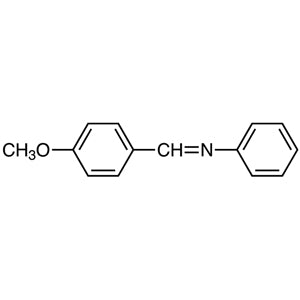
- TCI M0582 836-41-9 N-(4-Methoxybenzylidene)aniline
- TCI D0142 13532-96-2 4-Diazo-N-ethyl-N-(2-hydroxyethyl)aniline Chloride Zinc Chloride
- TCI B6650 5285-60-9 4,4'-Methylenebis[N-(sec-butyl)aniline]
- TCI P1911 108-45-2 1,3-Phenylenediamine
- TCI P1892 108-45-2 1,3-Phenylenediamine
- Organic synthesis is a primary application where aniline is used as a building block for creating complex molecules through various reaction mechanisms.
- Pharmaceutical research benefits from aniline's ability to participate in reactions that lead to the development of new drugs and medicinal compounds.
- Dye production relies on aniline's chemical properties for the synthesis of a wide range of colored compounds used in the textile and chemical industries.
- Industrial chemical manufacturing utilizes aniline as a precursor for producing various chemicals, including intermediates for polymer and specialty chemical production.
- Educational and research institutions use aniline in teaching and experimental settings to demonstrate fundamental chemical reactions and synthetic pathways.
| Brand | TCI |
|---|---|
| CAS number | 62-53-3 |
| Molecular formula | — |
| Purity | — |
| Category | Chemistry > Building Blocks > Non-Heterocyclic Building Blocks |
| Pack sizes | — |
| Physical form | Liquid |
| Storage | Store in a closed container in a cool, dry place away from light and incompatible materials. |
Aniline should be stored in a closed container in a cool, dry place, away from light and incompatible substances such as strong oxidizing agents. Due to its toxic and irritating nature, it requires careful handling, including the use of personal protective equipment such as gloves, goggles, and a fume hood. It is important to ensure proper ventilation in the laboratory to minimize exposure. Aniline should never be stored near heat sources or open flames. In case of spills, it should be cleaned up immediately using appropriate safety procedures. Regular training and adherence to safety protocols are essential to ensure safe handling and storage of this reactive chemical.
—
Produk Terkait
-
AnilineHydrogenPhthalate TCI P0284
Regular price Rp 1.246.350,00Regular priceRp 871.500,00Sale price Rp 1.246.350,00 -
N-(4-Methoxybenzylidene)aniline TCI M0582
Regular price From Rp 689.850,00Regular priceRp 497.700,00Sale price From Rp 689.850,00 -
4-Diazo-N-ethyl-N-(2-hydroxyethyl)anilineChlorideZincChloride TCI D0142
Regular price Rp 1.008.000,00Regular priceRp 704.550,00Sale price Rp 1.008.000,00 -
4,4'-Methylenebis[N-(sec-butyl)aniline] TCI B6650
Regular price From Rp 1.060.500,00Regular priceRp 757.050,00Sale price From Rp 1.060.500,00 -
1,3-Phenylenediamine TCI P1911
Regular price From Rp 1.193.850,00Regular priceRp 834.750,00Sale price From Rp 1.193.850,00 -
1,3-Phenylenediamine TCI P1892
Regular price From Rp 505.050,00Regular priceRp 352.800,00Sale price From Rp 505.050,00 -
1,2-Phenylenediamine TCI P0968
Regular price Rp 2.518.950,00Regular priceRp 1.760.850,00Sale price Rp 2.518.950,00 -
1,4-Phenylenediamine TCI P0170
Regular price From Rp 557.550,00Regular priceRp 389.550,00Sale price From Rp 557.550,00