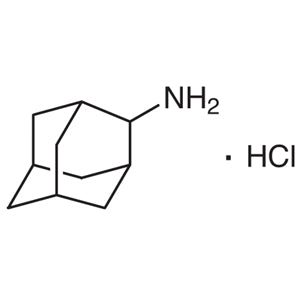
2-Adamantanamine Hydrochloride is a chemical compound widely used in laboratory settings for constructing complex molecular structures. As a building block in organic chemistry, it plays a vital role in the synthesis of various compounds, particularly those with biological activity. Its versatility makes it an essential tool for researchers working in pharmacology, organic chemistry, and materials science. This compound is frequently employed in the development of new drugs and functional materials due to its unique structural properties.
The compound's stability and reactivity make it a preferred choice for synthetic chemists. Its ability to form stable bonds with different functional groups enhances its applicability in a wide range of chemical reactions. The complex molecular structure of 2-Adamantanamine Hydrochloride allows for the creation of compounds with specific properties, such as antiviral or antitumor activity. This makes it a valuable reagent in the design of pharmaceuticals and advanced chemical materials.
In Indonesian laboratories, 2-Adamantanamine Hydrochloride is commonly used in chemical and pharmaceutical research. It is a key component in the development of new compounds with potential medical or industrial applications. Many research institutions and universities in Indonesia rely on this compound for their synthetic processes, contributing to the advancement of scientific knowledge and innovation in the field.
Related TCI products
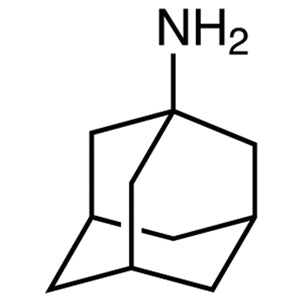
- TCI A3234 768-94-5 1-Adamantanamine (purified by sublimation)
- TCI A2318 768-94-5 1-Adamantanamine
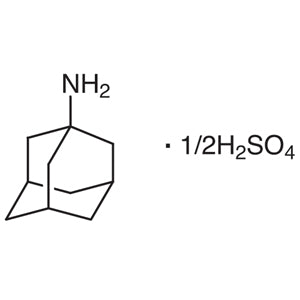
- TCI A1319 31377-23-8 1-Adamantanamine Sulfate
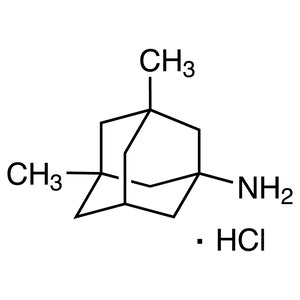
- TCI D3608 41100-52-1 3,5-Dimethyl-1-adamantanamine Hydrochloride
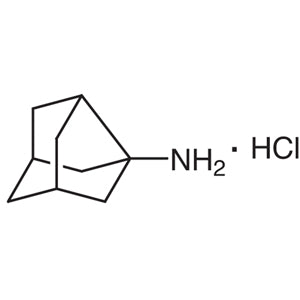
- TCI N0778 86128-83-8 3-Noradamantanamine Hydrochloride
- TCI A3265 10303-95-4 Adamantane-1,3-diamine
- Pharmaceutical Research: This compound is used to synthesize drugs with antiviral or antitumor properties due to its structural versatility and reactivity.
- Organic Synthesis: It serves as a building block for creating complex organic molecules, enabling the development of new chemical entities.
- Materials Science: Its stable molecular structure makes it suitable for the synthesis of functional materials with specific chemical properties.
- Academic Research: Widely used in universities and research institutes for teaching and experimental purposes in chemical synthesis.
- Drug Discovery: It is a valuable reagent in the early stages of drug development, helping to create compounds with targeted biological activities.
| Brand | TCI |
|---|---|
| CAS number | 10523-68-9 |
| Molecular formula | — |
| Purity | — |
| Category | Chemistry > Building Blocks > Non-Heterocyclic Building Blocks |
| Pack sizes | Available in various quantities as per standard laboratory supply |
| Physical form | Solid powder |
| Storage | Store in a cool, dry place away from moisture and direct sunlight |
2-Adamantanamine Hydrochloride should be stored in a cool, dry environment to maintain its chemical integrity. It is recommended to keep it in a sealed container to prevent exposure to moisture, which could affect its stability. The compound should be stored away from direct sunlight and sources of heat to avoid degradation. In a laboratory setting, it is important to handle the compound with care, using appropriate personal protective equipment such as gloves and safety goggles. Proper ventilation should be ensured when working with this material to minimize inhalation risks. Always follow standard laboratory safety protocols to ensure safe handling and storage.
—
Produk Terkait
-
1-Adamantanamine(purifiedbysublimation) TCI A3234
Regular price Rp 2.016.000,00Regular price -
1-Adamantanamine TCI A2318
Regular price From Rp 1.670.550,00Regular price -
1-AdamantanamineSulfate TCI A1319
Regular price Rp 1.167.600,00Regular price -
3,5-Dimethyl-1-adamantanamineHydrochloride TCI D3608
Regular price From Rp 1.405.950,00Regular price -
3-NoradamantanamineHydrochloride TCI N0778
Regular price From Rp 2.545.200,00Regular price -
Adamantane-1,3-diamine TCI A3265
Regular price From Rp 3.419.850,00Regular price -
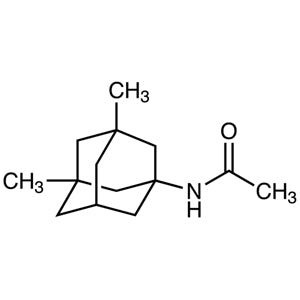
N-Acetyl-3,5-dimethyl-1-adamantanamine TCI A2653
Regular price Rp 3.949.050,00Regular price -
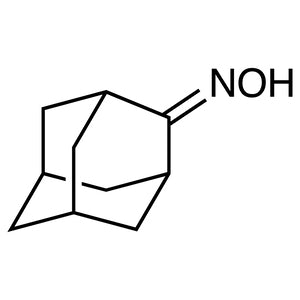
2-AdamantanoneOxime TCI A2110
Regular price Rp 1.565.550,00Regular price