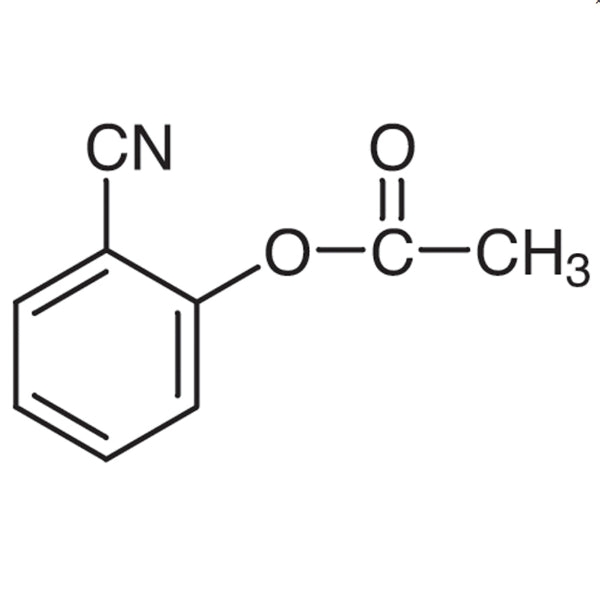
2-Acetoxybenzonitrile is a chemical compound widely used as a foundational building block in the synthesis of complex organic compounds. Its unique molecular structure, which includes both a nitrile group and an acetoxy group, provides it with high reactivity and versatility in chemical reactions. In laboratory settings, this compound plays a crucial role in the development of new pharmaceuticals, industrial chemicals, and molecular studies. Its ability to participate in various reaction mechanisms makes it an essential tool for chemists working in both academic and research environments.
The compound’s stability and reactivity make it a preferred choice for a wide range of chemical processes. It exhibits good solubility in organic solvents, which facilitates its use in purification, reaction mixtures, and separation techniques. Its chemical properties allow it to be involved in nucleophilic reactions, substitution reactions, and the synthesis of heterocyclic compounds. These characteristics make it particularly valuable in the field of organic chemistry, where precise control over molecular structure is essential.
In Indonesian laboratories, 2-Acetoxybenzonitrile is commonly used in organic synthesis research, especially in higher education institutions and research centers. Its relevance extends to the development of new drugs, industrial chemical formulations, and molecular structure analysis. The compound is a key component in the study of pharmacological compounds and is frequently employed in laboratory applications that require a reliable and reactive starting material.
Related TCI products
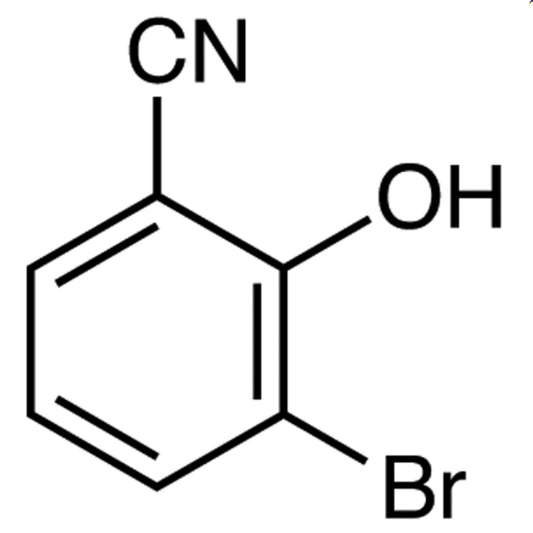
- TCI B5273 13073-28-4 3-Bromo-2-hydroxybenzonitrile
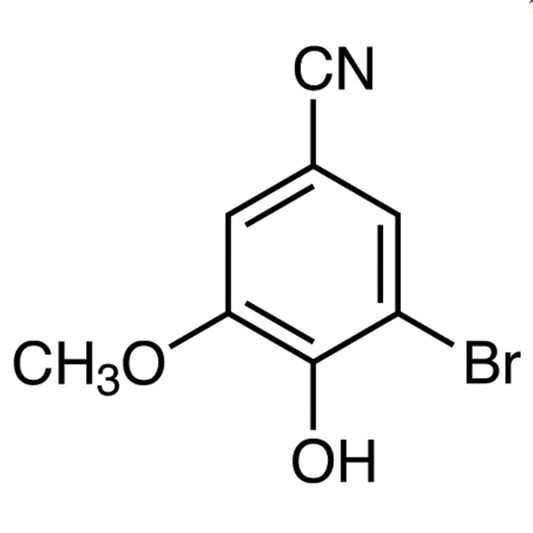
- TCI B4757 52805-45-5 3-Bromo-4-hydroxy-5-methoxybenzonitrile
- TCI B3124 117572-79-9 3-Bromo-4-methoxybenzonitrile
- TCI B3123 144649-99-0 5-Bromo-2-methoxybenzonitrile
- TCI B3120 288067-35-6 4-Bromo-2-hydroxybenzonitrile
- TCI B2214 40530-18-5 5-Bromo-2-hydroxybenzonitrile
- Pharmaceutical synthesis for the development of new drug compounds due to its reactivity and structural versatility.
- Organic chemistry research for the creation of complex molecules through nucleophilic and substitution reactions.
- Industrial chemical production as a building block for the synthesis of various functional materials.
- Molecular structure analysis in academic laboratories for studying chemical reactivity and bonding patterns.
- Heterocyclic compound synthesis due to its ability to participate in ring-forming reactions and functional group transformations.
| Brand | TCI |
|---|---|
| CAS number | 5715-02-6 |
| Molecular formula | — |
| Purity | — |
| Category | Chemistry > Building Blocks > Non-Heterocyclic Building Blocks |
| Pack sizes | Available in various quantities as per standard laboratory supply formats |
| Physical form | Liquid |
| Storage | Store in a cool, dry place away from direct sunlight and incompatible substances |
2-Acetoxybenzonitrile should be stored in a cool, dry environment to maintain its chemical stability. It is recommended to keep the compound in a tightly sealed container to prevent exposure to air and moisture. Due to its reactivity, it should be stored away from incompatible substances such as strong oxidizing agents or reactive metals. Proper ventilation is essential when handling this compound to minimize inhalation risks. Laboratory personnel should wear appropriate personal protective equipment, including gloves and safety goggles, when working with this material. Regular monitoring of storage conditions ensures the compound remains safe and effective for use in chemical experiments.
—
Produk Terkait
-
3-Bromo-2-hydroxybenzonitrile TCI B5273
Regular price Rp 1.272.600,00Regular priceRp 905.100,00Sale price Rp 1.272.600,00 -
3-Bromo-4-hydroxy-5-methoxybenzonitrile TCI B4757
Regular price Rp 742.350,00Regular priceRp 534.450,00Sale price Rp 742.350,00 -
3-Bromo-4-methoxybenzonitrile TCI B3124
Regular price Rp 1.881.600,00Regular priceRp 1.331.400,00Sale price Rp 1.881.600,00 -
5-Bromo-2-methoxybenzonitrile TCI B3123
Regular price Rp 1.192.800,00Regular priceRp 849.450,00Sale price Rp 1.192.800,00 -
4-Bromo-2-hydroxybenzonitrile TCI B3120
Regular price Rp 1.298.850,00Regular priceRp 924.000,00Sale price Rp 1.298.850,00 -
5-Bromo-2-hydroxybenzonitrile TCI B2214
Regular price Rp 3.153.150,00Regular priceRp 2.220.750,00Sale price Rp 3.153.150,00 -
3-Bromo-4-hydroxybenzonitrile TCI B2037
Regular price Rp 2.252.250,00Regular priceRp 1.590.750,00Sale price Rp 2.252.250,00 -
2-Amino-4,5-dimethoxybenzonitrile TCI A3750
Regular price Rp 2.411.850,00Regular priceRp 1.702.050,00Sale price Rp 2.411.850,00