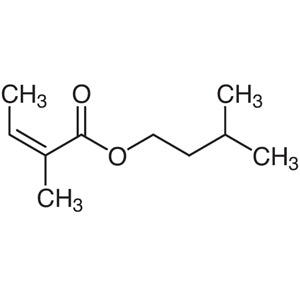
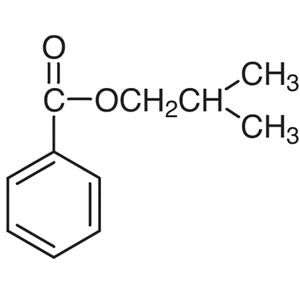
Isobutyl Angelate is a chemical compound widely used in laboratory settings for various chemical reactions and the synthesis of complex molecules. As a key building block in organic chemistry, it plays a crucial role in the development of compounds with specific structural characteristics. This compound is particularly valued for its versatility in participating in multiple reaction types, including esterification, reduction, and substitution reactions. Its presence in laboratory workflows supports the creation of a wide range of chemical products, making it an essential component in both research and educational environments.
The chemical properties of Isobutyl Angelate contribute to its popularity among laboratory professionals. It exhibits chemical stability, which ensures predictable behavior during reactions and simplifies experimental control. Its solubility in organic solvents facilitates efficient separation and isolation of final products, enhancing the overall efficiency of laboratory processes. Additionally, its non-reactive nature allows for safe handling under a variety of conditions, reducing the risk of unintended side reactions. These characteristics make it a reliable and practical choice for both routine and advanced chemical applications.
In Indonesian laboratories, Isobutyl Angelate is commonly used in organic chemistry research, especially in the synthesis of complex compounds and the development of new chemical materials. It is an integral part of the chemical equipment required for academic and industrial research activities. Its application spans across educational institutions and research facilities, supporting both teaching and innovation in the field of chemistry.
- Organic synthesis applications benefit from Isobutyl Angelate due to its role in forming ester groups, which are essential in creating complex organic molecules.
- It is ideal for reduction reactions because of its stability and compatibility with various reagents, enabling controlled chemical transformations.
- Substitution reactions in laboratory settings often utilize Isobutyl Angelate as a versatile building block for introducing functional groups into target molecules.
- Its solubility in organic solvents makes it suitable for purification processes, aiding in the isolation of desired compounds from reaction mixtures.
- In educational laboratories, Isobutyl Angelate is used to demonstrate fundamental chemical reactions and to teach students about molecular structure and reactivity.
| Brand | TCI |
|---|---|
| CAS number | 7779-81-9 |
| Molecular formula | — |
| Purity | — |
| Category | Chemistry > Building Blocks > Non-Heterocyclic Building Blocks |
| Pack sizes | Available in various quantities as per standard laboratory supply |
| Physical form | Liquid |
| Storage | Store in a cool, dry place away from direct sunlight |
Isobutyl Angelate should be stored in a cool, dry environment, away from direct sunlight and sources of heat. It is recommended to use sealed containers made of materials compatible with organic solvents to prevent evaporation and contamination. Due to its chemical stability, it does not require special refrigeration, but it should be kept in a well-ventilated area to ensure safe handling. Laboratory personnel should wear appropriate personal protective equipment, such as gloves and safety goggles, when working with this compound to minimize exposure. Proper labeling of storage containers is essential to ensure safe access and prevent accidental use. The compound should be handled with care to avoid spills and ensure compliance with standard laboratory safety protocols.
—
Produk Terkait
-
IsoamylAngelate TCI A1131
Regular price Rp 2.041.200,00Regular priceRp 1.442.700,00Sale price Rp 2.041.200,00 -
MethylAngelate TCI A1126
Regular price Rp 4.081.350,00Regular priceRp 2.869.650,00Sale price Rp 4.081.350,00 -
IsobutylAcetate TCI A0034
Regular price From Rp 477.750,00Regular priceRp 333.900,00Sale price From Rp 477.750,00 -
IsobutylTiglate(stabilizedwithHQ) TCI T1274
Regular price Rp 2.544.150,00Regular priceRp 1.794.450,00Sale price Rp 2.544.150,00 -
IsobutylButyrate TCI B0761
Regular price From Rp 664.650,00Regular priceRp 464.100,00Sale price From Rp 664.650,00 -
IsobutylBenzoate TCI B0072
Regular price From Rp 742.350,00Regular priceRp 534.450,00Sale price From Rp 742.350,00 -
IsobutylAcetoacetate TCI A0814
Regular price Rp 610.050,00Regular priceRp 442.050,00Sale price Rp 610.050,00 -
IsobutylAcrylate(stabilizedwithMEHQ) TCI A0747
Regular price From Rp 505.050,00Regular priceRp 352.800,00Sale price From Rp 505.050,00