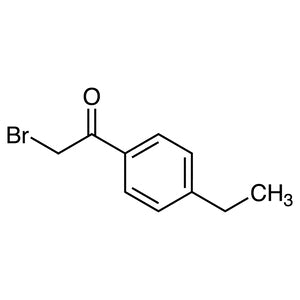
4-Ethylphenyl Acetate is a chemical compound widely used in organic synthesis reactions within laboratory settings. It serves as a key building block in the creation of various organic compounds, particularly in the development of intermediates for pharmaceutical and chemical applications. This compound is valued for its structural versatility and its ability to participate in multiple reaction pathways. Its role in the laboratory is critical for researchers aiming to synthesize complex molecules with specific functional groups. Due to its stability and predictable reactivity, it is a reliable choice for synthetic chemists working on diverse projects.
The compound is characterized by its non-polar nature and solubility in organic solvents such as ethyl acetate, chloroform, and ethanol. These properties make it suitable for use in a variety of reaction conditions where controlled reactivity is essential. Its stability under certain conditions allows it to be stored and used without significant degradation, ensuring consistency in experimental results. Additionally, its well-documented physical and chemical properties facilitate accurate identification and measurement, making it a trusted material in laboratory environments.
In Indonesian laboratories, 4-Ethylphenyl Acetate is commonly used in organic chemistry research, compound development, and analytical chemistry applications. It is a fundamental component in experiments that require the synthesis of new compounds or the analysis of existing ones. Its availability and reliability make it a preferred choice for academic and industrial research institutions in Indonesia.
Related TCI products
- TCI A1549 3056-59-5 2-Ethylphenyl Acetate
- TCI E1382 23949-66-8 N1-(2-Ethoxyphenyl)-N2-(2-ethylphenyl)oxalamide
- TCI B6672 2632-14-6 2-Bromo-1-(4-ethylphenyl)ethan-1-one
- TCI A0228 123-86-4 Butyl Acetate [for Spectrophotometry]
- TCI A0045 108-05-4 Vinyl Acetate Monomer (stabilized with HQ)
- TCI A0044 109-60-4 Propyl Acetate
- Organic synthesis reactions benefit from 4-Ethylphenyl Acetate due to its structural versatility and reactivity in forming complex molecules.
- Pharmaceutical research utilizes this compound as a building block for the development of new drug compounds and intermediates.
- Analytical chemistry applications rely on its solubility and stability for accurate identification and quantification of compounds.
- Compound development projects use it as a starting material for creating novel chemical structures with specific functional groups.
- Research institutions in Indonesia employ it in academic studies to explore chemical reactivity and synthesis pathways.
| Brand | TCI |
|---|---|
| CAS number | 3245-23-6 |
| Molecular formula | — |
| Purity | — |
| Category | Chemistry > Building Blocks > Non-Heterocyclic Building Blocks |
| Pack sizes | Available in standard laboratory quantities |
| Physical form | Liquid |
| Storage | Store in a cool, dry place away from direct sunlight |
4-Ethylphenyl Acetate should be stored in a cool, dry location, away from direct sunlight and sources of heat. It is recommended to use airtight containers made of glass or polyethylene to prevent contamination and evaporation. As a non-polar compound, it is compatible with most organic solvents but should be handled with care to avoid exposure to incompatible materials. In laboratory settings, proper ventilation is essential to ensure safe handling. Always follow standard safety protocols when working with chemical substances to maintain a secure and controlled environment.
—
Produk Terkait
-
2-EthylphenylAcetate TCI A1549
Regular price From Rp 1.115.100,00Regular priceRp 779.100,00Sale price From Rp 1.115.100,00 -
N1-(2-Ethoxyphenyl)-N2-(2-ethylphenyl)oxalamide TCI E1382
Regular price From Rp 1.298.850,00Regular priceRp 924.000,00Sale price From Rp 1.298.850,00 -
2-Bromo-1-(4-ethylphenyl)ethan-1-one TCI B6672
Regular price From Rp 1.246.350,00Regular priceRp 887.250,00Sale price From Rp 1.246.350,00 -
ButylAcetate[forSpectrophotometry] TCI A0228
Regular price Rp 1.538.250,00Regular priceRp 1.075.200,00Sale price Rp 1.538.250,00 -
VinylAcetateMonomer(stabilizedwithHQ) TCI A0045
Regular price Rp 477.750,00Regular priceRp 333.900,00Sale price Rp 477.750,00 -
PropylAcetate TCI A0044
Regular price From Rp 477.750,00Regular priceRp 333.900,00Sale price From Rp 477.750,00 -
PhenylAcetate TCI A0043
Regular price Rp 452.550,00Regular priceRp 316.050,00Sale price Rp 452.550,00 -
n-OctylAcetate TCI A0042
Regular price From Rp 505.050,00Regular priceRp 352.800,00Sale price From Rp 505.050,00