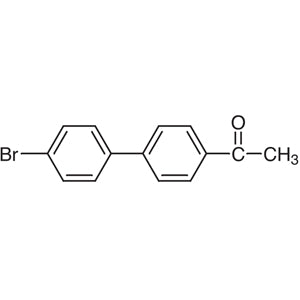
4-Acetyl-4'-bromobiphenyl is a chemical compound widely used as a building block in organic synthesis. It serves as a fundamental component in the development of complex organic molecules, particularly in laboratory settings where structural manipulation is required. This compound is commonly employed in reactions that lead to the formation of heterocyclic compounds or aromatic structures, making it an essential tool for chemists. Its versatility allows it to participate in various functional group transformations, contributing to the synthesis of a wide range of chemical entities.
The compound is known for its stable molecular structure and moderate reactivity, which makes it suitable for substitution reactions and other chemical transformations. Its non-polar nature enables it to dissolve easily in organic solvents such as chloroform and ethyl acetate. This solubility characteristic is crucial for its use in different reaction conditions. Additionally, its chemical stability ensures that it remains effective throughout the synthesis process without undergoing unwanted side reactions.
In Indonesian laboratories, 4-Acetyl-4'-bromobiphenyl is extensively used in organic chemistry research, especially in the synthesis of new compounds. It is a common reagent in academic and industrial settings, supporting experiments related to molecular structure and aromatic reactivity. Its availability and reliability make it a preferred choice for researchers aiming to develop novel chemical structures and pharmaceutical compounds.
- Synthesis of heterocyclic compounds for drug development due to its ability to undergo substitution reactions and form complex aromatic structures.
- Organic chemistry research involving functional group modifications because of its stability and compatibility with various reagents.
- Development of new chemical entities in academic and industrial laboratories due to its role as a versatile building block.
- Aromatic compound studies to investigate molecular reactivity and structural properties in controlled environments.
- Pharmaceutical compound design as a precursor in the creation of novel therapeutic agents through chemical transformations.
| Brand | TCI |
|---|---|
| CAS number | 5731-01-1 |
| Molecular formula | — |
| Purity | — |
| Category | Chemistry > Building Blocks > Non-Heterocyclic Building Blocks |
| Pack sizes | Available in various quantities as per supplier specifications |
| Physical form | Solid |
| Storage | Store in a cool, dry place away from light and moisture |
4-Acetyl-4'-bromobiphenyl should be stored in a cool, dry place away from direct light and moisture to maintain its stability and prevent degradation. It is recommended to use airtight containers to minimize exposure to air and contaminants. Due to its non-polar nature, it is important to handle it with appropriate personal protective equipment, such as gloves and safety goggles, to avoid skin contact. The compound is generally non-hazardous under normal laboratory conditions, but care should be taken to ensure proper ventilation during use. It should not be stored near incompatible substances such as strong oxidizers or acids. Proper labeling and storage practices are essential to ensure safe handling and long-term usability in laboratory environments.
—
Produk Terkait
-
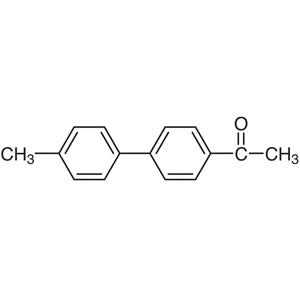
4-Acetyl-4'-methylbiphenyl TCI A1322
Regular price From Rp 1.035.300,00Regular price -
4-Benzoyl-4'-bromobiphenyl TCI B2720
Regular price Rp 2.518.950,00Regular price -
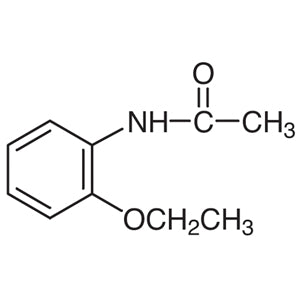
N-Acetyl-o-phenetidine TCI A0103
Regular price Rp 2.625.000,00Regular price -
AcetylIodide TCI A0095
Regular price From Rp 6.386.100,00Regular price -
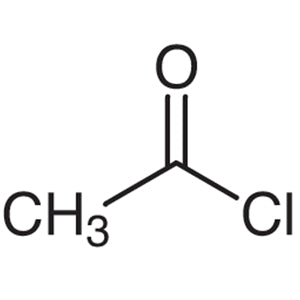
AcetylChloride TCI A0082
Regular price From Rp 795.900,00Regular price -
AcetylBromide TCI A0080
Regular price From Rp 689.850,00Regular price -
2-(Benzyloxy)acetylChloride TCI B3665
Regular price From Rp 1.724.100,00Regular price -
2-Acetyl-7-bromofluorene TCI A3061
Regular price Rp 3.127.950,00Regular price