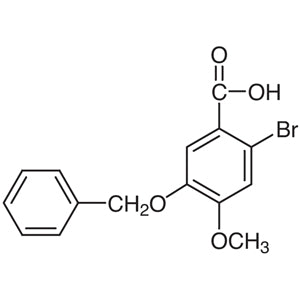
2-(Benzyloxy)acetyl Chloride is a chemical compound widely used in organic reactions, particularly in the synthesis of complex molecules. This reagent plays a crucial role in laboratory settings where the construction of molecular structures is required. Its unique chemical structure enables it to participate in substitution reactions and other essential processes in the formation of both heterocyclic and non-heterocyclic compounds. Due to its versatility, it is a valuable tool for chemists working on a variety of synthetic pathways.
The compound is known for its chemical stability under controlled conditions, making it reliable for use in laboratory experiments. However, it is highly reactive in the presence of moisture or air, which necessitates careful handling and storage. This reactivity makes it an ideal choice for reactions requiring high specificity and precise control over reaction conditions. Its ability to undergo various chemical transformations also enhances its utility in synthetic chemistry.
In Indonesian laboratories, 2-(Benzyloxy)acetyl Chloride is highly relevant for organic chemistry research, especially in academic institutions and research organizations. It is frequently used in projects involving the synthesis of new compounds, drug development, and the characterization of complex molecules. Its availability in various packaging options further supports its use in both small-scale and larger laboratory applications.
Related TCI products
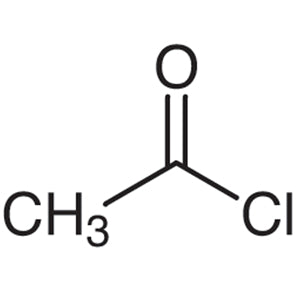
- TCI A0082 75-36-5 Acetyl Chloride
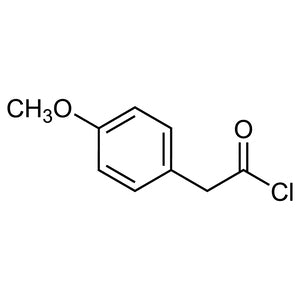
- TCI M3877 4693-91-8 2-(4-Methoxyphenyl)acetyl Chloride
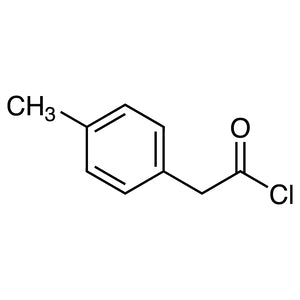
- TCI M3724 35675-44-6 2-(p-Tolyl)acetyl Chloride
- TCI T1870 70424-94-1 Methyl 3,4,5-Tris(benzyloxy)benzoate
- TCI T1869 1486-48-2 3,4,5-Tris(benzyloxy)benzoic Acid
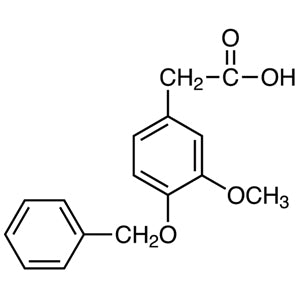
- TCI B4800 29973-91-9 4-Benzyloxy-3-methoxyphenylacetic Acid
- Synthesis of heterocyclic compounds: This compound is ideal for creating complex ring structures due to its reactivity and ability to undergo substitution reactions.
- Organic synthesis research: It is widely used in laboratories for developing new chemical compounds and exploring reaction mechanisms.
- Drug development projects: Its chemical properties make it suitable for synthesizing pharmaceutical intermediates and active ingredients.
- Molecular characterization studies: It is used in experiments that require the formation of specific molecular structures for analysis.
- Academic teaching laboratories: It is a common reagent used in educational settings to demonstrate organic reaction mechanisms and synthesis techniques.
| Brand | TCI |
|---|---|
| CAS number | 19810-31-2 |
| Molecular formula | — |
| Purity | — |
| Category | Chemistry > Building Blocks > Non-Heterocyclic Building Blocks |
| Pack sizes | Available in multiple sizes to suit various laboratory needs |
| Physical form | Liquid |
| Storage | Requires storage under controlled conditions to prevent degradation |
This compound should be stored in a cool, dry place away from moisture and air to maintain its chemical stability. It is recommended to use airtight containers to minimize exposure to environmental factors that could affect its reactivity. Due to its sensitivity, it should be handled in a well-ventilated area, preferably with appropriate personal protective equipment. Storage conditions should be controlled to prevent unwanted reactions and ensure the compound remains viable for use in laboratory applications. Regular monitoring of storage conditions is essential to maintain the integrity of the material.
—
Produk Terkait
-
AcetylChloride TCI A0082
Regular price From Rp 848.400,00Regular priceRp 609.000,00Sale price From Rp 848.400,00 -
2-(4-Methoxyphenyl)acetylChloride TCI M3877
Regular price From Rp 1.140.300,00Regular priceRp 812.700,00Sale price From Rp 1.140.300,00 -
2-(p-Tolyl)acetylChloride TCI M3724
Regular price From Rp 3.312.750,00Regular priceRp 2.332.050,00Sale price From Rp 3.312.750,00 -
Methyl3,4,5-Tris(benzyloxy)benzoate TCI T1870
Regular price Rp 1.510.950,00Regular priceRp 1.072.050,00Sale price Rp 1.510.950,00 -
3,4,5-Tris(benzyloxy)benzoicAcid TCI T1869
Regular price From Rp 3.312.750,00Regular priceRp 2.332.050,00Sale price From Rp 3.312.750,00 -
4-Benzyloxy-3-methoxyphenylaceticAcid TCI B4800
Regular price Rp 2.571.450,00Regular priceRp 1.813.350,00Sale price Rp 2.571.450,00 -
4-Benzyloxy-3-methoxybenzaldehyde TCI B3599
Regular price From Rp 769.650,00Regular priceRp 537.600,00Sale price From Rp 769.650,00 -
5-Benzyloxy-2-bromo-4-methoxybenzoicAcid TCI B3332
Regular price From Rp 2.439.150,00Regular priceRp 1.720.950,00Sale price From Rp 2.439.150,00