


1-Cyanovinyl Acetate (stabilized with TBC) is a chemical compound widely used in laboratory settings for the synthesis of complex molecules. It serves as a building block in organic chemistry, particularly in the development of both heterocyclic and non-heterocyclic compounds. This material is commonly found in chemical laboratories where researchers require reliable and stable reagents for their experiments. Its role is critical in facilitating controlled chemical reactions, enabling the creation of a wide range of functionalized compounds with specific properties.
The compound’s unique chemical properties, including high reactivity and the ability to form bonds with various functional groups, make it a preferred choice for chemists. The addition of TBC (tri-n-butylcopper) as a stabilizer enhances its stability, reducing the risk of unwanted degradation or side reactions. This stability is essential for maintaining the integrity of the compound during storage and use, ensuring consistent results in experimental processes. The combination of reactivity and stability makes it a versatile reagent in synthetic chemistry.
In Indonesian laboratories, 1-Cyanovinyl Acetate is frequently used in organic chemistry research. It is particularly valuable in projects involving the synthesis of complex organic molecules, where precision and reliability are crucial. Its application is common in academic and industrial research settings, supporting the development of new materials and pharmaceutical compounds. Researchers rely on its predictable behavior to achieve accurate and reproducible outcomes in their experiments.
Related TCI products
- TCI A0039 619-90-9 4-Nitrobenzyl Acetate
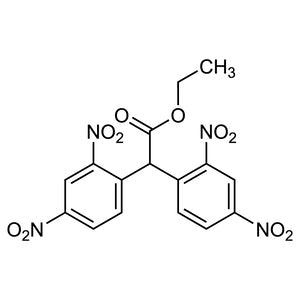
- TCI B0817 5833-18-1 Ethyl Bis(2,4-dinitrophenyl)acetate
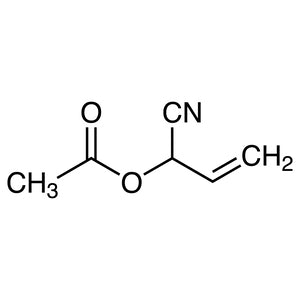
- TCI A1196 15667-63-7 1-Cyano-2-propenyl Acetate
- TCI E1387 946598-34-1 Ethyl 2-[trans-4-[(tert-Butoxycarbonyl)amino]cyclohexyl]acetate
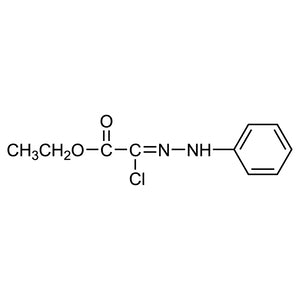
- TCI C4073 28663-68-5 Ethyl 2-Chloro-2-(2-phenylhydrazineylidene)acetate
- TCI A0228 123-86-4 Butyl Acetate [for Spectrophotometry]
- Organic synthesis of heterocyclic and non-heterocyclic compounds due to its reactivity and functional group compatibility.
- Precursor in the development of pharmaceutical intermediates requiring controlled chemical transformations.
- Use in functional group modification reactions where stability and reactivity are essential for successful outcomes.
- Support in the creation of complex organic molecules for academic and industrial research applications.
- Application in chemical research where precise and stable reagents are required for reproducible results.
| Brand | TCI |
|---|---|
| CAS number | 3061-65-2 |
| Molecular formula | — |
| Purity | — |
| Category | Chemistry > Building Blocks > Non-Heterocyclic Building Blocks |
| Pack sizes | Available in standard laboratory quantities |
| Physical form | Liquid |
| Storage | Store in a cool, dry place away from light and incompatible materials |
This compound should be stored in a cool, dry environment, away from direct sunlight and sources of heat. It is recommended to keep it in a sealed container to prevent exposure to air and moisture. Due to its reactivity, it should be handled in a well-ventilated area, using appropriate personal protective equipment such as gloves and safety goggles. It is important to avoid contact with incompatible substances, such as strong oxidizers or acids. Proper labeling of containers is essential for safe handling and to prevent accidental exposure. Always follow standard laboratory safety protocols when working with this material to ensure both safety and the integrity of the compound.
—
Produk Terkait
-
4-NitrobenzylAcetate TCI A0039
Regular price From Rp 1.298.850,00Regular price -
EthylBis(2,4-dinitrophenyl)acetate TCI B0817
Regular price Rp 1.458.450,00Regular price -
1-Cyano-2-propenylAcetate TCI A1196
Regular price Rp 7.023.450,00Regular price -
Ethyl2-[trans-4-[(tert-Butoxycarbonyl)amino]cyclohexyl]acetate TCI E1387
Regular price From Rp 1.193.850,00Regular price -
Ethyl2-Chloro-2-(2-phenylhydrazineylidene)acetate TCI C4073
Regular price From Rp 1.644.300,00Regular price -
ButylAcetate[forSpectrophotometry] TCI A0228
Regular price Rp 1.538.250,00Regular price -
VinylAcetateMonomer(stabilizedwithHQ) TCI A0045
Regular price Rp 477.750,00Regular price -
PropylAcetate TCI A0044
Regular price From Rp 477.750,00Regular price

![Ethyl 2-[trans-4-[(tert-Butoxycarbonyl)amino]cyclohexyl]acetate (CAS 946598-34-1) - TCI E1387 - AMI Scientific](http://amiscientific.com/cdn/shop/files/TCI2510E1387.jpg?v=1767112760&width=533)
![123-86-4 Butyl Acetate [for Spectrophotometry] - AMI Scientific](http://amiscientific.com/cdn/shop/files/TCI2510A0228.jpg?v=1767078302&width=533)

