Ethyl 2-Chloro-2-(2-phenylhydrazineylidene)acetate (TCI C4073) is an organic compound from the hydrazonoyl chloride class. Its molecule has a phenylhydrazone group bonded to a carbon that also carries a chlorine atom and an ethyl ester group. In synthesis laboratories it serves as a non-heterocyclic building block for constructing nitrogen-containing heterocyclic rings. When treated with a base, hydrazonoyl chlorides can generate nitrile imines in situ. Nitrile imines are reactive 1,3-dipolar species that drive many cyclization reactions in modern organic chemistry.
Researchers choose this material because one molecule carries three reactive sites: a chloride that leaves easily, the hydrazone C=N bond, and an ester that can be modified further. After the reaction, the ethyl ester can be hydrolyzed to a carboxylic acid, converted to an amide, or reduced without disturbing the heterocyclic framework that has already formed. The phenyl ring on nitrogen stabilizes the starting compound and also becomes the aryl substituent on the final product. These features make the compound a practical way to design analog series in medicinal chemistry programs.
In Indonesian laboratories, this compound suits research groups in university organic chemistry departments, pharmaceutical research units, and natural product and drug discovery teams that build nitrogen heterocycle libraries. It fits well in student thesis projects on cycloaddition chemistry, in method development work on new cyclization routes, and in medicinal chemistry programs that need several closely related analogs. Because TCI is a well-established reagent brand, laboratories can plan their synthetic work around a consistent, clearly identified starting material.
Related TCI products
- TCI A0039 619-90-9 4-Nitrobenzyl Acetate
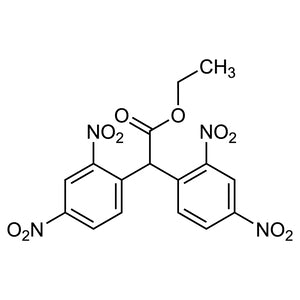
- TCI B0817 5833-18-1 Ethyl Bis(2,4-dinitrophenyl)acetate
- TCI E1387 946598-34-1 Ethyl 2-[trans-4-[(tert-Butoxycarbonyl)amino]cyclohexyl]acetate
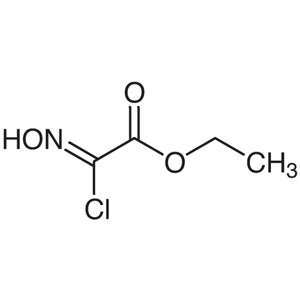
- TCI E0371 14337-43-0 Ethyl 2-Chloro-2-(hydroxyimino)acetate
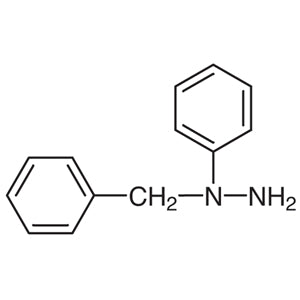
- TCI B1157 614-31-3 1-Benzyl-1-phenylhydrazine
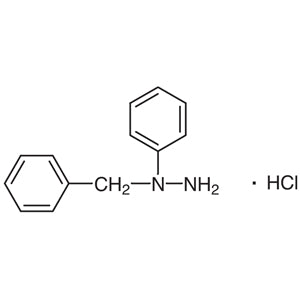
- TCI B0434 5705-15-7 1-Benzyl-1-phenylhydrazine Hydrochloride
- Generating nitrile imines in situ: treating this hydrazonoyl chloride with a base releases a reactive 1,3-dipole directly in the flask, so the unstable intermediate never needs to be isolated.
- 1,3-dipolar cycloaddition studies: the nitrile imine formed from this compound reacts with suitable dipolarophiles, which makes it a useful model substrate for research on cyclization methods.
- Building nitrogen-containing heterocycles: as a non-heterocyclic building block, it gives synthetic chemists a direct route to nitrogen heterocyclic rings that carry an aryl group and an ester group.
- Analog series in medicinal chemistry: the ethyl ester can later be hydrolyzed, converted to an amide, or reduced, so one core scaffold can lead to many derivatives for structure–activity work.
- Teaching and thesis research in organic synthesis: its three clearly defined reactive sites make it a good example for teaching students about reactive intermediates, cyclization, and functional group transformation.
| Brand | TCI (product code C4073) |
|---|---|
| CAS number | 28663-68-5 |
| Molecular formula | — |
| Purity | — |
| Category | Chemistry > Building Blocks > Non-Heterocyclic Building Blocks |
| Pack sizes | see available options on the product page or ask our team |
| Physical form | refer to the TCI label and Safety Data Sheet (SDS) supplied with the product |
| Storage | — |
- Compound class: hydrazonoyl chloride with phenylhydrazone and ethyl ester groups
Keep the product tightly closed in its original manufacturer container, in a cool, dry, well-ventilated area away from direct sunlight, moisture, and heat. Follow the storage conditions printed on the TCI label and in the Safety Data Sheet. Because the molecule contains a reactive chloride and readily forms reactive intermediates with base, store it apart from strong bases, oxidizers, and other incompatible materials. Handle it in a fume hood while wearing nitrile gloves, safety glasses, and a lab coat. Avoid inhaling dust or vapor and avoid skin contact. Dispose of residues and contaminated materials according to your institution's chemical waste procedures.
—
Produk Terkait
-
4-NitrobenzylAcetate TCI A0039
Regular price From Rp 1.298.850,00Regular priceRp 908.250,00Sale price From Rp 1.298.850,00 -
EthylBis(2,4-dinitrophenyl)acetate TCI B0817
Regular price Rp 1.510.950,00Regular priceRp 1.072.050,00Sale price Rp 1.510.950,00 -
Ethyl2-[trans-4-[(tert-Butoxycarbonyl)amino]cyclohexyl]acetate TCI E1387
Regular price From Rp 1.246.350,00Regular priceRp 887.250,00Sale price From Rp 1.246.350,00 -
Ethyl2-Chloro-2-(hydroxyimino)acetate TCI E0371
Regular price From Rp 2.199.750,00Regular priceRp 1.554.000,00Sale price From Rp 2.199.750,00 -
1-Benzyl-1-phenylhydrazine TCI B1157
Regular price Rp 2.835.000,00Regular priceRp 1.998.150,00Sale price Rp 2.835.000,00 -
1-Benzyl-1-phenylhydrazineHydrochloride TCI B0434
Regular price From Rp 1.618.050,00Regular priceRp 1.146.600,00Sale price From Rp 1.618.050,00