

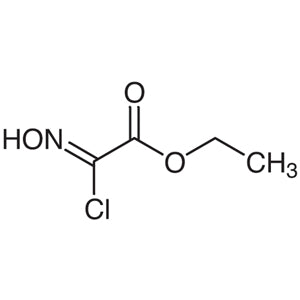
Ethyl 2-Chloro-2-(hydroxyimino)acetate is a chemical compound widely used in organic reactions, particularly in the synthesis of complex molecules that require high reactivity. This compound serves as a key building block in chemical laboratories, providing a versatile intermediate for the creation of heterocyclic compounds and other complex structures. Its unique molecular structure, featuring both a chloro group and a hydroxyimino group, contributes to its reactivity and specificity, making it a valuable reagent in various synthetic pathways.
The compound’s reactivity stems from its ability to participate in substitution, addition, and redox reactions, depending on the conditions and reagents used. Its stability under controlled laboratory conditions allows it to be a reliable choice for researchers aiming to achieve consistent results. The presence of functional groups such as the hydroxyimino group enhances its utility in creating a wide range of chemical derivatives, making it a preferred option in synthetic chemistry.
In Indonesian laboratories, this compound is commonly used in organic chemistry research, especially in academic and research institutions focused on the synthesis of new compounds or drug development. It is also relevant in higher education programs that emphasize understanding reactivity and synthetic strategies. Its role in advancing chemical research makes it an essential material for both teaching and applied research settings.
Related TCI products
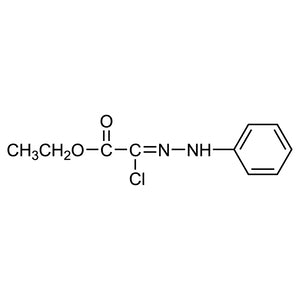
- TCI C4073 28663-68-5 Ethyl 2-Chloro-2-(2-phenylhydrazineylidene)acetate
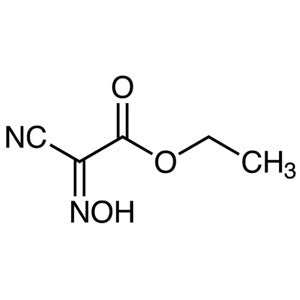
- TCI E0847 3849-21-6 Ethyl Cyano(hydroxyimino)acetate
- TCI D3806 287410-78-0 Di-mu-chlorobis[5-chloro-2-[(4-chlorophenyl)(hydroxyimino)methyl]phenyl]palladium(II) Dimer
- TCI A0228 123-86-4 Butyl Acetate [for Spectrophotometry]
- TCI A0045 108-05-4 Vinyl Acetate Monomer (stabilized with HQ)
- TCI A0044 109-60-4 Propyl Acetate
- Organic synthesis of complex molecules due to its reactivity and functional group versatility.
- Development of heterocyclic compounds as a key intermediate in synthetic pathways.
- Redox reactions where the hydroxyimino group can participate in electron transfer processes.
- Substitution reactions with various reagents to form a wide range of derivatives.
- Teaching and research applications in Indonesian universities focusing on chemical synthesis and drug development.
| Brand | TCI |
|---|---|
| CAS number | 14337-43-0 |
| Molecular formula | — |
| Purity | — |
| Category | Chemistry > Building Blocks > Non-Heterocyclic Building Blocks |
| Pack sizes | Available in standard laboratory quantities |
| Physical form | Solid or liquid, depending on formulation |
| Storage | Store in a cool, dry place away from direct sunlight |
This compound should be stored in a cool, dry environment to maintain its chemical stability. It is recommended to keep it in a tightly sealed container to prevent moisture absorption and contamination. Due to its reactivity, it should be handled with appropriate personal protective equipment, including gloves and safety goggles. Storage away from incompatible materials is essential to ensure safety. In laboratory settings, it should be kept in a well-ventilated area to minimize exposure risks. Proper labeling and storage conditions are crucial for maintaining the integrity and usability of the compound.
—
Produk Terkait
-
Ethyl2-Chloro-2-(2-phenylhydrazineylidene)acetate TCI C4073
Regular price From Rp 1.644.300,00Regular price -
EthylCyano(hydroxyimino)acetate TCI E0847
Regular price From Rp 1.724.100,00Regular price -
![Di-mu-chlorobis[5-chloro-2-[(4-chlorophenyl)(hydroxyimino)methyl]phenyl]palladium(II) Dimer (CAS 287410-78-0) - TCI D3806 - AMI Scientific](//amiscientific.com/cdn/shop/files/TCI2510D3806.jpg?v=1767106583&width=533)
Di-mu-chlorobis[5-chloro-2-[(4-chlorophenyl)(hydroxyimino)methyl]phenyl]palladium(II)Dimer TCI D3806
Regular price From Rp 1.908.900,00Regular price -
ButylAcetate[forSpectrophotometry] TCI A0228
Regular price Rp 1.538.250,00Regular price -
VinylAcetateMonomer(stabilizedwithHQ) TCI A0045
Regular price Rp 477.750,00Regular price -
PropylAcetate TCI A0044
Regular price From Rp 477.750,00Regular price -
PhenylAcetate TCI A0043
Regular price Rp 452.550,00Regular price -
n-OctylAcetate TCI A0042
Regular price From Rp 505.050,00Regular price
![Di-mu-chlorobis[5-chloro-2-[(4-chlorophenyl)(hydroxyimino)methyl]phenyl]palladium(II) Dimer (CAS 287410-78-0) - TCI D3806 - AMI Scientific](http://amiscientific.com/cdn/shop/files/TCI2510D3806.jpg?v=1767106583&width=533)
![123-86-4 Butyl Acetate [for Spectrophotometry] - AMI Scientific](http://amiscientific.com/cdn/shop/files/TCI2510A0228.jpg?v=1767078302&width=533)


