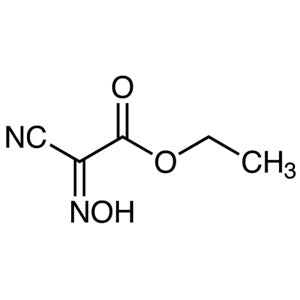
Ethyl Cyano(hydroxyimino)acetate is a chemical compound widely used in organic synthesis reactions within laboratory settings. It serves as a key building block for the creation of complex molecular structures, offering versatility in chemical reactions due to its unique functional groups. This compound is particularly valued for its ability to participate in specific chemical transformations, making it a preferred choice for researchers aiming to develop new compounds and materials. Its role in synthetic chemistry is crucial, especially in the design of pharmaceuticals and specialty chemicals.
The compound exhibits chemical stability under controlled conditions, yet it remains highly reactive to changes in pH, temperature, and catalysts. This reactivity allows for precise control in synthetic processes, ensuring the desired outcomes in laboratory experiments. Its ability to form various chemical bonds further enhances its utility in diverse applications. The compound’s reactivity and selectivity make it an essential tool in synthetic chemistry, enabling the development of new compounds with tailored properties.
In Indonesian laboratories, Ethyl Cyano(hydroxyimino)acetate is commonly used by chemists in organic synthesis research and the development of new materials. It plays a vital role in academic and industrial research settings, supporting both educational and innovative projects. Its relevance in chemical education and research makes it a valuable resource for universities and research institutions focused on advancing chemical knowledge and applications.
Advantages (TCI brochure)
- Reactivity similar to triazole derivatives
- Minimized explosion risk compared with triazoles
TCI brochures (PDF)
- Condensing Agents 2025-11-18 · p. 2
- Amino Acids and Peptide Synthesis Reagents 2025-08-14 · p. 37
Related TCI products
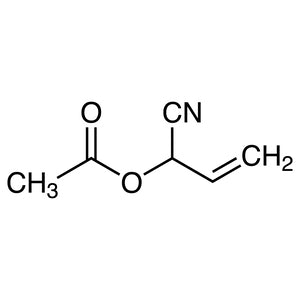
- TCI A1196 15667-63-7 1-Cyano-2-propenyl Acetate
- TCI E0371 14337-43-0 Ethyl 2-Chloro-2-(hydroxyimino)acetate
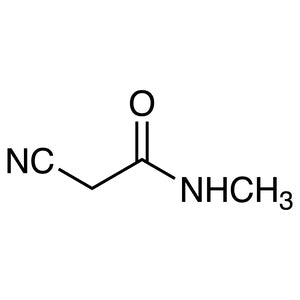
- TCI M3781 6330-25-2 2-Cyano-N-methylacetamide
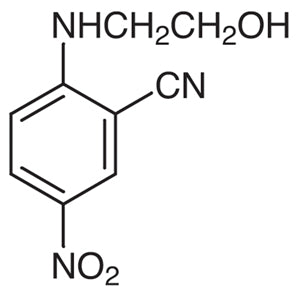
- TCI H0749 63989-40-2 N-(2-Hydroxyethyl)-2-cyano-4-nitroaniline
- TCI C2892 58743-75-2 4-Cyano-4'-ethylbiphenyl
- TCI C2764 58743-76-3 4-Cyano-4'-propylbiphenyl
- Organic synthesis research where precise chemical transformations are required due to its reactivity and selectivity.
- Development of new pharmaceutical compounds as a building block for complex molecular structures.
- Chemical education in academic institutions for teaching synthetic chemistry techniques and molecular design.
- Industrial research applications in the creation of specialty chemicals and advanced materials.
- Custom compound synthesis projects requiring versatile and adaptable chemical intermediates.
From the TCI brochure
- Synthesis of active esters, used with carbodiimides
| Brand | TCI |
|---|---|
| CAS number | 3849-21-6 |
| Molecular formula | — |
| Purity | — |
| Category | Chemistry > Building Blocks > Non-Heterocyclic Building Blocks |
| Pack sizes | Available in standard laboratory quantities |
| Physical form | Solid or liquid, depending on formulation |
| Storage | Store in a cool, dry place away from direct sunlight |
Data from the TCI brochure
| Yield | Y. 82% (EDC·HCl (D1601), DIEA (D1599), DMF) |
|---|
Source: TCI brochure R5113 (2025-11-18)
Ethyl Cyano(hydroxyimino)acetate should be stored in a cool, dry environment to maintain its chemical stability. It is recommended to keep the compound in airtight containers to prevent exposure to moisture and air, which may affect its reactivity. Laboratory personnel should handle the material with care, using appropriate personal protective equipment such as gloves and safety goggles. The compound should be stored away from incompatible substances to avoid potential chemical interactions. Regular monitoring of storage conditions ensures the compound remains suitable for use in research applications. Proper labeling and secure storage are essential to maintain safety and prevent accidental exposure.
—
Produk Terkait
-
1-Cyano-2-propenylAcetate TCI A1196
Regular price Rp 7.023.450,00Regular price -
Ethyl2-Chloro-2-(hydroxyimino)acetate TCI E0371
Regular price From Rp 2.147.250,00Regular price -
2-Cyano-N-methylacetamide TCI M3781
Regular price From Rp 1.565.550,00Regular price -
N-(2-Hydroxyethyl)-2-cyano-4-nitroaniline TCI H0749
Regular price Rp 1.829.100,00Regular price -
4-Cyano-4'-ethylbiphenyl TCI C2892
Regular price Rp 717.150,00Regular price -
4-Cyano-4'-propylbiphenyl TCI C2764
Regular price From Rp 530.250,00Regular price -
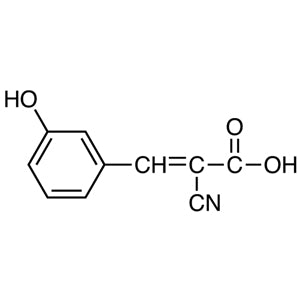
alpha-Cyano-3-hydroxycinnamicAcid TCI C2677
Regular price Rp 2.386.650,00Regular price -
4-Cyano-trans-stilbene TCI C2046
Regular price Rp 3.127.950,00Regular price