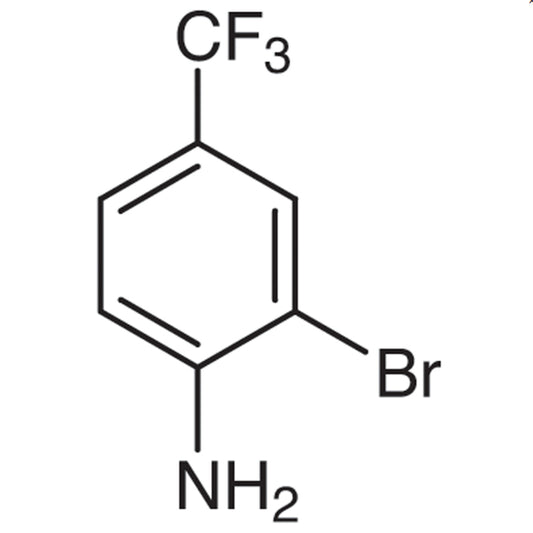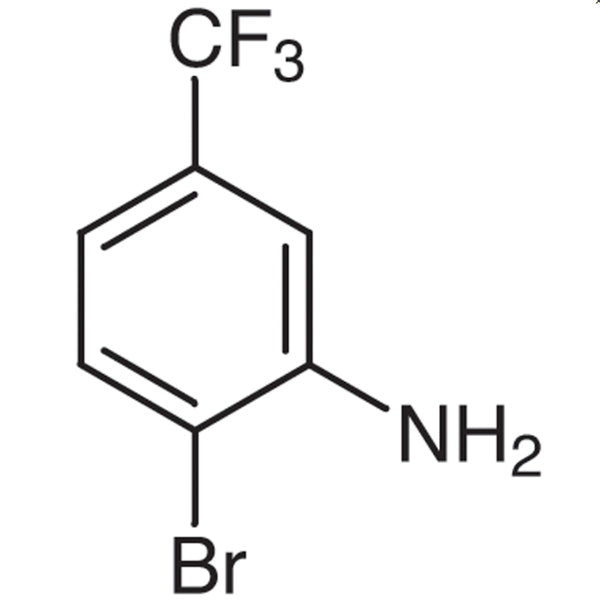
3-Amino-4-bromobenzotrifluoride is a chemical compound widely used in organic synthesis reactions within laboratory settings. It serves as a key building block for the development of more complex organic and heterocyclic compounds. This compound is particularly valuable for its structural versatility, allowing it to participate in various substitution and functionalization reactions. Its presence in the laboratory enables chemists to explore new synthetic pathways and create compounds with tailored properties. Due to its stability and controlled reactivity, it is a reliable choice for researchers working on advanced chemical projects.
The compound’s chemical properties make it a preferred choice for synthetic chemists. It exhibits good solubility in organic solvents such as ethyl acetate and acetone, which simplifies its handling and integration into chemical processes. Its stable molecular structure ensures consistent performance across multiple experiments, making it suitable for repeated use in both educational and research environments. Additionally, its reactivity can be precisely manipulated, allowing for the synthesis of a wide range of target molecules with high efficiency and selectivity.
In Indonesian laboratories, 3-Amino-4-bromobenzotrifluoride is commonly used in organic chemistry research and teaching. It plays a vital role in the development of new compounds with applications in pharmaceuticals, materials science, and industrial chemistry. Its availability and chemical properties make it a staple in both academic and industrial research settings, supporting innovation and discovery in various scientific fields.
Related TCI products
- TCI A1914 54962-75-3 3-Amino-5-bromobenzotrifluoride
- TCI A1847 393-36-2 5-Amino-2-bromobenzotrifluoride
- TCI A1578 57946-63-1 4-Amino-3-bromobenzotrifluoride
- TCI A1056 445-02-3 2-Amino-5-bromobenzotrifluoride
- TCI B3686 367-67-9 2-Bromo-5-nitrobenzotrifluoride
- TCI B3074 349-03-1 4-Bromo-3-nitrobenzotrifluoride
- Organic synthesis is a primary application where this compound is used to create complex molecules through substitution and functionalization reactions.
- Heterocyclic compound development benefits from its structural versatility, enabling the formation of ring systems with specific functionalities.
- Pharmaceutical research utilizes it as a building block for the synthesis of drug candidates with targeted biological activities.
- Material science applications leverage its chemical stability and reactivity for the creation of advanced polymers and functional materials.
- Educational laboratories use it to teach fundamental concepts in organic chemistry and synthetic methodology to students.
| Brand | TCI |
|---|---|
| CAS number | 454-79-5 |
| Molecular formula | — |
| Purity | — |
| Category | Chemistry > Building Blocks > Non-Heterocyclic Building Blocks |
| Pack sizes | Available in various quantities as per supplier specifications |
| Physical form | Solid |
| Storage | Store in a cool, dry place away from direct sunlight |
This compound should be stored in a cool, dry environment, away from direct sunlight and sources of heat. It is recommended to use airtight containers made of materials such as glass or polyethylene to prevent contamination and maintain chemical integrity. Due to its chemical nature, it should be handled with appropriate personal protective equipment, including gloves and safety goggles. Avoid exposure to moisture and ensure proper ventilation in the laboratory. Regular inspection of storage conditions is advised to ensure long-term stability and safety.
—
Produk Terkait
-
3-Amino-5-bromobenzotrifluoride TCI A1914
Regular price From Rp 689.850,00Regular price -
5-Amino-2-bromobenzotrifluoride TCI A1847
Regular price From Rp 664.650,00Regular price -
4-Amino-3-bromobenzotrifluoride TCI A1578
Regular price From Rp 610.050,00Regular price -
2-Amino-5-bromobenzotrifluoride TCI A1056
Regular price From Rp 610.050,00Regular price -
2-Bromo-5-nitrobenzotrifluoride TCI B3686
Regular price From Rp 769.650,00Regular price -
4-Bromo-3-nitrobenzotrifluoride TCI B3074
Regular price From Rp 1.724.100,00Regular price -
5-Bromo-2-nitrobenzotrifluoride TCI B2853
Regular price From Rp 717.150,00Regular price -
4-Amino-3-chlorobenzotrifluoride TCI A1511
Regular price From Rp 689.850,00Regular price