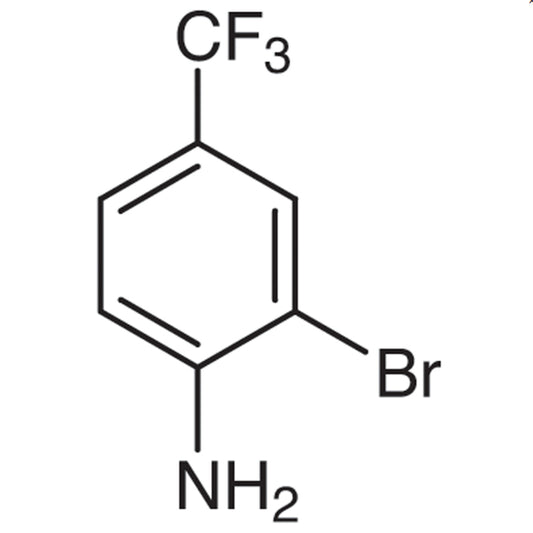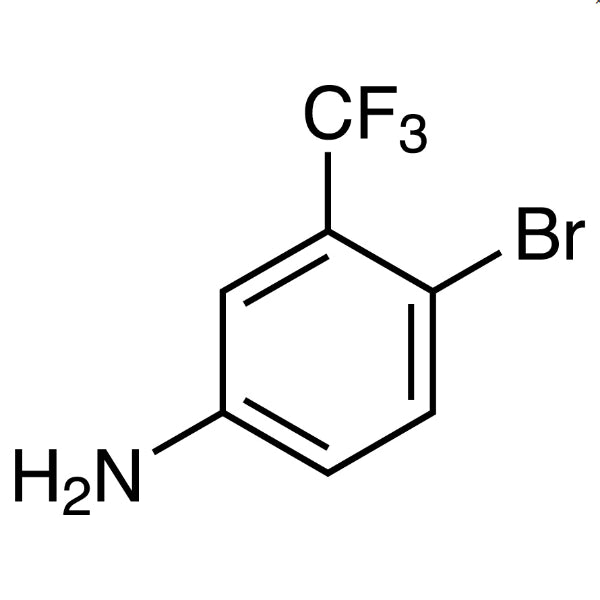
5-Amino-2-bromobenzotrifluoride is a chemical compound widely used in synthetic laboratory reactions. It belongs to the category of non-heterocyclic building blocks and is valued for its structural complexity and reactivity. This compound is commonly employed as a precursor in the synthesis of aromatic and heterocyclic compounds, making it a key reagent in organic chemistry research. Its unique molecular structure enables it to participate in various chemical transformations, contributing to the development of new compounds and the refinement of existing synthesis methods.
The compound’s high reactivity and ability to undergo diverse chemical reactions make it a preferred choice for researchers. It exhibits stability under certain conditions but is sensitive to high temperatures and strong reagents, which necessitates careful handling. Its versatility in reacting under different conditions and its availability in solid form make it a popular material in chemical laboratories. These properties allow it to be used in a wide range of experimental setups, supporting both basic and advanced research in organic chemistry.
In Indonesian laboratories, 5-Amino-2-bromobenzotrifluoride is utilized in research institutions and universities focused on organic chemistry. It is frequently used to develop new compounds or improve existing synthesis processes. Its availability and chemical properties make it a valuable resource for scientists working on synthetic pathways and molecular design. This compound plays a significant role in advancing chemical research in Indonesia.
TCI brochures (PDF)
- Fluorination Reagents, Fluorinated Building Blocks 2026-03-18 · p. 40
Related TCI products
- TCI A1914 54962-75-3 3-Amino-5-bromobenzotrifluoride
- TCI A1578 57946-63-1 4-Amino-3-bromobenzotrifluoride
- TCI A1483 454-79-5 3-Amino-4-bromobenzotrifluoride
- TCI A1056 445-02-3 2-Amino-5-bromobenzotrifluoride
- TCI B3686 367-67-9 2-Bromo-5-nitrobenzotrifluoride
- TCI B3074 349-03-1 4-Bromo-3-nitrobenzotrifluoride
- Organic synthesis applications benefit from this compound's reactivity and structural versatility, enabling the creation of complex aromatic and heterocyclic molecules.
- It is ideal for research in medicinal chemistry due to its potential in developing pharmaceutical compounds with specific functional groups.
- The compound supports the development of new materials in polymer science by participating in cross-linking and functionalization reactions.
- It is used in analytical chemistry for the synthesis of reference standards and the calibration of chemical instruments.
- Its role in academic research is crucial for teaching and training students in advanced synthetic techniques and chemical reactivity.
| Brand | TCI |
|---|---|
| CAS number | 393-36-2 |
| Molecular formula | — |
| Purity | — |
| Category | Chemistry > Building Blocks > Non-Heterocyclic Building Blocks |
| Pack sizes | Available in various quantities as per supplier specifications |
| Physical form | Solid |
| Storage | Store in a cool, dry place away from direct sunlight and incompatible materials |
This compound should be stored in a cool, dry environment, away from direct sunlight and sources of heat. It is recommended to use airtight containers made of materials that are chemically inert, such as glass or high-density polyethylene. Due to its reactivity, it should be handled with care, using appropriate personal protective equipment like gloves and safety goggles. Avoid exposure to strong oxidizing agents or high temperatures to prevent unintended chemical reactions. In laboratory settings, it is important to follow standard safety protocols and ensure proper ventilation when working with this compound.
—
Produk Terkait
-
3-Amino-5-bromobenzotrifluoride TCI A1914
Regular price From Rp 689.850,00Regular price -
4-Amino-3-bromobenzotrifluoride TCI A1578
Regular price From Rp 610.050,00Regular price -
3-Amino-4-bromobenzotrifluoride TCI A1483
Regular price Rp 1.538.250,00Regular price -
2-Amino-5-bromobenzotrifluoride TCI A1056
Regular price From Rp 610.050,00Regular price -
2-Bromo-5-nitrobenzotrifluoride TCI B3686
Regular price From Rp 769.650,00Regular price -
4-Bromo-3-nitrobenzotrifluoride TCI B3074
Regular price From Rp 1.724.100,00Regular price -
5-Bromo-2-nitrobenzotrifluoride TCI B2853
Regular price From Rp 717.150,00Regular price -
4-Amino-3-chlorobenzotrifluoride TCI A1511
Regular price From Rp 689.850,00Regular price