



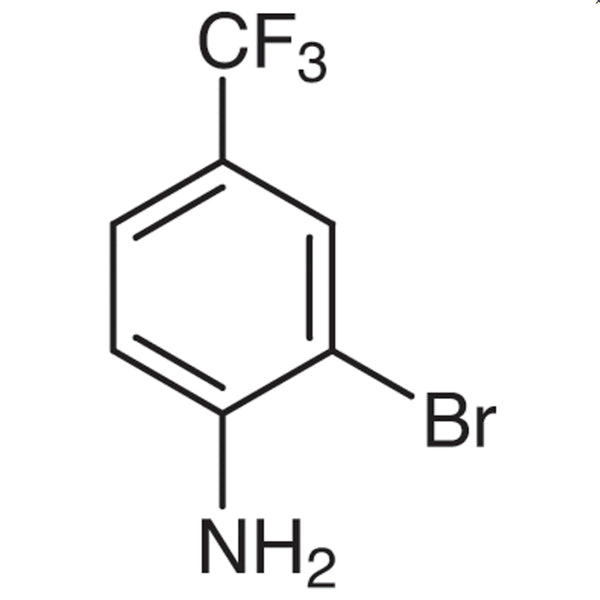
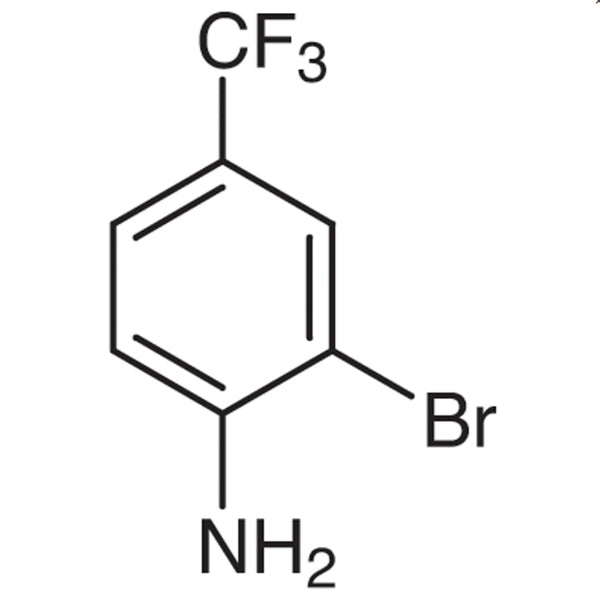
4-Amino-3-bromobenzotrifluoride is a chemical compound widely used as a building block in the synthesis of complex organic molecules. Its unique molecular structure features an amino group and a bromo substituent positioned at specific sites, along with three fluorine atoms on the benzene ring. This compound plays a crucial role in laboratory settings, particularly in organic chemistry, where it serves as a versatile intermediate for the development of various chemical products. Its presence in research allows scientists to tailor molecular structures for specific applications, enhancing the efficiency of synthetic pathways.
The compound's chemical properties make it a preferred choice for researchers due to its stability under controlled conditions and its reactivity in various chemical reactions. Its ability to participate in substitution, reduction, and electrophilic reactions makes it highly adaptable for different synthetic strategies. The presence of fluorine atoms also contributes to its unique reactivity profile, enabling it to be a valuable component in the design of pharmaceuticals and industrial chemicals. These characteristics make it a reliable and effective tool for chemical synthesis.
In Indonesian laboratories, 4-Amino-3-bromobenzotrifluoride is commonly used in organic chemistry research, especially in pharmaceutical and industrial chemistry applications. Its role in the development of new compounds and materials makes it an essential reagent for academic and industrial research. Researchers in Indonesia rely on this compound to advance their work in the field of chemical synthesis and innovation.
Related TCI products
- TCI A1914 54962-75-3 3-Amino-5-bromobenzotrifluoride
- TCI A1847 393-36-2 5-Amino-2-bromobenzotrifluoride
- TCI A1483 454-79-5 3-Amino-4-bromobenzotrifluoride
- TCI A1056 445-02-3 2-Amino-5-bromobenzotrifluoride
- TCI B3686 367-67-9 2-Bromo-5-nitrobenzotrifluoride
- TCI B3074 349-03-1 4-Bromo-3-nitrobenzotrifluoride
- Organic synthesis is a key application where this compound is used to build complex molecular structures through various chemical reactions.
- Pharmaceutical research benefits from its ability to participate in reactions that lead to the development of new drug molecules.
- Industrial chemistry applications include the production of specialty chemicals and materials that require precise molecular design.
- Academic research in chemistry utilizes this compound to explore new synthetic methodologies and reaction mechanisms.
- Chemical innovation projects often incorporate this compound to create novel compounds with specific functional properties.
| Brand | TCI |
|---|---|
| CAS number | 57946-63-1 |
| Molecular formula | — |
| Purity | — |
| Category | Chemistry > Building Blocks > Non-Heterocyclic Building Blocks |
| Pack sizes | Available in standard laboratory quantities as per supplier specifications |
| Physical form | Solid, crystalline appearance |
| Storage | Store in a cool, dry place away from direct sunlight and moisture |
This compound should be stored in a cool, dry environment, away from direct sunlight and moisture. It is recommended to use airtight containers to prevent exposure to air and humidity. Due to its reactivity, it should be handled with care, using appropriate personal protective equipment such as gloves and goggles. It is advisable to store it in a well-ventilated area to minimize the risk of inhalation of vapors. Proper labeling of containers is essential to ensure safe handling and prevent accidental exposure. Always follow standard laboratory safety protocols when working with this compound.
—
Produk Terkait
-
3-Amino-5-bromobenzotrifluoride TCI A1914
Regular price From Rp 689.850,00Regular price -
5-Amino-2-bromobenzotrifluoride TCI A1847
Regular price From Rp 664.650,00Regular price -
3-Amino-4-bromobenzotrifluoride TCI A1483
Regular price Rp 1.538.250,00Regular price -
2-Amino-5-bromobenzotrifluoride TCI A1056
Regular price From Rp 610.050,00Regular price -
2-Bromo-5-nitrobenzotrifluoride TCI B3686
Regular price From Rp 769.650,00Regular price -
4-Bromo-3-nitrobenzotrifluoride TCI B3074
Regular price From Rp 1.724.100,00Regular price -
5-Bromo-2-nitrobenzotrifluoride TCI B2853
Regular price From Rp 717.150,00Regular price -
4-Amino-3-chlorobenzotrifluoride TCI A1511
Regular price From Rp 689.850,00Regular price


