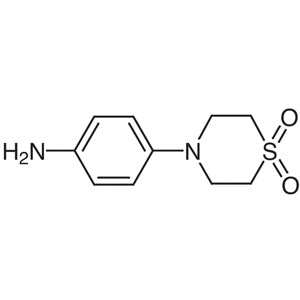
4-(4-Aminophenyl)thiomorpholine 1,1-Dioxide is a chemical compound widely used in organic reactions, particularly in the synthesis of heterocyclic compounds. This versatile building block plays a crucial role in laboratories where complex molecular structures are being developed. Its unique chemical structure allows for various substitution and reaction mechanisms, making it an essential tool for chemists working on advanced synthetic pathways. Due to its reactivity and structural complexity, it is frequently employed in the creation of new compounds with specific functional properties.
The compound's high reactivity and stability under controlled conditions make it a preferred choice for synthetic chemists. It is capable of participating in nucleophilic, electrophilic, and substitution reactions, which are fundamental in the development of new pharmaceutical and industrial materials. Its ability to undergo multiple reaction types enhances its utility in diverse chemical applications, contributing to the efficiency and success of laboratory experiments. The compound’s chemical stability ensures that it remains effective even when stored properly.
In Indonesian laboratories, 4-(4-Aminophenyl)thiomorpholine 1,1-Dioxide is commonly used in chemical and pharmaceutical research. It is a key component in the synthesis of heterocyclic compounds, which have applications in medicine and industry. Its role in creating complex molecular structures makes it an important material for researchers aiming to develop new drugs or functional materials.
Related TCI products
- TCI T2193 39093-93-1 Thiomorpholine 1,1-Dioxide
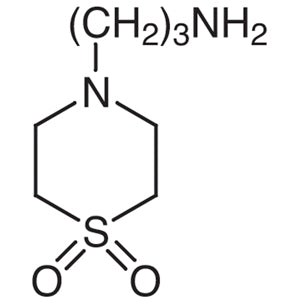
- TCI A1804 90000-25-2 4-(3-Aminopropyl)thiomorpholine 1,1-Dioxide
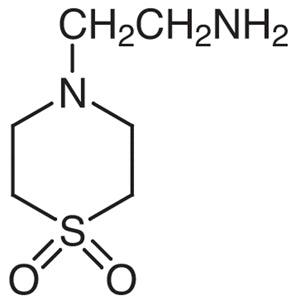
- TCI A1803 89937-52-0 4-(2-Aminoethyl)thiomorpholine 1,1-Dioxide
- TCI H1141 205194-33-8 4-(3-Hydroxypropyl)thiomorpholine 1,1-Dioxide
- TCI H1140 26475-62-7 4-(2-Hydroxyethyl)thiomorpholine 1,1-Dioxide
- TCI H1063 103661-13-8 4-(4-Hydroxyphenyl)thiomorpholine 1,1-Dioxide
- Heterocyclic Compound Synthesis: This compound is ideal for creating complex ring structures, which are essential in pharmaceutical and medicinal chemistry.
- Organic Reaction Development: Its reactivity allows it to be used in a wide range of organic reactions, including nucleophilic and electrophilic substitutions.
- Pharmaceutical Research: It is frequently used in the development of new drugs due to its ability to form stable and reactive intermediates.
- Industrial Chemical Synthesis: Its versatility makes it suitable for industrial applications where complex chemical structures are required.
- Academic Research: It is a valuable tool for academic institutions conducting advanced chemical research and teaching synthetic methods.
| Brand | TCI |
|---|---|
| CAS number | 105297-10-7 |
| Molecular formula | — |
| Purity | — |
| Category | Chemistry > Building Blocks > Heterocyclic Building Blocks |
| Pack sizes | Available in various quantities as per supplier specifications |
| Physical form | Solid (as per standard chemical properties) |
| Storage | Store in a cool, dry place away from light and moisture |
This compound should be stored in a cool, dry environment, away from direct light and moisture to maintain its stability and reactivity. It is recommended to use airtight containers to prevent exposure to air and humidity. Proper labeling of storage containers is essential to ensure safe handling. In laboratory settings, it should be handled with appropriate personal protective equipment, such as gloves and safety goggles, to minimize exposure. Due to its chemical nature, it should be kept away from incompatible substances to avoid potential reactions. Regular monitoring of storage conditions helps ensure the compound remains in optimal condition for use in research and development.
—
Produk Terkait
-
Thiomorpholine1,1-Dioxide TCI T2193
Regular price From Rp 4.559.100,00Regular price -
4-(3-Aminopropyl)thiomorpholine1,1-Dioxide TCI A1804
Regular price From Rp 2.306.850,00Regular price -
4-(2-Aminoethyl)thiomorpholine1,1-Dioxide TCI A1803
Regular price From Rp 2.597.700,00Regular price -
4-(3-Hydroxypropyl)thiomorpholine1,1-Dioxide TCI H1141
Regular price From Rp 2.518.950,00Regular price -
4-(2-Hydroxyethyl)thiomorpholine1,1-Dioxide TCI H1140
Regular price From Rp 2.518.950,00Regular price -
4-(4-Hydroxyphenyl)thiomorpholine1,1-Dioxide TCI H1063
Regular price Rp 3.075.450,00Regular price -
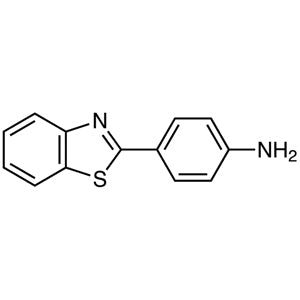
2-(4-Aminophenyl)benzothiazole TCI A2672
Regular price Rp 1.298.850,00Regular price -
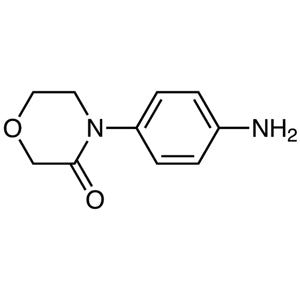
4-(4-Aminophenyl)morpholin-3-one TCI A2614
Regular price From Rp 477.750,00Regular price