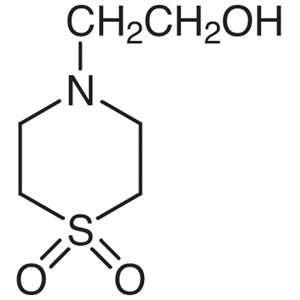
4-(2-Hydroxyethyl)thiomorpholine 1,1-Dioxide is a chemical compound widely used in organic reactions and the synthesis of complex molecules. As a heterocyclic building block, it plays a crucial role in the development of new compounds within the field of chemistry. Its unique molecular structure allows for versatile chemical transformations, making it an essential component in various synthetic pathways. This compound is particularly valued for its ability to participate in multiple reaction types, contributing to the efficiency and selectivity of chemical processes.
The compound's chemical properties, including its reactivity and functional group compatibility, make it a preferred choice for researchers. Its stability under controlled conditions ensures consistent performance in laboratory settings. The presence of both hydroxyl and thioether groups enhances its utility in forming diverse molecular architectures. These characteristics enable it to be a reliable reagent in the synthesis of pharmaceuticals and other advanced materials. Its adaptability to different reaction conditions further supports its widespread use in chemical research.
In Indonesian laboratories, 4-(2-Hydroxyethyl)thiomorpholine 1,1-Dioxide is commonly used in the synthesis of bioactive compounds, drug development, and material innovation. Its availability supports scientific research that requires precision and high-quality reagents. Researchers rely on this compound to achieve accurate results in their experiments, contributing to advancements in both academic and industrial chemistry. Its role in fostering innovation and scientific discovery is vital to the progress of chemical research in Indonesia.
- Used in the synthesis of bioactive compounds due to its ability to form complex molecular structures and participate in diverse chemical reactions.
- Applied in pharmaceutical research for the development of new drugs, as it supports the creation of heterocyclic frameworks essential in medicinal chemistry.
- Utilized in material science for the production of advanced polymers and functional materials, leveraging its reactivity and structural versatility.
- Employed in organic synthesis to facilitate the formation of novel compounds with specific functional groups and stereochemical configurations.
- Integrated into research projects focused on green chemistry, where its stability and reactivity contribute to efficient and sustainable synthetic methods.
| Brand | TCI |
|---|---|
| CAS number | 26475-62-7 |
| Molecular formula | — |
| Purity | — |
| Category | Chemistry > Building Blocks > Heterocyclic Building Blocks |
| Pack sizes | Available in various quantities as per standard laboratory supply |
| Physical form | Solid or liquid, depending on the specific product variant |
| Storage | Store in a cool, dry place away from direct sunlight and moisture |
This compound should be stored in a cool, dry environment to maintain its chemical integrity and prevent degradation. It is recommended to keep it in airtight containers to avoid exposure to moisture and air, which may affect its stability. Proper labeling of storage containers is essential to ensure safe handling and prevent cross-contamination. In laboratory settings, it should be handled with appropriate personal protective equipment, including gloves and safety goggles, to minimize direct contact. Regular monitoring of storage conditions is advised to ensure optimal preservation. Due to its chemical nature, it should be stored separately from incompatible substances to prevent any potential reactions. Following these guidelines ensures safe and effective use in research applications.
—
Produk Terkait
-
Thiomorpholine1,1-Dioxide TCI T2193
Regular price From Rp 4.559.100,00Regular price -
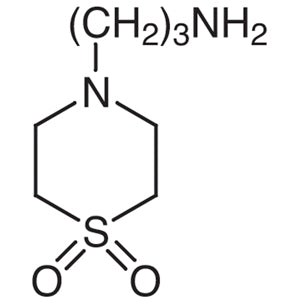
4-(3-Aminopropyl)thiomorpholine1,1-Dioxide TCI A1804
Regular price From Rp 2.306.850,00Regular price -
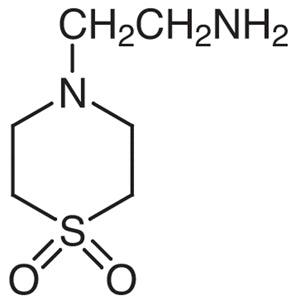
4-(2-Aminoethyl)thiomorpholine1,1-Dioxide TCI A1803
Regular price From Rp 2.597.700,00Regular price -
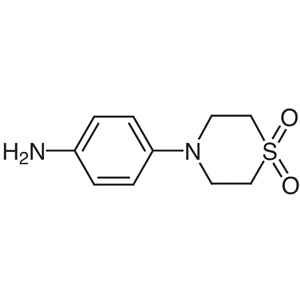
4-(4-Aminophenyl)thiomorpholine1,1-Dioxide TCI A1669
Regular price From Rp 1.670.550,00Regular price -
4-(3-Hydroxypropyl)thiomorpholine1,1-Dioxide TCI H1141
Regular price From Rp 2.518.950,00Regular price -
4-(4-Hydroxyphenyl)thiomorpholine1,1-Dioxide TCI H1063
Regular price Rp 3.075.450,00Regular price -
ThiomorpholinoaceticAcid1',1'-DioxideMonohydrate TCI T2050
Regular price From Rp 1.776.600,00Regular price -
4-Benzylthiomorpholine1,1-Dioxide TCI B2434
Regular price From Rp 1.696.800,00Regular price