4-(3-Hydroxypropyl)thiomorpholine 1,1-Dioxide is a chemical compound widely used in laboratory settings for the synthesis of heterocyclic compounds. This versatile building block plays a crucial role in organic chemistry, particularly in the development of complex molecular structures. Its unique chemical structure allows it to participate in various reaction types, including substitution, coupling, and structural modification. As a fundamental component in synthetic pathways, it supports the creation of a wide range of pharmaceutical and industrial compounds.
The compound's chemical properties make it a preferred choice for researchers and chemists. It exhibits stability under controlled conditions while maintaining reactivity when required. Its ability to interact with a variety of reagents enables precise control over reaction outcomes. The compound’s solubility in organic solvents further enhances its usability in laboratory processes. These characteristics make it an essential tool for achieving accurate and efficient chemical synthesis.
In Indonesian laboratories, 4-(3-Hydroxypropyl)thiomorpholine 1,1-Dioxide is commonly used in chemical research, drug development, and industrial chemical production. Its availability in solid form and compatibility with organic solvents make it easy to handle and integrate into various synthetic protocols. Due to its specificity in heterocyclic synthesis, it is often selected by researchers to accelerate the development of new chemical products and improve overall laboratory efficiency.
- Used in pharmaceutical research for the synthesis of complex heterocyclic compounds due to its structural versatility and reactivity.
- Applied in organic chemistry for creating molecular frameworks that are essential in drug development and chemical innovation.
- Employed in industrial chemical production to develop specialized compounds with unique functional properties.
- Utilized in academic research for teaching and experimental purposes involving heterocyclic synthesis techniques.
- Integrated into analytical chemistry workflows for the study of reaction mechanisms and molecular interactions.
| Brand | TCI |
|---|---|
| CAS number | 205194-33-8 |
| Molecular formula | — |
| Purity | — |
| Category | Chemistry > Building Blocks > Heterocyclic Building Blocks |
| Pack sizes | Available in various quantities as per standard laboratory supply options |
| Physical form | Solid |
| Storage | Store in a cool, dry place away from direct sunlight and moisture |
This compound should be stored in a cool, dry environment to maintain its chemical stability. It is recommended to keep it in airtight containers to prevent exposure to moisture and air, which may affect its reactivity. Due to its organic nature, it is best stored in glass or plastic containers that are resistant to chemical degradation. Always ensure proper ventilation when handling the compound to avoid inhalation of vapors. Avoid contact with incompatible substances to prevent unwanted reactions. Regular inspection of storage conditions is advised to ensure the material remains in optimal condition for laboratory use.
—
Produk Terkait
-
Thiomorpholine1,1-Dioxide TCI T2193
Regular price From Rp 4.559.100,00Regular price -
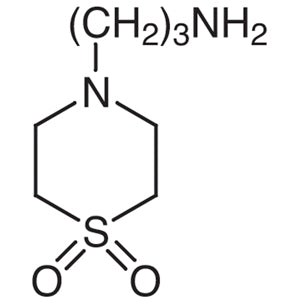
4-(3-Aminopropyl)thiomorpholine1,1-Dioxide TCI A1804
Regular price From Rp 2.306.850,00Regular price -
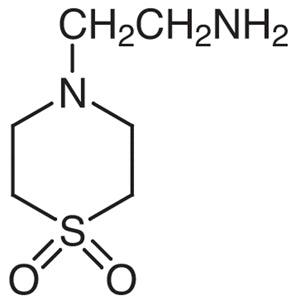
4-(2-Aminoethyl)thiomorpholine1,1-Dioxide TCI A1803
Regular price From Rp 2.597.700,00Regular price -
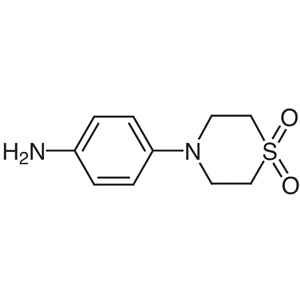
4-(4-Aminophenyl)thiomorpholine1,1-Dioxide TCI A1669
Regular price From Rp 1.670.550,00Regular price -
4-(2-Hydroxyethyl)thiomorpholine1,1-Dioxide TCI H1140
Regular price From Rp 2.518.950,00Regular price -
4-(4-Hydroxyphenyl)thiomorpholine1,1-Dioxide TCI H1063
Regular price Rp 3.075.450,00Regular price -
Thiomorpholine TCI T1007
Regular price From Rp 1.908.900,00Regular price -
4-(3-Hydroxypropyl)morpholine TCI H1355
Regular price Rp 2.862.300,00Regular price