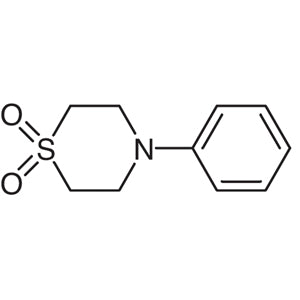
Thiomorpholine is a chemical compound with a heterocyclic structure containing one sulfur atom. It serves as a fundamental building block in organic chemistry, particularly in the synthesis of complex molecules. In laboratory settings, thiomorpholine is widely used for its ability to participate in various functional group reactions, making it essential for both research and development. Its versatility allows it to be incorporated into substitution and cyclic reactions, supporting the creation of a wide range of organic compounds. This compound is highly valued in academic and industrial laboratories for its role in advancing chemical innovation.
Thiomorpholine exhibits chemical stability under specific conditions, yet it remains reactive toward acids, bases, and organic solvents. These properties make it a preferred choice for reactions requiring precise control and selectivity. Its solubility in organic solvents such as ethyl acetate and acetone further enhances its utility in laboratory processes, facilitating separation and isolation techniques. The compound’s reactivity and solubility characteristics ensure it remains a key reagent in diverse chemical applications, particularly in organic synthesis and pharmaceutical research.
In Indonesian laboratories, thiomorpholine is commonly used in chemical and pharmaceutical research. It is a staple in academic institutions and research laboratories, where it supports the synthesis of new compounds and the development of advanced materials. Its availability in small pack sizes like 5mL and 25mL makes it practical for both experimental and routine laboratory work. This accessibility ensures that researchers can effectively utilize thiomorpholine in their studies and experiments.
Related TCI products
- TCI T2193 39093-93-1 Thiomorpholine 1,1-Dioxide
- TCI T2050 1894677-16-7 Thiomorpholinoacetic Acid 1',1'-Dioxide Monohydrate
- TCI B2434 26475-66-1 4-Benzylthiomorpholine 1,1-Dioxide
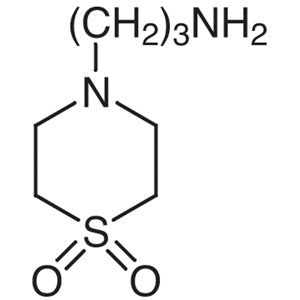
- TCI A1804 90000-25-2 4-(3-Aminopropyl)thiomorpholine 1,1-Dioxide
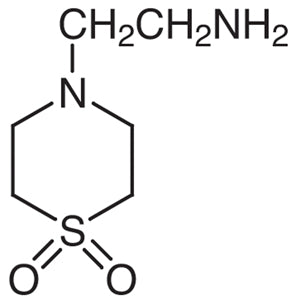
- TCI A1803 89937-52-0 4-(2-Aminoethyl)thiomorpholine 1,1-Dioxide
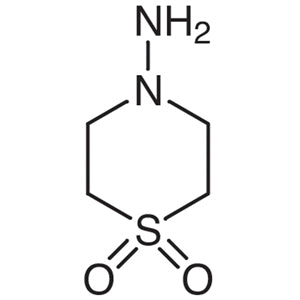
- TCI A1798 26494-76-8 4-Aminothiomorpholine 1,1-Dioxide
- Organic synthesis applications benefit from thiomorpholine's ability to participate in substitution and cyclic reactions, enabling the creation of complex molecular structures.
- Pharmaceutical research utilizes thiomorpholine due to its reactivity with various functional groups, supporting the development of new drug compounds.
- Material science experiments leverage thiomorpholine's solubility in organic solvents, facilitating the synthesis of advanced materials with specific properties.
- Analytical chemistry processes use thiomorpholine for its stability and reactivity, aiding in the identification and characterization of chemical compounds.
- Educational laboratories incorporate thiomorpholine for teaching purposes, demonstrating its role in fundamental chemical reactions and synthesis techniques.
| Brand | TCI |
|---|---|
| CAS number | 123-90-0 |
| Molecular formula | — |
| Purity | — |
| Category | Chemistry > Building Blocks > Heterocyclic Building Blocks |
| Pack sizes | 5mL, 25mL |
| Physical form | Liquid |
| Storage | Store in a cool, dry place away from light and incompatible materials |
Thiomorpholine should be stored in a cool, dry place away from direct light and incompatible substances such as strong acids and bases. It is recommended to use airtight containers made of glass or high-density polyethylene to prevent contamination and evaporation. Due to its reactivity with certain solvents and reagents, it is important to handle thiomorpholine with appropriate personal protective equipment, including gloves and safety goggles. In laboratory settings, it should be kept in a well-ventilated area to minimize exposure. Always ensure that the storage area is secure and inaccessible to unauthorized personnel to maintain safety standards.
—
Produk Terkait
-
Thiomorpholine1,1-Dioxide TCI T2193
Regular price From Rp 4.611.600,00Regular priceRp 3.240.300,00Sale price From Rp 4.611.600,00 -
ThiomorpholinoaceticAcid1',1'-DioxideMonohydrate TCI T2050
Regular price From Rp 1.829.100,00Regular priceRp 1.294.650,00Sale price From Rp 1.829.100,00 -
4-Benzylthiomorpholine1,1-Dioxide TCI B2434
Regular price From Rp 1.749.300,00Regular priceRp 1.239.000,00Sale price From Rp 1.749.300,00 -
4-(3-Aminopropyl)thiomorpholine1,1-Dioxide TCI A1804
Regular price From Rp 2.359.350,00Regular priceRp 1.665.300,00Sale price From Rp 2.359.350,00 -
4-(2-Aminoethyl)thiomorpholine1,1-Dioxide TCI A1803
Regular price From Rp 2.650.200,00Regular priceRp 1.869.000,00Sale price From Rp 2.650.200,00 -
4-Aminothiomorpholine1,1-Dioxide TCI A1798
Regular price From Rp 2.199.750,00Regular priceRp 1.554.000,00Sale price From Rp 2.199.750,00 -
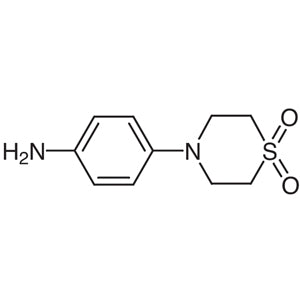
4-(4-Aminophenyl)thiomorpholine1,1-Dioxide TCI A1669
Regular price From Rp 1.723.050,00Regular priceRp 1.220.100,00Sale price From Rp 1.723.050,00 -
4-Phenylthiomorpholine1,1-Dioxide TCI P1603
Regular price From Rp 2.702.700,00Regular priceRp 1.905.750,00Sale price From Rp 2.702.700,00