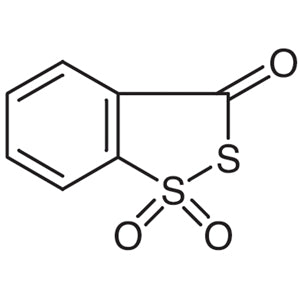
4-Phenylthiomorpholine 1,1-Dioxide from TCI is a heterocyclic compound built on a thiomorpholine ring. The sulfur atom in the ring has been oxidized to a sulfone, and a phenyl group is attached to the nitrogen atom. It is a heterocyclic building block used in organic synthesis and medicinal chemistry. Laboratories use it as a starting material or a model compound when building molecules that contain the thiomorpholine dioxide motif. This structural unit appears fairly often in the design of drug candidates, so the compound is a practical part of a synthetic chemist's toolkit.
Chemists often choose this compound because of its sulfone group. The sulfone adds high polarity and can accept hydrogen bonds without adding any hydrogen-bond donor groups. That combination is often wanted when optimizing solubility and pharmacokinetic profiles. Sulfones are also fairly chemically stable under many reaction conditions, so the ring usually survives later synthetic steps intact. The phenyl ring on the nitrogen can be modified further through electrophilic aromatic substitution, which makes the compound a flexible scaffold for further development.
In Indonesian laboratories, this material suits research groups in medicinal chemistry, pharmacy, and organic synthesis that are assembling compound libraries or exploring structure–activity relationships around sulfur-containing heterocycles. University research laboratories, pharmaceutical development teams, and academic groups working on synthetic method development can use it as a dependable reference building block. TCI's consistent quality also helps keep results reproducible across repeated experiments and between different research groups.
Related TCI products
- TCI T2193 39093-93-1 Thiomorpholine 1,1-Dioxide
- TCI T1007 123-90-0 Thiomorpholine
- TCI H1140 26475-62-7 4-(2-Hydroxyethyl)thiomorpholine 1,1-Dioxide
- TCI H1063 103661-13-8 4-(4-Hydroxyphenyl)thiomorpholine 1,1-Dioxide
- TCI T3320 17396-35-9 Tetrahydrothiopyran-4-one 1,1-Dioxide
- TCI T2100 64096-87-3 Tetrahydro-2H-thiopyran-4-carboxylic Acid 1,1-Dioxide
- Medicinal chemistry scaffold building: the thiomorpholine dioxide motif appears often in drug candidate design, so this compound is a practical entry point for adding that unit to new molecules.
- Solubility and pharmacokinetic optimization studies: the sulfone group adds polarity and hydrogen-bond acceptor capacity without adding donors, which helps researchers adjust the physicochemical profile of lead compounds.
- Multi-step organic synthesis: the sulfone is relatively chemically stable under many reaction conditions, so the heterocyclic ring usually stays intact through later synthetic transformations.
- Aromatic functionalization research: the N-phenyl ring can undergo electrophilic aromatic substitution, so chemists can make substituted derivatives and expand a series of related compounds.
- Model compound for method development: its well-defined heterocyclic sulfone structure makes it a good reference substrate for testing new reactions involving sulfur–nitrogen heterocycles.
| Brand | TCI (product code P1603) |
|---|---|
| CAS number | 17688-68-5 |
| Molecular formula | — |
| Purity | — |
| Category | Chemistry > Building Blocks > Heterocyclic Building Blocks |
| Pack sizes | available in the pack sizes listed on the product page |
| Physical form | refer to the manufacturer's Certificate of Analysis and product label |
| Storage | follow the storage conditions stated on the TCI label and Safety Data Sheet |
Keep this compound in its original, tightly closed container, away from moisture, direct sunlight, and heat. Store it in a cool, dry, well-ventilated chemical storage area and follow any specific temperature guidance on the TCI label or Safety Data Sheet. Keep it apart from strong oxidizing agents and incompatible substances. Handle it in a fume hood or a well-ventilated area and wear standard personal protective equipment, including a lab coat, safety glasses, and chemical-resistant gloves. Do not inhale dust and do not let it contact skin or eyes. Label all secondary containers clearly and dispose of waste according to your institution's chemical waste procedures.
—
Produk Terkait
-
Thiomorpholine1,1-Dioxide TCI T2193
Regular price Rp 4.611.600,00Regular priceRp 3.240.300,00Sale price Rp 4.611.600,00 -
Thiomorpholine TCI T1007
Regular price Rp 1.961.400,00Regular priceRp 1.387.050,00Sale price Rp 1.961.400,00 -
4-(2-Hydroxyethyl)thiomorpholine1,1-Dioxide TCI H1140
Regular price Rp 2.571.450,00Regular priceRp 1.813.350,00Sale price Rp 2.571.450,00 -
4-(4-Hydroxyphenyl)thiomorpholine1,1-Dioxide TCI H1063
Regular price Rp 3.127.950,00Regular priceRp 2.202.900,00Sale price Rp 3.127.950,00 -
Tetrahydrothiopyran-4-one1,1-Dioxide TCI T3320
Regular price Rp 1.696.800,00Regular priceRp 1.202.250,00Sale price Rp 1.696.800,00 -
Tetrahydro-2H-thiopyran-4-carboxylicAcid1,1-Dioxide TCI T2100
Regular price Rp 1.458.450,00Regular priceRp 1.035.300,00Sale price Rp 1.458.450,00 -
ThiomorpholinoaceticAcid1',1'-DioxideMonohydrate TCI T2050
Regular price Rp 1.829.100,00Regular priceRp 1.294.650,00Sale price Rp 1.829.100,00 -
3H-1,2-Benzodithiol-3-one1,1-Dioxide TCI B3125
Regular price Rp 2.041.200,00Regular priceRp 1.442.700,00Sale price Rp 2.041.200,00