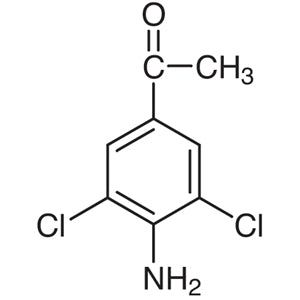
4'-Amino-3',5'-dichloroacetophenone is a chemical compound widely used as a building block in the synthesis of complex molecules. Its structural versatility allows it to be modified through various chemical reactions, making it an essential component in organic chemistry research. In the laboratory, this compound plays a crucial role in the development of new compounds, particularly in the field of pharmaceutical and industrial chemistry. Its ability to participate in multiple reaction types, such as substitution and electrophilic reactions, enhances its utility in synthetic pathways.
The compound is valued for its stable chemical structure and controlled reactivity, which ensures predictable outcomes in experimental processes. Its solubility in organic solvents simplifies handling and application in diverse chemical experiments. These properties make it a preferred choice for researchers aiming to design and synthesize new compounds with specific functional groups. The compound's reliability and consistency in performance contribute to its popularity among chemists working in both academic and industrial settings.
In Indonesian laboratories, 4'-Amino-3',5'-dichloroacetophenone is commonly used in organic chemistry research, especially in the development of new compounds with potential pharmaceutical or industrial applications. Its role in the synthesis of aromatic and heterocyclic compounds makes it a valuable resource for scientists engaged in drug discovery and material science. The compound is frequently utilized in academic institutions and research centers to support advanced chemical studies and innovation.
- Organic synthesis of aromatic and heterocyclic compounds due to its versatile functional groups and reactivity.
- Development of pharmaceutical compounds as a key intermediate in drug molecule design and modification.
- Research in material science for the creation of new chemical structures with specific properties.
- Educational purposes in teaching advanced organic chemistry techniques and synthetic pathways.
- Industrial applications in the production of specialty chemicals and chemical intermediates.
| Brand | TCI |
|---|---|
| CAS number | 37148-48-4 |
| Molecular formula | — |
| Purity | — |
| Category | Chemistry > Building Blocks > Non-Heterocyclic Building Blocks |
| Pack sizes | Available in various quantities as per standard laboratory supply formats |
| Physical form | Solid, crystalline or powder, depending on the specific batch |
| Storage | Store in a cool, dry place away from light and moisture |
4'-Amino-3',5'-dichloroacetophenone should be stored in a cool, dry environment, away from direct light and moisture to maintain its chemical stability. It is recommended to use airtight containers to prevent exposure to air and humidity, which could affect its purity and reactivity. In laboratory settings, proper personal protective equipment, such as gloves and safety goggles, should be worn when handling the compound to ensure safety. The compound is generally non-hazardous under normal conditions but should be handled with care to avoid any potential chemical interactions. It is important to follow standard laboratory safety protocols to ensure safe usage and storage.
—
Produk Terkait
-
3',5'-Dichloroacetophenone TCI D5111
Regular price From Rp 903.000,00Regular price -
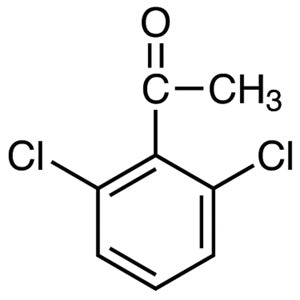
2',6'-Dichloroacetophenone TCI D4119
Regular price From Rp 1.035.300,00Regular price -
2',5'-Dichloroacetophenone TCI D2502
Regular price From Rp 477.750,00Regular price -
2',4'-Dichloroacetophenone TCI D1490
Regular price Rp 903.000,00Regular price -
2,2-Dichloroacetophenone TCI D1122
Regular price Rp 2.597.700,00Regular price -
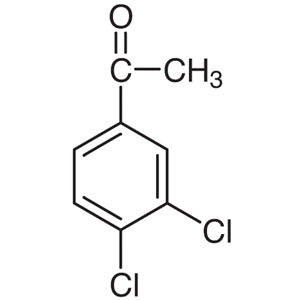
3',4'-Dichloroacetophenone TCI D0311
Regular price Rp 1.776.600,00Regular price -
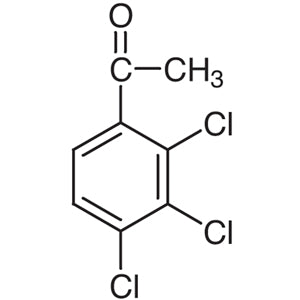
2',3',4'-Trichloroacetophenone TCI T2306
Regular price Rp 848.400,00Regular price -
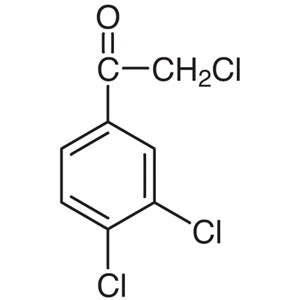
2,3',4'-Trichloroacetophenone TCI T1965
Regular price Rp 2.068.500,00Regular price