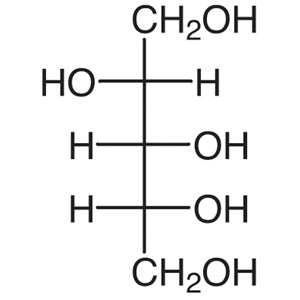
Allitol, with CAS number 488-44-8, is a chemical compound widely used in research applications across chemistry and biochemistry. It plays a crucial role in laboratory settings, particularly in the study of glycoscience, where it contributes to understanding the structure and function of carbohydrates. As a key reagent, Allitol is frequently employed in the synthesis of complex molecules and as a substrate in various chemical reactions. Its versatility makes it an essential component in both qualitative and quantitative analyses, helping researchers identify the presence of specific compounds in samples.
The chemical properties of Allitol make it a preferred choice for laboratory use. It is chemically stable under certain conditions, which simplifies handling and storage. Its non-reactive nature ensures that it does not interfere with primary reactions, making it suitable for a wide range of chemical processes. Additionally, Allitol is typically colorless and solid in form, which facilitates its use and processing. These characteristics contribute to its reliability and consistency in research environments.
In Indonesian laboratories, Allitol is commonly used in biochemical and pharmacological research. It is a fundamental material for scientists studying carbohydrate-related processes and developing new compounds. Its availability and reliability make it an important tool for researchers working on diverse scientific projects, supporting both academic and industrial research efforts.
TCI brochures (PDF)
- Glycoscience Research – Allitol is ideal for studying carbohydrate structures and their biological functions, supporting advanced biochemical investigations.
- Synthetic Chemistry – Its stability and non-reactive nature make it a valuable reagent for the synthesis of complex organic molecules.
- Qualitative Analysis – Allitol is used to detect and identify specific compounds in samples through analytical techniques.
- Quantitative Analysis – It serves as a standard in quantitative assays to measure the concentration of target substances accurately.
- Biochemical Studies – Allitol supports research into metabolic pathways and enzyme interactions in biological systems.
| Brand | TCI |
|---|---|
| CAS number | 488-44-8 |
| Molecular formula | — |
| Purity | — |
| Category | Chemistry > Chemical Biology > Glycoscience |
| Pack sizes | Available in various quantities as per standard laboratory supply |
| Physical form | Solid |
| Storage | Store in a cool, dry place away from direct sunlight |
Allitol should be stored in a cool, dry environment to maintain its chemical stability. It is recommended to keep it in airtight containers to prevent moisture absorption and contamination. Since it is non-reactive, it does not require special handling beyond standard laboratory protocols. However, it is important to ensure that it is stored away from incompatible substances. The solid form of Allitol makes it easy to handle, but care should be taken to avoid physical damage during storage and use. Proper labeling of containers is essential for safe and efficient laboratory operations.
—
Produk Terkait
-
D-(+)-Allose TCI A1488
Regular price From Rp 1.961.400,00Regular priceRp 1.387.050,00Sale price From Rp 1.961.400,00 -
4-Formylphenylbeta-D-Allopyranoside TCI F0542
Regular price Rp 3.048.150,00Regular priceRp 2.147.250,00Sale price Rp 3.048.150,00 -
1,2:5,6-Di-O-isopropylidene-alpha-D-allofuranose TCI D2265
Regular price From Rp 1.776.600,00Regular priceRp 1.257.900,00Sale price From Rp 1.776.600,00 -
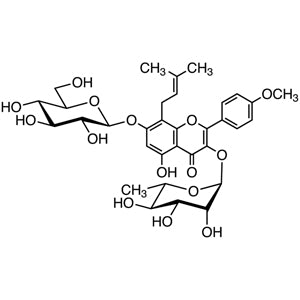
Icariin TCI I0862
Regular price From Rp 1.881.600,00Regular priceRp 1.331.400,00Sale price From Rp 1.881.600,00 -
D-(-)-Arabinose TCI A0513
Regular price From Rp 1.192.800,00Regular priceRp 849.450,00Sale price From Rp 1.192.800,00 -
DL-Arabinose TCI A0514
Regular price From Rp 1.272.600,00Regular priceRp 905.100,00Sale price From Rp 1.272.600,00 -
L-(+)-Arabinose TCI A0515
Regular price From Rp 1.167.600,00Regular priceRp 831.600,00Sale price From Rp 1.167.600,00 -
D-(+)-Arabitol TCI A0516
Regular price Rp 769.650,00Regular priceRp 553.350,00Sale price Rp 769.650,00