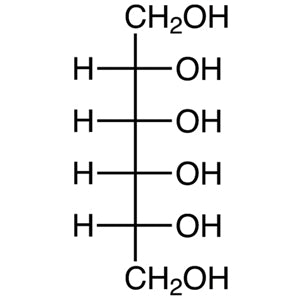
D-(+)-Allose is a naturally occurring sugar belonging to the monosaccharide family, widely used in chemical and biochemical research. It plays a crucial role in laboratory settings, particularly in the study of carbohydrate structure and function. This compound is essential for the development of bioactive compounds and analytical chemistry due to its unique molecular structure. Its presence in various research areas highlights its importance in advancing scientific understanding in both academic and industrial environments.
D-(+)-Allose is favored for its chemical stability and solubility in organic solvents, making it suitable for a wide range of chemical reactions and analytical applications. The specific molecular structure of D-(+)-Allose enables it to be an ideal candidate for studying molecular interactions and enzymatic activities. These properties make it a reliable and versatile material for researchers seeking precision and consistency in their experiments.
In Indonesian laboratories, D-(+)-Allose is commonly used in biochemical, pharmacological, and environmental research. It is frequently found in studies related to carbohydrate metabolism and the development of new pharmaceuticals. Its chemical properties support its application in both fundamental and applied research, contributing to scientific innovation and discovery in the region.
TCI brochures (PDF)
- Biochemical Research: D-(+)-Allose is used to study carbohydrate metabolism and enzyme interactions due to its structural specificity and chemical stability.
- Pharmacological Studies: It supports the development of new drugs by providing a model compound for analyzing bioactive properties and metabolic pathways.
- Environmental Analysis: D-(+)-Allose is utilized in environmental research to assess the presence and behavior of carbohydrates in natural systems.
- Glycoscience Investigations: Its unique molecular structure makes it ideal for studying molecular interactions and enzymatic activities in glycoscience research.
- Synthetic Chemistry Applications: It serves as a building block in the synthesis of complex compounds, offering versatility in chemical reactions and compound development.
| Brand | TCI |
|---|---|
| CAS number | 2595-97-3 |
| Molecular formula | — |
| Purity | — |
| Category | Chemistry > Chemical Biology > Glycoscience |
| Pack sizes | Available in various quantities as per standard laboratory requirements |
| Physical form | Crystalline solid |
| Storage | Store in a cool, dry place away from light and moisture |
D-(+)-Allose should be stored in a cool, dry place, away from light and moisture to maintain its chemical stability. It is recommended to use airtight containers to prevent exposure to air and humidity. Due to its solubility in organic solvents, it should be handled in a well-ventilated area to avoid inhalation of vapors. Standard laboratory safety practices should be followed, including the use of personal protective equipment. Proper labeling of containers is essential to ensure safe handling and prevent cross-contamination. The compound is non-hazardous under normal conditions but should be treated with care during handling and storage to maintain its integrity and effectiveness.
—
Product Categories
Produk Terkait
-
4-Formylphenylbeta-D-Allopyranoside TCI F0542
Regular price Rp 2.982.000,00Regular priceRp 2.045.000,00Sale price Rp 2.982.000,00 -
Allitol TCI A1982
Regular price Rp 2.878.000,00Regular priceRp 1.974.000,00Sale price Rp 2.878.000,00 -
1,2:5,6-Di-O-isopropylidene-alpha-D-allofuranose TCI D2265
Regular price From Rp 1.736.000,00Regular priceRp 1.198.000,00Sale price From Rp 1.736.000,00 -
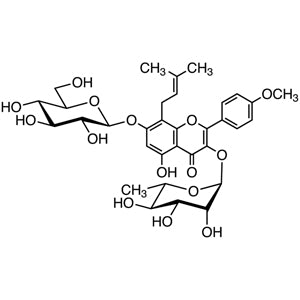
Icariin TCI I0862
Regular price From Rp 1.841.000,00Regular priceRp 1.268.000,00Sale price From Rp 1.841.000,00 -
Arbutin TCI A0522
Regular price From Rp 492.000,00Regular priceRp 351.000,00Sale price From Rp 492.000,00 -
N-Acetyl-D-glucosamine TCI A0092
Regular price From Rp 959.000,00Regular priceRp 668.000,00Sale price From Rp 959.000,00 -
Xylitol TCI X0018
Regular price From Rp 492.000,00Regular priceRp 351.000,00Sale price From Rp 492.000,00 -
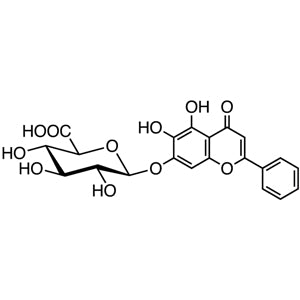
Baicalin TCI B2835
Regular price Rp 2.670.000,00Regular priceRp 1.833.000,00Sale price Rp 2.670.000,00