Baicalin is a flavonoid compound derived from the extract of *Scutellaria baicalensis*, commonly known as *Huang Qin* in traditional Chinese medicine. It plays a crucial role in laboratory research, particularly in the fields of chemical biology and glycoscience. As a key component in biochemical studies, Baicalin is used to investigate molecular interactions and biological processes. Its presence in various experimental setups allows researchers to explore its therapeutic potential and biochemical behavior. This compound is essential for advancing understanding in pharmacology and drug development.
Baicalin is valued for its antioxidant, anti-inflammatory, and antitumor properties, which make it a preferred choice in scientific research. Its high radical scavenging activity ensures stability under certain conditions, making it suitable for long-term studies. The compound is soluble in organic solvents such as ethyl acetate and ethanol, which facilitates its use in synthesis and analytical procedures. These characteristics contribute to its reliability and effectiveness in laboratory applications, enhancing the accuracy and reproducibility of experimental results.
In Indonesian laboratories, Baicalin is widely used in health, pharmaceutical, and biotechnology research. It is often applied in studies aimed at developing new therapeutic agents and understanding the mechanisms of disease. Its versatility and well-documented properties make it a go-to compound for researchers seeking to explore natural products and their biological impacts. Its role in enhancing experimental outcomes is vital for scientific progress in these fields.
TCI brochures (PDF)
- Biofilm Research Reagents 2024-06-21 · p. 1
- Regenerative Medicine Research Reagents 2016-03-18 · p. 1
- Antioxidants for Research and Experimental Use 2026-07-29 · p. 1
- Traditional Medicine/Crude Medicine Research Reagents 2024-09-11 · p. 2
- Polyphenols 2024-12-05 · p. 1
- Immunology Research Reagents 2026-06-03 · p. 10
- Used in pharmacological research for studying its anti-inflammatory and antioxidant effects due to its bioactive properties.
- Applied in biochemical assays to evaluate its interaction with proteins and enzymes, aiding in drug discovery processes.
- Utilized in glycoscience studies to investigate its role in carbohydrate metabolism and molecular interactions.
- Employed in analytical chemistry for its solubility in organic solvents, facilitating chromatographic and spectroscopic analyses.
- Integrated into drug development programs for its potential in creating novel therapeutic agents with natural origins.
| Brand | TCI |
|---|---|
| CAS number | 21967-41-9 |
| Molecular formula | — |
| Purity | — |
| Category | Chemistry > Chemical Biology > Glycoscience |
| Pack sizes | Available in various quantities as per standard laboratory requirements |
| Physical form | Powder |
| Storage | Store in a cool, dry place away from light and moisture |
Data from the TCI brochure
| Purity | >90.0%(T) |
|---|---|
| mp | 196℃ |
Source: TCI brochure reagent_for_glyco_chemistry_&_biology_5th_ed ()
Baicalin should be stored in a cool, dry environment, away from direct sunlight and moisture to maintain its stability and potency. It is recommended to use airtight containers made of glass or high-density polyethylene to prevent contamination and degradation. As a powder, it should be handled with care to avoid inhalation or skin contact, using appropriate personal protective equipment such as gloves and a lab coat. It is important to ensure good ventilation in the workspace to minimize exposure. Proper labeling of storage containers is essential for safe handling and to prevent mix-ups with other compounds. Regular monitoring of storage conditions ensures the compound remains viable for research use.
—
Product Categories
- GlycoscienceApplications Using Glyco-materialsGlyco-functional Analysis [Applications Using Glyco-materials]
- GlycoscienceFunctional OligosaccharidesNatural Glycosides [Functional Oligosaccharides]
- GlycoscienceMonosaccharides [Glycoscience]Glucuronic Acids [Glycoscience]
- Biochemicals and ReagentsCarbohydrates
- Biochemicals and ReagentsCrude Medicine Ingredients for Research and Experimental Use
- Biochemicals and ReagentsPhenylpropanoids, Aromatic PolyketidesAromatic Polyketides
- Cell BiologyCancer ResearchChemopreventive Agents [Cancer Research]
- Cell BiologyImmune System, Inflammation, Allergy ResearchGABA Receptor Inhibitors
- Cell BiologyNutrition ResearchPhytochemicals
- MicrobiologyBiofilm ResearchBiofilm Inhibitors and Suppressors, etc.
- Pharmaceutical Development and Drug Discovery ResearchCrude Medicine Ingredients for Research and Experimental Use
Produk Terkait
-
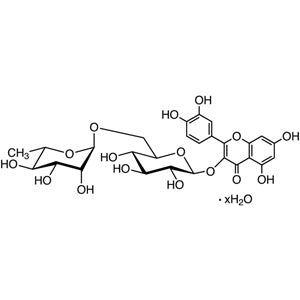
RutinHydrate TCI R0035
Regular price Rp 1.431.150,00Regular priceRp 1.016.400,00Sale price Rp 1.431.150,00 -
Naringin TCI N0073
Regular price Rp 1.670.550,00Regular priceRp 1.183.350,00Sale price Rp 1.670.550,00 -
Hesperidin TCI H0049
Regular price From Rp 1.272.600,00Regular priceRp 905.100,00Sale price From Rp 1.272.600,00 -
Daidzin TCI D3920
Regular price Rp 5.883.150,00Regular priceRp 4.129.650,00Sale price Rp 5.883.150,00 -
PotengriffiosideA TCI T4196
Regular price Rp 7.897.050,00Regular priceRp 5.537.700,00Sale price Rp 7.897.050,00 -
Piceid TCI P1878
Regular price From Rp 2.491.650,00Regular priceRp 1.757.700,00Sale price From Rp 2.491.650,00 -
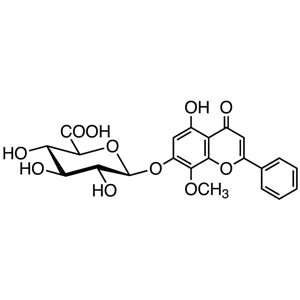
Wogonoside TCI W0012
Regular price From Rp 5.724.600,00Regular priceRp 4.018.350,00Sale price From Rp 5.724.600,00 -
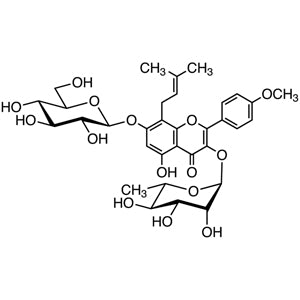
Icariin TCI I0862
Regular price From Rp 1.881.600,00Regular priceRp 1.331.400,00Sale price From Rp 1.881.600,00