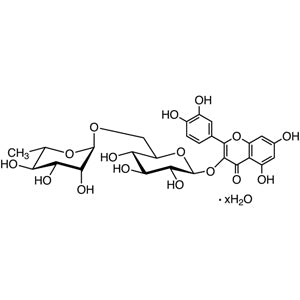
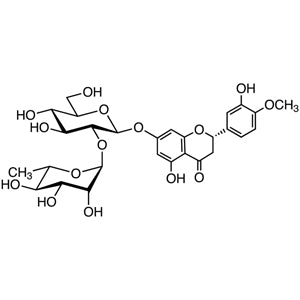
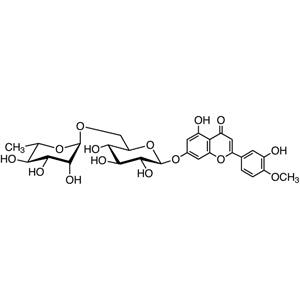
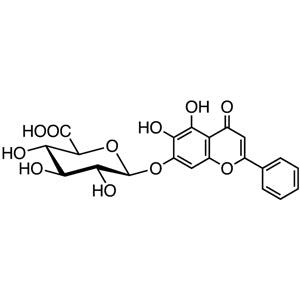
TCI H0049 Hesperidin is a flavanone glycoside that occurs naturally and abundantly in citrus fruits, particularly in the peel and the white spongy tissue beneath it. Structurally, the compound combines the aglycone hesperetin with the sugar rutinose, placing it within the family of natural product glycoscience compounds. In the laboratory, hesperidin serves as a test substance in antioxidant research, as a comparison compound in the analysis of flavonoid content, and as a raw material for research into functional food formulations and pharmaceutical preparations. Its availability in pure form allows researchers to work with a single compound of clearly established identity.
The property that makes this material attractive is the phenolic group on the flavanone skeleton, which confers the ability to quench free radicals, combined with the sugar portion that influences its solubility and absorption behaviour. Hesperidin is known as a solid powder whose solubility is limited in neutral water but increases under alkaline conditions or in solvents such as dimethyl sulfoxide, a characteristic that directly affects the way researchers prepare their stock solutions. The presence of the glycosidic bond also makes this compound an interesting substrate for studies of the enzymes that act upon it.
In Indonesian laboratories, hesperidin of defined identity supports work in university research groups, food technology departments, and pharmaceutical development units where citrus-derived flavonoids are a recurring subject of study. Researchers rely on a pure reference material when they need results that can be compared across experiments and across institutions. Because the compound is supplied as a characterised single substance rather than an extract, it removes the uncertainty that accompanies plant material of variable composition.
TCI brochures (PDF)
- Bone Metabolism Research Reagents 2026-04-21 · p. 2
- Quorum Sensing Research Reagents 2024-10-17 · p. 2
- Biofilm Research Reagents 2024-06-21 · p. 2
- Antioxidants for Research and Experimental Use 2026-07-29 · p. 1
- Vitamins for Research and Experimental Use 2025-06-27 · p. 6
- Polyphenols 2024-12-05 · p. 1
- Antioxidant research: hesperidin serves as a test substance in free radical scavenging assays because its phenolic groups on the flavanone skeleton provide well defined radical quenching behaviour in a single characterised compound.
- Flavonoid content analysis: the material functions as a comparison compound during quantitative determination of flavonoids, giving analysts a reference of clear identity against which sample responses can be measured reliably.
- Functional food formulation research: as a raw material of established identity, hesperidin supports development studies where a citrus derived flavonoid must be incorporated at a known and reproducible composition.
- Pharmaceutical preparation development: researchers use hesperidin as a starting material in formulation studies, where its limited neutral water solubility directly shapes the solvent and vehicle choices under investigation.
- Enzyme studies on glycosidic bonds: the rutinose sugar linked to the hesperetin aglycone makes this compound an attractive substrate for investigating the enzymes that cleave or modify such glycosidic bonds.
| Brand | TCI |
|---|---|
| CAS number | 520-26-3 |
| Molecular formula | — |
| Purity | — |
| Category | Chemistry > Chemical Biology > Glycoscience |
| Pack sizes | available in the pack sizes listed on the product page |
| Physical form | solid powder |
| Storage | store according to the manufacturer's stated conditions on the product label |
Store hesperidin in a tightly closed container, kept dry and protected from direct light, following the storage conditions stated by the manufacturer on the product label. Amber glass bottles or the original supplier container are suitable for keeping the powder, and the container should be resealed promptly after each use to limit moisture uptake. Handle the powder in a well ventilated area or within a fume hood to avoid generating airborne dust, and wear standard laboratory personal protective equipment including gloves, safety glasses, and a laboratory coat. When preparing stock solutions, note that solubility is limited in neutral water and improves under alkaline conditions or in solvents such as dimethyl sulfoxide, so plan the solvent choice before weighing. Consult the manufacturer's safety data sheet before first use and dispose of residues in accordance with the institution's chemical waste procedures.
—
Product Categories
- GlycoscienceDisaccharides [Glycoscience]
- GlycoscienceFunctional OligosaccharidesNatural Glycosides [Functional Oligosaccharides]
- Biochemicals and ReagentsCarbohydrates
- Biochemicals and ReagentsCrude Medicine Ingredients for Research and Experimental Use
- Biochemicals and ReagentsPharmaceutical Research Reagents (for Experimental Use)Anti-osteoporosis Ingredients (for Research and Experimental Use)
- Biochemicals and ReagentsPhenylpropanoids, Aromatic PolyketidesAromatic Polyketides
- Biochemicals and ReagentsVitamins and Related CompoundsVitamin Related Compounds
- Cell BiologyCancer ResearchChemopreventive Agents [Cancer Research]
- Cell BiologyNutrition ResearchPhytochemicals
- Cell BiologyBone Metabolism ResearchFlavonoids [Bone Metabolism Research]
- Cell BiologyParaptosis
- MicrobiologyBiofilm ResearchBiofilm Inhibitors and Suppressors, etc.
- MicrobiologyQuorum Sensing ResearchQuorum Sensing Inhibitors and Antagonists, etc.
- Molecular BiologyAntioxidants [Life Science]
- Pharmaceutical Development and Drug Discovery ResearchPharmaceutical Research Reagents (for Experimental Use)Anti-osteoporosis Ingredients (for Research and Experimental Use)
- Pharmaceutical Development and Drug Discovery ResearchCrude Medicine Ingredients for Research and Experimental Use
Produk Terkait
-
RutinHydrate TCI R0035
Regular price Rp 1.431.150,00Regular priceRp 1.016.400,00Sale price Rp 1.431.150,00 -
Neohesperidin TCI N1121
Regular price Rp 3.710.700,00Regular priceRp 2.610.300,00Sale price Rp 3.710.700,00 -
Naringin TCI N0073
Regular price Rp 1.670.550,00Regular priceRp 1.183.350,00Sale price Rp 1.670.550,00 -
Diosmin TCI D3908
Regular price From Rp 1.378.650,00Regular priceRp 979.650,00Sale price From Rp 1.378.650,00 -
NeohesperidinDihydrochalcone TCI N0675
Regular price From Rp 3.207.750,00Regular priceRp 2.258.550,00Sale price From Rp 3.207.750,00 -
Baicalin TCI B2835
Regular price Rp 2.730.000,00Regular priceRp 1.924.650,00Sale price Rp 2.730.000,00 -
Piceid TCI P1878
Regular price From Rp 2.491.650,00Regular priceRp 1.757.700,00Sale price From Rp 2.491.650,00 -
Narirutin TCI N1125
Regular price Rp 5.352.900,00Regular priceRp 3.759.000,00Sale price Rp 5.352.900,00