Allyl Heptanoate (TCI A2119), with CAS number 142-19-8, is a chemical compound widely used in laboratory settings for its versatility in organic synthesis. As an ester, it serves as a building block in the creation of more complex organic molecules, making it an essential tool for chemists engaged in research and development. Its role in the laboratory extends beyond mere reactivity; it is a key component in the synthesis of various compounds, including fragrances, pharmaceuticals, and industrial chemicals. Due to its structural characteristics, Allyl Heptanoate can participate in esterification and hydrolysis reactions, offering chemists a range of synthetic possibilities.
One of the key attributes that make Allyl Heptanoate a preferred choice is its chemical stability under controlled conditions. However, it is sensitive to high temperatures and UV light, which necessitates careful handling and storage. Its unique molecular structure allows for a variety of chemical transformations, making it adaptable to different synthetic strategies. Additionally, its characteristic aroma makes it valuable in the development of fragrance compounds and other specialty chemicals. These properties contribute to its widespread use in both academic and industrial research environments.
In Indonesian laboratories, Allyl Heptanoate is commonly utilized in organic chemistry research, particularly in the synthesis of new compounds and the development of chemical materials. It is also used in studies focused on the physical and chemical properties of organic substances. Its reactivity and structural versatility make it a valuable resource for educational institutions and research centers dedicated to advancing chemical knowledge and innovation.
- Organic synthesis applications benefit from Allyl Heptanoate due to its reactivity and ability to participate in esterification and hydrolysis reactions, enabling the creation of complex organic molecules.
- Fragrance development projects utilize Allyl Heptanoate for its characteristic aroma, making it a key ingredient in the formulation of perfumes and flavor compounds.
- Industrial chemical research relies on Allyl Heptanoate as a building block for the synthesis of various chemical intermediates and specialty products.
- Educational institutions use Allyl Heptanoate in teaching and research to demonstrate ester chemistry and its role in organic synthesis.
- Physical and chemical property studies incorporate Allyl Heptanoate to analyze its behavior under different conditions and its reactivity in various chemical environments.
| Brand | TCI |
|---|---|
| CAS number | 142-19-8 |
| Molecular formula | — |
| Purity | — |
| Category | Chemistry > Building Blocks > Non-Heterocyclic Building Blocks |
| Pack sizes | — |
| Physical form | Liquid |
| Storage | Store in a cool, dark place away from heat and UV light |
Allyl Heptanoate should be stored in a cool, dark environment to prevent degradation due to heat and UV exposure. It is recommended to use airtight containers made of glass or inert materials to maintain its chemical integrity. Due to its reactivity, it should be handled in a well-ventilated area, and appropriate personal protective equipment should be worn. Avoid direct contact with skin and eyes, and ensure that it is kept away from incompatible substances such as strong acids or bases. Proper labeling and storage conditions are essential to ensure safety and maintain the compound's effectiveness in laboratory applications.
—
Produk Terkait
-
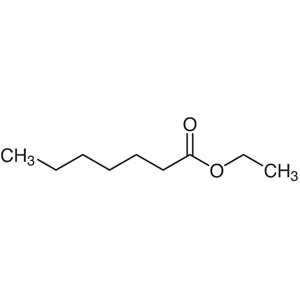
EthylHeptanoate TCI H0031
Regular price From Rp 582.750,00Regular priceRp 423.150,00Sale price From Rp 582.750,00 -
AllylBenzoate TCI B2041
Regular price Rp 2.702.700,00Regular priceRp 1.905.750,00Sale price Rp 2.702.700,00 -
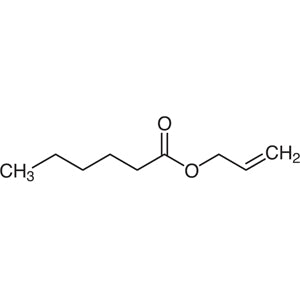
AllylHexanoate TCI A2179
Regular price Rp 689.850,00Regular priceRp 497.700,00Sale price Rp 689.850,00 -
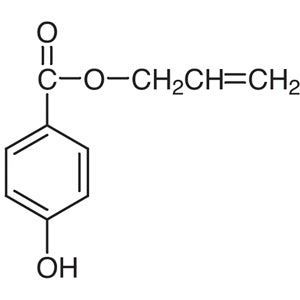
Allyl4-Hydroxybenzoate TCI A1846
Regular price Rp 3.895.500,00Regular priceRp 2.739.450,00Sale price Rp 3.895.500,00 -
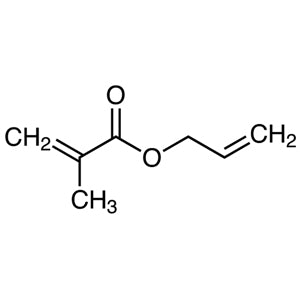
AllylMethacrylate(stabilizedwithMEHQ) TCI M0075
Regular price From Rp 477.750,00Regular priceRp 333.900,00Sale price From Rp 477.750,00 -
AllylCyanoacetate TCI C1039
Regular price From Rp 1.378.650,00Regular priceRp 979.650,00Sale price From Rp 1.378.650,00 -
MethylHeptanoate TCI H0032
Regular price Rp 795.900,00Regular priceRp 572.250,00Sale price Rp 795.900,00 -
SodiumHeptanoate TCI E0009
Regular price Rp 5.485.200,00Regular priceRp 3.851.400,00Sale price Rp 5.485.200,00