2-Amino-6-(trifluoromethyl)benzothiazole is a chemical compound widely used in organic synthesis reactions, particularly in the development of heterocyclic compounds and pharmacologically active substances. This versatile building block plays a crucial role in laboratories where researchers aim to create complex molecular structures with specific biological activities. Its ability to participate in various reaction types, such as substitution, condensation, and catalytic processes, makes it an essential tool for synthetic chemists. Due to its structural complexity and functional groups, it is frequently employed in the design of new compounds with tailored properties for pharmaceutical and material science applications.
The compound’s unique chemical properties stem from the presence of fluorine atoms and a heterocyclic ring system. The trifluoromethyl group imparts distinct electronic characteristics, enhancing its reactivity and compatibility with a range of synthetic methodologies. Additionally, the amino group contributes to its ability to form stable intermediates and participate in diverse reaction mechanisms. These features make it a preferred choice for researchers seeking to modify molecular structures with precision and control. Its stability under certain conditions further ensures reliable performance in laboratory settings.
In Indonesian laboratories, 2-Amino-6-(trifluoromethyl)benzothiazole is commonly used in organic chemistry, pharmaceutical research, and material development. It supports a wide range of experimental applications, from drug discovery to the synthesis of advanced materials. Its availability through reliable suppliers ensures that researchers can access this essential compound for their ongoing studies and innovation efforts.
TCI brochures (PDF)
- Fluorination Reagents, Fluorinated Building Blocks 2026-03-18 · p. 50
Related TCI products
- TCI A3230 120068-79-3 5-Amino-1-[2,6-dichloro-4-(trifluoromethyl)phenyl]-1H-pyrazole-3-carbonitrile
- TCI A2522 16075-42-6 2-Amino-4-(trifluoromethyl)pyrimidine
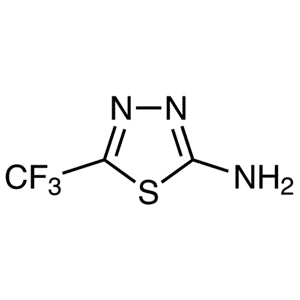
- TCI A2462 10444-89-0 2-Amino-5-trifluoromethyl-1,3,4-thiadiazole
- TCI T3076 52222-73-8 4-(Trifluoromethyl)pyrazole
- TCI T2998 762240-92-6 3-(Trifluoromethyl)-5,6,7,8-tetrahydro-[1,2,4]triazolo[4,3-a]pyrazine Hydrochloride
- TCI T2982 25371-96-4 1-[2-(Trifluoromethyl)phenyl]imidazole
- Organic synthesis is a primary application where this compound serves as a key intermediate in the creation of complex molecules with specific biological activities.
- Pharmaceutical research utilizes this compound to develop new drugs by modifying molecular structures for enhanced therapeutic effects.
- Material science applications benefit from its unique chemical properties, enabling the synthesis of advanced polymers and functional materials.
- Heterocyclic compound synthesis relies on this building block to create a variety of ring-based structures with diverse chemical functionalities.
- Catalytic reactions often incorporate this compound due to its ability to participate in and influence reaction pathways with high efficiency.
| Brand | TCI |
|---|---|
| CAS number | 777-12-8 |
| Molecular formula | — |
| Purity | — |
| Category | Chemistry > Building Blocks > Fluorinated Building Blocks |
| Pack sizes | Available in various quantities as per supplier specifications |
| Physical form | Solid, crystalline appearance |
| Storage | Store in a cool, dry place away from light and moisture |
This compound should be stored in a cool, dry environment, away from direct sunlight and moisture. It is recommended to use airtight containers made of glass or high-density polyethylene to prevent contamination and degradation. Due to its chemical nature, it should be handled with appropriate personal protective equipment, including gloves and safety goggles, to ensure laboratory safety. It is important to avoid exposure to incompatible substances and to maintain proper ventilation in the workspace. Regular inspection of storage conditions ensures the compound remains stable and suitable for use in research applications.
—
Produk Terkait
-
5-Amino-1-[2,6-dichloro-4-(trifluoromethyl)phenyl]-1H-pyrazole-3-carbonitrile TCI A3230
Regular price From Rp 848.400,00Regular priceRp 609.000,00Sale price From Rp 848.400,00 -
2-Amino-4-(trifluoromethyl)pyrimidine TCI A2522
Regular price From Rp 1.113.000,00Regular priceRp 793.800,00Sale price From Rp 1.113.000,00 -
2-Amino-5-trifluoromethyl-1,3,4-thiadiazole TCI A2462
Regular price From Rp 1.643.250,00Regular priceRp 1.164.450,00Sale price From Rp 1.643.250,00 -
4-(Trifluoromethyl)pyrazole TCI T3076
Regular price From Rp 2.013.900,00Regular priceRp 1.423.800,00Sale price From Rp 2.013.900,00 -
3-(Trifluoromethyl)-5,6,7,8-tetrahydro-[1,2,4]triazolo[4,3-a]pyrazineHydrochloride TCI T2998
Regular price From Rp 955.500,00Regular priceRp 683.550,00Sale price From Rp 955.500,00 -
1-[2-(Trifluoromethyl)phenyl]imidazole TCI T2982
Regular price From Rp 1.140.300,00Regular priceRp 812.700,00Sale price From Rp 1.140.300,00 -
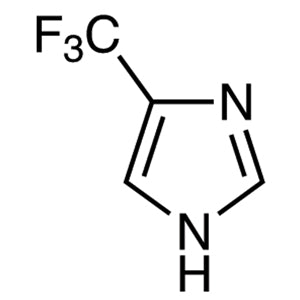
4(5)-(Trifluoromethyl)imidazole TCI T2928
Regular price Rp 3.843.000,00Regular priceRp 2.702.700,00Sale price Rp 3.843.000,00 -
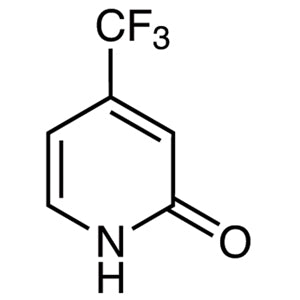
4-(Trifluoromethyl)-2-pyridone TCI T2790
Regular price From Rp 1.696.800,00Regular priceRp 1.202.250,00Sale price From Rp 1.696.800,00