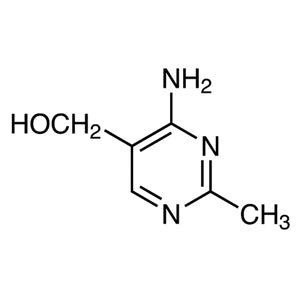
4-Amino-2-methyl-5-pyrimidinemethanol is a chemical compound classified under the heterocyclic building blocks category. It plays a crucial role in laboratory settings as a foundational molecule for the synthesis of more complex compounds. This compound is widely used in organic chemistry and pharmacology research due to its structural versatility and reactivity. Its presence in various chemical reactions allows scientists to explore new molecular structures and functional groups, making it an essential tool in modern chemical research.
The compound's unique properties, including the presence of both amino and hydroxyl functional groups, contribute to its high reactivity. These groups enable it to participate in a wide range of chemical transformations, such as substitution, reduction, and bond formation. The reactivity of 4-Amino-2-methyl-5-pyrimidinemethanol makes it a preferred choice for researchers aiming to modify molecular structures or develop new compounds with specific biological activities. Its adaptability across different synthetic pathways enhances its utility in diverse chemical applications.
In Indonesian laboratories, 4-Amino-2-methyl-5-pyrimidinemethanol is commonly used in organic chemistry research, pharmaceutical synthesis, and the development of new chemical materials. It is a key component in experiments aimed at creating bioactive compounds and exploring molecular interactions. Its widespread use in academic and industrial research settings highlights its importance in advancing chemical innovation and scientific discovery.
Related TCI products
- TCI B4249 114214-69-6 1-(tert-Butoxycarbonyl)-3-pyrrolidinemethanol
- TCI B3992 142253-56-3 1-(tert-Butoxycarbonyl)-3-azetidinemethanol
- TCI P2129 6705-33-5 2-Pyrazinemethanol
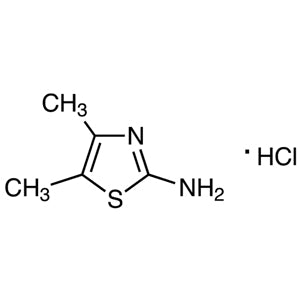
- TCI A0292 71574-33-9 2-Amino-4,5-dimethylthiazole Hydrochloride
- TCI A0336 6142-15-0 2-Amino-4-methylthiazole Hydrochloride
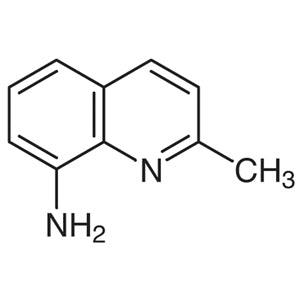
- TCI A0416 18978-78-4 8-Amino-2-methylquinoline
- Organic synthesis research utilizes this compound due to its reactivity and structural versatility, enabling the creation of complex molecules.
- Pharmaceutical development benefits from its ability to form bioactive compounds, supporting drug discovery and formulation.
- Chemical material innovation relies on its functional groups, allowing for the modification of molecular structures in new material design.
- Academic research in Indonesian universities employs it as a building block for teaching and experimental studies in synthetic chemistry.
- Industrial chemical processes use it as a precursor in the production of specialized compounds requiring heterocyclic frameworks.
| Brand | TCI |
|---|---|
| CAS number | 73-67-6 |
| Molecular formula | — |
| Purity | — |
| Category | Chemistry > Building Blocks > Heterocyclic Building Blocks |
| Pack sizes | Available in various quantities as per supplier specifications |
| Physical form | Liquid or crystalline, depending on purity and storage conditions |
| Storage | Store in a cool, dry place away from light and incompatible substances |
This compound should be stored in a cool, dry environment, away from direct sunlight and sources of heat. It is recommended to use airtight, sealed containers to prevent moisture absorption and contamination. Due to its reactivity, it should be kept away from incompatible substances such as strong oxidizers or acids. Proper ventilation is essential when handling this material to minimize exposure. Laboratory personnel should wear appropriate personal protective equipment, including gloves and safety goggles, to ensure safe handling. Regular monitoring of storage conditions is advised to maintain the compound’s integrity and ensure its suitability for use in research applications.
—
Produk Terkait
-
1-(tert-Butoxycarbonyl)-3-pyrrolidinemethanol TCI B4249
Regular price From Rp 2.121.000,00Regular price -
1-(tert-Butoxycarbonyl)-3-azetidinemethanol TCI B3992
Regular price Rp 2.227.050,00Regular price -
2-Pyrazinemethanol TCI P2129
Regular price Rp 2.571.450,00Regular price -
2-Amino-4,5-dimethylthiazoleHydrochloride TCI A0292
Regular price From Rp 505.050,00Regular price -
2-Amino-4-methylthiazoleHydrochloride TCI A0336
Regular price From Rp 1.326.150,00Regular price -
8-Amino-2-methylquinoline TCI A0416
Regular price From Rp 1.273.650,00Regular price -
2-Amino-5-mercapto-1,3,4-thiadiazole TCI A0425
Regular price From Rp 769.650,00Regular price -
5-Amino-1H-tetrazole TCI A0427
Regular price From Rp 1.776.600,00Regular price