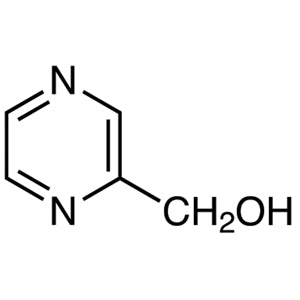
2-Pyrazinemethanol is a chemical compound widely used as a building block in the synthesis of heterocyclic compounds. It plays a crucial role in organic chemistry laboratories, where it serves as a versatile intermediate for creating complex molecular structures. This compound is particularly valuable for its ability to participate in various chemical reactions, making it an essential tool for researchers working on drug development, pesticide formulation, and industrial chemical synthesis. Its unique chemical structure allows it to interact with multiple functional groups, enabling the formation of a wide range of compounds with diverse applications.
The reactivity and stability of 2-Pyrazinemethanol make it a preferred choice for laboratory use. Its ability to undergo substitution and condensation reactions ensures its utility in a variety of synthetic pathways. The compound’s heterocyclic nature enhances its compatibility with other functional groups, allowing for the construction of more complex molecules. Additionally, its availability in pure form and small packaging sizes makes it practical for use in both research and educational settings. These properties contribute to its widespread adoption in chemical laboratories worldwide.
In Indonesian laboratories, 2-Pyrazinemethanol is commonly used in organic chemistry research, particularly in the study of bioactive compounds and the synthesis of heterocyclic structures. It is also utilized in educational institutions to introduce students to the principles of chemical synthesis and functional group reactivity. Its role in both academic and industrial research underscores its importance in the chemical sciences within the region.
Related TCI products
- TCI B4249 114214-69-6 1-(tert-Butoxycarbonyl)-3-pyrrolidinemethanol
- TCI B3992 142253-56-3 1-(tert-Butoxycarbonyl)-3-azetidinemethanol
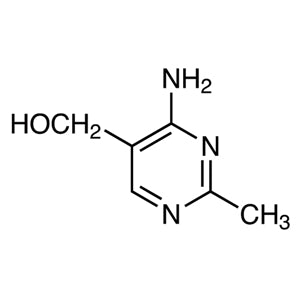
- TCI A2730 73-67-6 4-Amino-2-methyl-5-pyrimidinemethanol
- TCI T1660 71637-34-8 3-Thiophenemethanol
- TCI T1112 636-72-6 2-Thiophenemethanol
- TCI O0558 6246-06-6 3-Oxetanemethanol
- Organic synthesis of bioactive compounds due to its reactivity and ability to form complex heterocyclic structures.
- Pesticide development as a building block for creating compounds with specific biological activity.
- Industrial chemical production for the synthesis of various functional materials and intermediates.
- Educational use in teaching chemical synthesis techniques and functional group reactivity.
- Drug discovery research for the development of pharmaceutical compounds with therapeutic potential.
| Brand | TCI |
|---|---|
| CAS number | 6705-33-5 |
| Molecular formula | — |
| Purity | — |
| Category | Chemistry > Building Blocks > Heterocyclic Building Blocks |
| Pack sizes | Available in small packaging suitable for laboratory use |
| Physical form | — |
| Storage | Store in a cool, dry place away from direct sunlight |
2-Pyrazinemethanol should be stored in a cool, dry environment to maintain its chemical integrity. It is recommended to keep it in a sealed container to prevent exposure to moisture and air. Due to its reactivity, it should be handled with care, using appropriate personal protective equipment. Storage should be away from incompatible substances to avoid any potential chemical interactions. Proper ventilation is essential when working with this compound to ensure a safe laboratory environment. Regular monitoring of storage conditions helps maintain the compound’s stability and effectiveness for research purposes.
—
Produk Terkait
-
1-(tert-Butoxycarbonyl)-3-pyrrolidinemethanol TCI B4249
Regular price From Rp 2.121.000,00Regular price -
1-(tert-Butoxycarbonyl)-3-azetidinemethanol TCI B3992
Regular price Rp 2.227.050,00Regular price -
4-Amino-2-methyl-5-pyrimidinemethanol TCI A2730
Regular price From Rp 2.359.350,00Regular price -
3-Thiophenemethanol TCI T1660
Regular price From Rp 1.936.200,00Regular price -
2-Thiophenemethanol TCI T1112
Regular price From Rp 3.207.750,00Regular price -
3-Oxetanemethanol TCI O0558
Regular price From Rp 1.326.150,00Regular price -
3-Methyl-3-oxetanemethanol TCI M1136
Regular price From Rp 875.700,00Regular price -
3-Ethyl-3-oxetanemethanol TCI E0546
Regular price From Rp 1.670.550,00Regular price