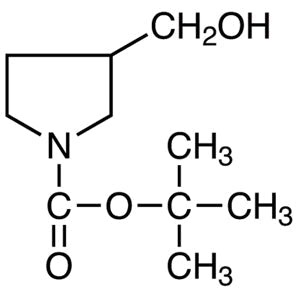
1-(tert-Butoxycarbonyl)-3-pyrrolidinemethanol is a chemical compound widely used in synthetic laboratory applications. It belongs to the category of heterocyclic building blocks, which are essential in the synthesis of complex molecules such as pharmaceuticals, industrial chemicals, and organic compounds. This compound serves as a versatile intermediate in various chemical reactions, enabling the modification and construction of molecular structures. Its presence in laboratory workflows supports the development of new chemical entities and the exploration of molecular reactivity.
The compound's reactivity and stability make it a preferred choice for synthetic chemists. It can participate in a range of reactions, including coupling, functional group transformations, and structural modifications. Its ability to interact with various reagents such as acids, bases, and organic solvents enhances its utility in diverse synthetic strategies. The tert-butoxycarbonyl group provides additional stability, making it suitable for controlled reaction conditions. These properties make it a reliable component in both academic and industrial research settings.
In Indonesian laboratories, this compound is commonly used in organic chemistry research, particularly in pharmaceutical and chemical development projects. It is a key reagent in the synthesis of heterocyclic compounds, which are fundamental to drug discovery and chemical innovation. Many research institutions and universities in Indonesia incorporate this material into their experimental protocols to advance molecular design and functional group manipulation. Its relevance in laboratory applications underscores its importance in the chemical sciences.
Related TCI products
- TCI B3992 142253-56-3 1-(tert-Butoxycarbonyl)-3-azetidinemethanol
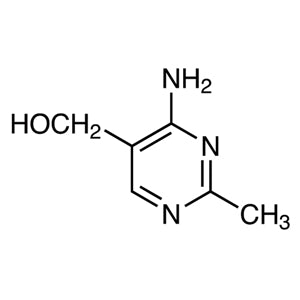
- TCI A2730 73-67-6 4-Amino-2-methyl-5-pyrimidinemethanol
- TCI B5217 1153949-11-1 1-(tert-Butoxycarbonyl)-3-(cyanomethylene)azetidine
- TCI B5160 177947-96-5 1-(tert-Butoxycarbonyl)azetidine-3-carboxaldehyde
- TCI B4806 188345-71-3 2-(tert-Butoxycarbonyl)-2-azabicyclo[2.2.1]hept-5-ene
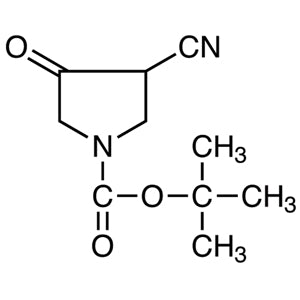
- TCI B4761 175463-32-8 1-tert-Butoxycarbonyl-3-cyano-4-pyrrolidone
- Drug discovery and development through the synthesis of heterocyclic compounds, as it enables the construction of complex molecular frameworks essential for pharmaceutical research.
- Organic chemistry research focused on molecular structure modification, where its reactivity allows for the creation of diverse chemical intermediates.
- Industrial chemical synthesis applications, where its stability and functional group versatility support the production of specialized chemical products.
- Academic teaching and experimental training in synthetic chemistry, providing students with hands-on experience in advanced molecular manipulation techniques.
- Molecular reactivity studies that explore the behavior of functional groups under various reaction conditions, aiding in the understanding of chemical mechanisms.
| Brand | TCI |
|---|---|
| CAS number | 114214-69-6 |
| Molecular formula | — |
| Purity | — |
| Category | Chemistry > Building Blocks > Heterocyclic Building Blocks |
| Pack sizes | Available in various quantities as per supplier specifications |
| Physical form | Solid or liquid, depending on the specific product variant |
| Storage | Store in a cool, dry place away from direct sunlight and incompatible materials |
This compound should be stored in a cool, dry environment, away from direct sunlight and sources of heat. It is recommended to use airtight containers made of materials that are chemically inert, such as glass or high-density polyethylene, to prevent contamination and degradation. Due to its reactivity, it should be handled with appropriate personal protective equipment, including gloves and safety goggles. Avoid exposure to strong acids or bases, as these can cause unwanted side reactions. In laboratory settings, ensure proper ventilation and follow standard safety protocols to minimize risks associated with chemical handling. Always store the compound in a designated chemical storage area to maintain a safe and organized workspace.
—
Produk Terkait
-
1-(tert-Butoxycarbonyl)-3-azetidinemethanol TCI B3992
Regular price Rp 2.279.550,00Regular priceRp 1.609.650,00Sale price Rp 2.279.550,00 -
4-Amino-2-methyl-5-pyrimidinemethanol TCI A2730
Regular price From Rp 2.411.850,00Regular priceRp 1.702.050,00Sale price From Rp 2.411.850,00 -
1-(tert-Butoxycarbonyl)-3-(cyanomethylene)azetidine TCI B5217
Regular price From Rp 875.700,00Regular priceRp 627.900,00Sale price From Rp 875.700,00 -
1-(tert-Butoxycarbonyl)azetidine-3-carboxaldehyde TCI B5160
Regular price From Rp 1.881.600,00Regular priceRp 1.331.400,00Sale price From Rp 1.881.600,00 -
2-(tert-Butoxycarbonyl)-2-azabicyclo[2.2.1]hept-5-ene TCI B4806
Regular price Rp 2.464.350,00Regular priceRp 1.738.800,00Sale price Rp 2.464.350,00 -
1-tert-Butoxycarbonyl-3-cyano-4-pyrrolidone TCI B4761
Regular price From Rp 742.350,00Regular priceRp 534.450,00Sale price From Rp 742.350,00 -
1-(tert-Butoxycarbonyl)-3-azetidinone TCI B3988
Regular price From Rp 1.326.150,00Regular priceRp 942.900,00Sale price From Rp 1.326.150,00 -
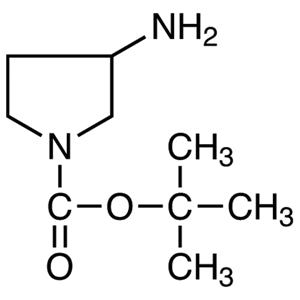
3-Amino-1-(tert-butoxycarbonyl)pyrrolidine TCI B3890
Regular price From Rp 2.147.250,00Regular priceRp 1.517.250,00Sale price From Rp 2.147.250,00