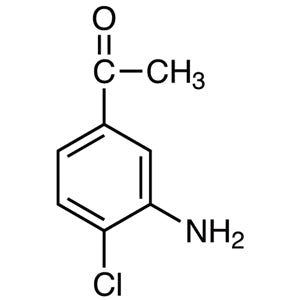
3'-Amino-4'-chloroacetophenone is a chemical compound widely used as a building block in the synthesis of complex organic molecules. It plays a crucial role in laboratory settings, particularly in the development of new compounds and the study of chemical reactions. This compound is commonly utilized in various synthetic pathways, especially in the formation of heterocyclic structures and aromatic compounds with intricate molecular frameworks. Its versatility makes it an essential tool for researchers and scientists working in chemical and pharmaceutical laboratories.
The compound’s molecular structure is stable, and it exhibits moderate reactivity, making it suitable for substitution reactions and other chemical transformations. The presence of both an amino group and a chloro group at specific positions enhances its functionality as a donor of electrons or a reactive intermediate under different reaction conditions. These chemical properties make it a preferred choice for a wide range of experimental applications. Its ability to participate in diverse reactions and its predictable behavior in synthetic processes contribute to its popularity among chemists.
In Indonesian laboratories, 3'-Amino-4'-chloroacetophenone is commonly used by chemists, pharmacists, and advanced students for experimental research and educational purposes. It is an important component in both academic and industrial research, supporting the development of new chemical technologies and pharmaceutical compounds. Its relevance in chemical education and innovation makes it a valuable resource for scientific advancement in Indonesia.
- Organic synthesis: This compound is ideal for creating complex organic molecules due to its reactive functional groups and structural versatility.
- Heterocyclic compound development: Its ability to participate in ring-forming reactions makes it useful in the synthesis of heterocyclic structures.
- Pharmaceutical research: It serves as a key intermediate in the development of new drug compounds due to its chemical reactivity and functional groups.
- Educational experiments: It is commonly used in academic settings to teach students about chemical reactivity and synthetic pathways.
- Analytical chemistry applications: Its stable molecular structure allows it to be used in various analytical procedures for compound identification and characterization.
| Brand | TCI |
|---|---|
| CAS number | 79406-57-8 |
| Molecular formula | — |
| Purity | — |
| Category | Chemistry > Building Blocks > Non-Heterocyclic Building Blocks |
| Pack sizes | Available in standard laboratory quantities as per supplier specifications |
| Physical form | Solid, crystalline appearance |
| Storage | Store in a cool, dry place away from direct sunlight and moisture |
This compound should be stored in a cool, dry environment to maintain its chemical stability and prevent degradation. It is recommended to keep it in airtight containers to avoid exposure to moisture and air, which could affect its reactivity. Due to its chemical nature, it should be handled with appropriate personal protective equipment, such as gloves and safety goggles, to ensure laboratory safety. It is important to store it away from incompatible substances to prevent any potential chemical reactions. Proper labeling of containers is essential for safe handling and to prevent accidental use. Regular inspection of storage conditions ensures the compound remains suitable for use in laboratory applications.
—
Produk Terkait
-
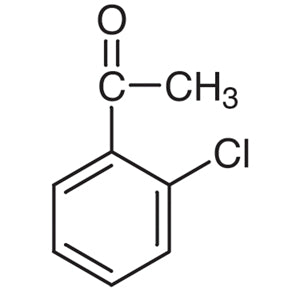
2'-Chloroacetophenone TCI C1084
Regular price From Rp 795.900,00Regular price -
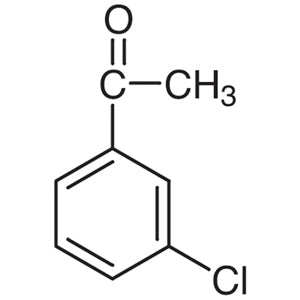
3'-Chloroacetophenone TCI C0096
Regular price From Rp 1.961.400,00Regular price -
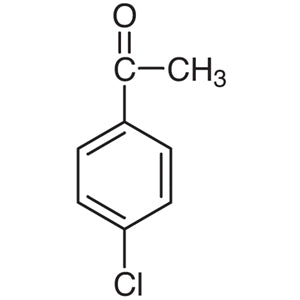
4'-Chloroacetophenone TCI C0033
Regular price From Rp 477.750,00Regular price -
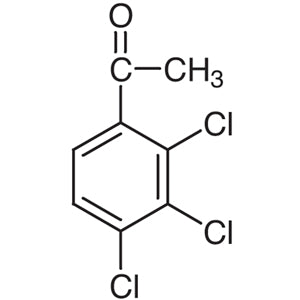
2',3',4'-Trichloroacetophenone TCI T2306
Regular price Rp 848.400,00Regular price -
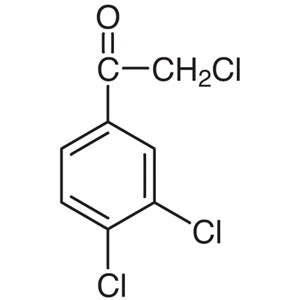
2,3',4'-Trichloroacetophenone TCI T1965
Regular price Rp 2.068.500,00Regular price -
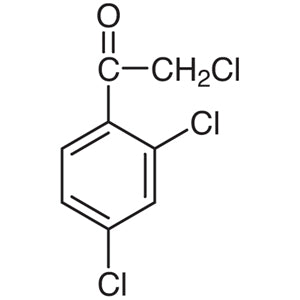
2,2',4'-Trichloroacetophenone TCI T1405
Regular price Rp 610.050,00Regular price -
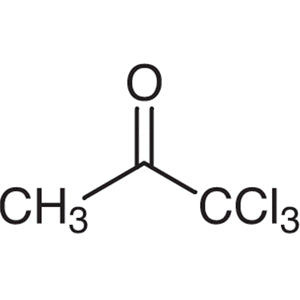
1,1,1-Trichloroacetone TCI T1376
Regular price Rp 5.194.350,00Regular price -
Ethyl4,4,4-Trichloroacetoacetate TCI T1285
Regular price From Rp 4.028.850,00Regular price