Ammonium Thiocyanate (ATC), with the chemical formula NH₄SCN, is a versatile chemical compound widely used in laboratory settings for various synthetic and analytical applications. It serves as a key building block in the synthesis of both organic and inorganic compounds, playing a crucial role in chemical reactions that require thiocyanate ions (SCN⁻). Its reactivity and ability to form complexes with metal ions make it an essential reagent in chemical research and development. ATC is commonly used in qualitative analysis, redox reactions, and complexation processes, making it a fundamental component in many laboratory protocols.
The chemical properties of Ammonium Thiocyanate make it a preferred choice for laboratory use. It is a crystalline solid that dissolves easily in water, facilitating its use in aqueous reactions. Its stability under controlled conditions ensures consistent performance in experiments, while its sensitivity to moisture and high temperatures necessitates careful handling. The compound’s ability to interact with a wide range of metal ions enhances its utility in analytical and synthetic chemistry. These characteristics contribute to its reliability and effectiveness in laboratory applications.
In Indonesian laboratories, Ammonium Thiocyanate is commonly used in analytical chemistry for qualitative analysis and in the synthesis of various compounds. Its role in complexation reactions and redox processes makes it a valuable reagent for researchers and students alike. The compound is also used in the preparation of other thiocyanate-based compounds, supporting a wide range of chemical investigations. Its availability and reliability make it a standard item in many laboratory setups across Indonesia.
Related TCI products
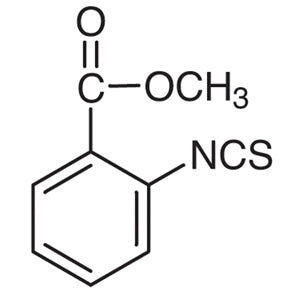
- TCI I0574 16024-82-1 Methyl 2-Isothiocyanatobenzoate
- TCI G0230 593-84-0 Guanidine Thiocyanate
- TCI T2461 1645-65-4 4-(Trifluoromethyl)phenyl Isothiocyanate
- TCI T2460 1840-19-3 3-(Trifluoromethyl)phenyl Isothiocyanate
- TCI T2459 1743-86-8 2-(Trifluoromethyl)phenyl Isothiocyanate
- TCI B4373 502693-09-6 Bis(isothiocyanato)(2,2'-bipyridyl-4,4'-dicarboxylato)(4,4'-dinonyl-2,2'-bipyridyl)ruthenium(II)
- Ammonium Thiocyanate is widely used in qualitative analysis for detecting metal ions due to its ability to form characteristic precipitates.
- It plays a key role in redox reactions, where it acts as a reducing agent or oxidizing agent depending on the reaction conditions.
- The compound is essential in complexation reactions, where it forms stable complexes with various metal ions, aiding in analytical procedures.
- Ammonium Thiocyanate is commonly used in the synthesis of organic and inorganic compounds, serving as a source of thiocyanate ions.
- It is utilized in the preparation of other thiocyanate derivatives, supporting further chemical transformations and research applications.
| Brand | TCI |
|---|---|
| CAS number | 1762-95-4 |
| Molecular formula | — |
| Purity | — |
| Category | Chemistry > Building Blocks > Non-Heterocyclic Building Blocks |
| Pack sizes | Available in standard laboratory quantities |
| Physical form | Crystalline solid |
| Storage | Store in a cool, dry place away from moisture and heat |
Ammonium Thiocyanate should be stored in a cool, dry environment to prevent degradation due to moisture and high temperatures. It is recommended to use airtight containers to minimize exposure to humidity. The compound is sensitive to moisture, so it should be handled with care to avoid contamination. In laboratory settings, it is important to ensure proper ventilation when working with this material. Storage away from incompatible substances is also advised to maintain its chemical integrity. Regular inspection of storage conditions ensures the compound remains suitable for use in analytical and synthetic applications.
—
Produk Terkait
-
Methyl2-Isothiocyanatobenzoate TCI I0574
Regular price Rp 3.976.350,00Regular priceRp 2.780.400,00Sale price Rp 3.976.350,00 -
GuanidineThiocyanate TCI G0230
Regular price From Rp 557.550,00Regular priceRp 405.300,00Sale price From Rp 557.550,00 -
4-(Trifluoromethyl)phenylIsothiocyanate TCI T2461
Regular price From Rp 689.850,00Regular priceRp 481.950,00Sale price From Rp 689.850,00 -
3-(Trifluoromethyl)phenylIsothiocyanate TCI T2460
Regular price Rp 1.246.350,00Regular priceRp 871.500,00Sale price Rp 1.246.350,00 -
2-(Trifluoromethyl)phenylIsothiocyanate TCI T2459
Regular price From Rp 823.200,00Regular priceRp 575.400,00Sale price From Rp 823.200,00 -
Bis(isothiocyanato)(2,2'-bipyridyl-4,4'-dicarboxylato)(4,4'-dinonyl-2,2'-bipyridyl)ruthenium(II) TCI B4373
Regular price Rp 3.524.850,00Regular priceRp 2.480.100,00Sale price Rp 3.524.850,00 -
Bis(isothiocyanato)bis(2,2'-bipyridyl-4,4'-dicarboxylato)ruthenium(II) TCI B4372
Regular price Rp 3.949.050,00Regular priceRp 2.777.250,00Sale price Rp 3.949.050,00 -
1-Butyl-3-methylimidazoliumThiocyanate TCI B4091
Regular price From Rp 1.167.600,00Regular priceRp 831.600,00Sale price From Rp 1.167.600,00