![45650-35-9 5-Azoniaspiro[4.4]nonane Iodide - AMI Scientific](http://amiscientific.com/cdn/shop/files/TCI2510A3093.jpg?v=1768358839&width=1946)
![45650-35-9 5-Azoniaspiro[4.4]nonane Iodide - AMI Scientific](http://amiscientific.com/cdn/shop/files/TCI2510A3093.jpg?v=1768358839&width=1445)
5-Azoniaspiro[4.4]nonane Iodide is a chemical compound widely used in laboratory research for perovskite solar cell (PSC) materials. This compound plays a crucial role in the synthesis of active layers in PSCs, which are among the most promising technologies in renewable energy development. Its application is essential for achieving high-performance solar cells with improved efficiency and stability. In the context of materials science, it serves as a key component in the fabrication of light-absorbing layers that convert sunlight into electrical energy.
The compound is valued for its chemical stability and reactivity, making it a preferred choice for researchers working on complex chemical reactions. Its unique molecular structure allows it to act as a precursor in the synthesis of perovskite materials, offering controlled reactivity and consistent experimental results. These properties make it an ideal material for laboratories aiming to develop reliable and reproducible solar cell technologies. Additionally, its chemical inertness under specific conditions ensures that it remains stable during various stages of synthesis and processing.
In Indonesian laboratories, 5-Azoniaspiro[4.4]nonane Iodide is commonly used in research initiatives focused on clean energy technologies. It is integral to studies aimed at enhancing the efficiency and durability of perovskite solar cells. Researchers in academic and industrial settings rely on this compound to advance their work in sustainable energy solutions. Its availability through AMI Scientific supports local scientific innovation and technological development in the field of renewable energy.
TCI brochures (PDF)
- Organic-Inorganic Perovskite Precursors 2026-09-01 · p. 6
- Solar Cell Materials 2026-04-21 · p. 5
- Quaternary Ammonium Salts 2025-11-10 · p. 7
Related TCI products
- TCI A3092 98997-63-8 5-Azoniaspiro[4.4]nonane Chloride
- TCI A3091 16450-38-7 5-Azoniaspiro[4.4]nonane Bromide
- TCI H1759 1009321-13-4 1-Hexyl-1,4-diazabicyclo[2.2.2]octan-1-ium Iodide
- TCI A0008 124-42-5 Acetamidine Hydrochloride
- TCI T4375 118725-79-4 Thiomorpholine Hydroiodide
- TCI T2648 429-42-5 Tetrabutylammonium Tetrafluoroborate
- Perovskite Solar Cell Fabrication: This compound is essential for creating the active layers in PSCs, which are critical for efficient light absorption and charge transport.
- Material Synthesis Research: It is widely used in the synthesis of perovskite materials, where its chemical properties enable controlled and reproducible reactions.
- Energy Conversion Studies: Researchers use it to investigate the performance and stability of solar cells under various environmental conditions.
- Photovoltaic Device Development: It supports the development of next-generation photovoltaic devices by providing a stable and reactive precursor for material synthesis.
- Renewable Energy Innovation: It is a key component in experiments aimed at improving the efficiency and longevity of solar energy technologies.
| Brand | TCI |
|---|---|
| CAS number | 45650-35-9 |
| Molecular formula | — |
| Purity | — |
| Category | Materials Science > Electronic Materials > Perovskite Solar Cell (PSC) Materials |
| Pack sizes | Available in various quantities as per standard laboratory supply |
| Physical form | Solid (precise form may vary depending on supplier) |
| Storage | Store in a cool, dry place away from moisture and direct sunlight |
This compound should be stored in a cool, dry environment to maintain its chemical stability. It is recommended to use airtight containers to prevent exposure to moisture and air, which could affect its reactivity. Proper labeling of containers is essential for safe handling and identification. Laboratory personnel should wear appropriate personal protective equipment, such as gloves and safety goggles, when handling this material. It is important to ensure that the storage area is well-ventilated to minimize any potential risks associated with chemical exposure. The compound should not be stored near incompatible substances to prevent any adverse chemical reactions. Following these guidelines ensures safe and effective use in laboratory settings.
—
Produk Terkait
-
5-Azoniaspiro[4.4]nonaneChloride TCI A3092
Regular price From Rp 1.298.850,00Regular price -
5-Azoniaspiro[4.4]nonaneBromide TCI A3091
Regular price From Rp 1.353.450,00Regular price -
1-Hexyl-1,4-diazabicyclo[2.2.2]octan-1-iumIodide TCI H1759
Regular price Rp 2.094.750,00Regular price -
AcetamidineHydrochloride TCI A0008
Regular price From Rp 557.550,00Regular price -
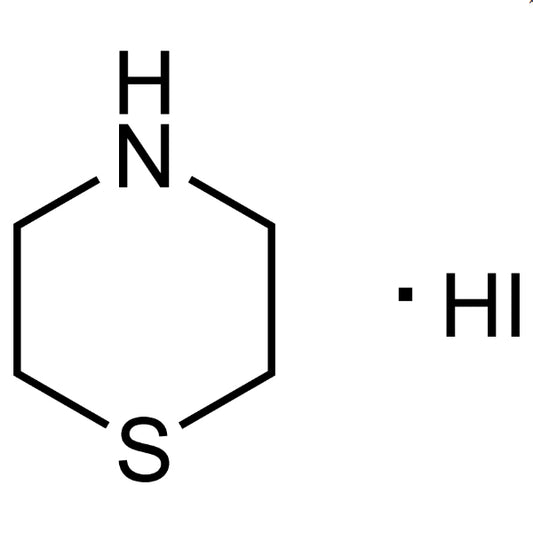
ThiomorpholineHydroiodide TCI T4375
Regular price From Rp 1.936.200,00Regular price -
TetrabutylammoniumTetrafluoroborate TCI T2648
Regular price Rp 2.757.300,00Regular price -
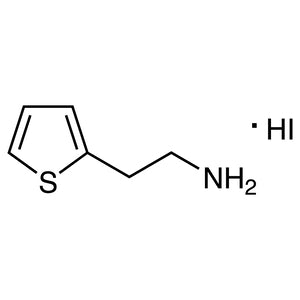
2-(Thiophen-2-yl)ethan-1-amineHydroiodide TCI A3720
Regular price From Rp 1.378.650,00Regular price -
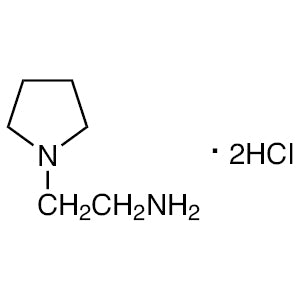
2-(1-Pyrrolidinyl)ethanamineDihydrochloride TCI A3393
Regular price Rp 1.881.600,00Regular price
![98997-63-8 5-Azoniaspiro[4.4]nonane Chloride - AMI Scientific](http://amiscientific.com/cdn/shop/files/TCI_a26e2494-b57b-4cfc-86aa-2b9d81a75643.png?v=1766989192&width=533)
![98997-63-8 5-Azoniaspiro[4.4]nonane Chloride - AMI Scientific](http://amiscientific.com/cdn/shop/files/TCI2510A3092.jpg?v=1769144813&width=533)
![16450-38-7 5-Azoniaspiro[4.4]nonane Bromide - AMI Scientific](http://amiscientific.com/cdn/shop/files/TCI_611ba7e3-f017-41af-9993-77cb801e8dec.png?v=1766989186&width=533)
![1009321-13-4 1-Hexyl-1,4-diazabicyclo[2.2.2]octan-1-ium Iodide - AMI Scientific](http://amiscientific.com/cdn/shop/files/TCI2510H1759.jpg?v=1769142641&width=533)