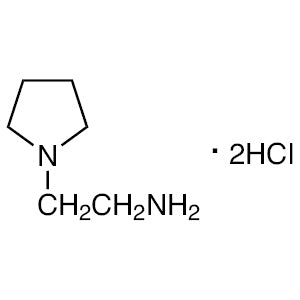
2-(1-Pyrrolidinyl)ethanamine Dihydrochloride is a chemical compound widely used in organic synthesis reactions. It serves as a key building block in the development of complex molecular structures, making it an essential material for researchers and scientists working in chemical and pharmaceutical laboratories. This compound is particularly valued for its versatility and stability, allowing it to be incorporated into a variety of synthetic pathways. Its unique chemical structure enables it to interact with multiple functional groups, which is crucial for the design of new compounds with specific biological or industrial applications.
The compound is preferred due to its chemical stability and reactivity under controlled conditions. Its ability to participate in diverse chemical reactions makes it a valuable tool in the synthesis of pharmaceuticals and industrial chemicals. The dihydrochloride salt form enhances its solubility and reactivity, making it more suitable for laboratory use. These properties make it a popular choice among researchers who require reliable and consistent results in their experiments.
In Indonesian laboratories, this compound is commonly used in chemical and pharmaceutical research. It is frequently employed in the synthesis of bioactive compounds and is a standard reagent in academic and industrial research settings. Its availability and reliability ensure that it remains a key component in the development of new chemical products and scientific discoveries.
TCI brochures (PDF)
- Organic-Inorganic Perovskite Precursors 2026-09-01 · p. 3
- Solar Cell Materials 2026-04-21 · p. 7
Related TCI products
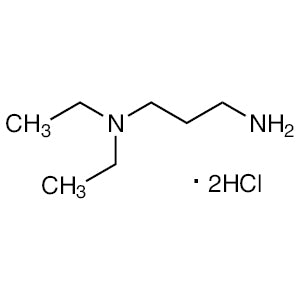
- TCI D5861 99310-71-1 N,N-Diethyl-1,3-propanediamine Dihydrochloride
- TCI D5860 52198-62-6 N,N-Diethyl-1,2-ethanediamine Dihydrochloride
- TCI D5617 52198-63-7 N,N-Dimethyl-1,3-propanediamine Dihydrochloride
- TCI D5251 49563-87-3 1,4-Diazabicyclo[2.2.2]octane Dihydrochloride
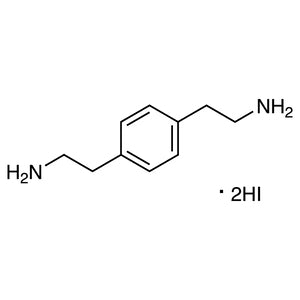
- TCI B6570 2739684-32-1 1,4-Benzenediethanamine Dihydroiodide
- TCI P2491 142-64-3 Piperazine Dihydrochloride
- Organic synthesis reactions benefit from this compound's ability to form stable intermediates and participate in multiple reaction pathways.
- Pharmaceutical research utilizes it for the development of bioactive molecules and drug candidates due to its reactivity and structural versatility.
- Chemical research applications rely on its stability and solubility to facilitate the synthesis of complex organic compounds.
- Industrial chemical production uses it as a building block for the creation of various chemical intermediates and specialty products.
- Academic laboratories incorporate it into teaching and research programs to demonstrate fundamental principles of organic chemistry and synthetic methodology.
| Brand | TCI |
|---|---|
| CAS number | 65592-36-1 |
| Molecular formula | — |
| Purity | — |
| Category | Chemistry > Building Blocks > Non-Heterocyclic Building Blocks |
| Pack sizes | Available in various quantities as per standard laboratory supply |
| Physical form | Solid powder |
| Storage | Store in a cool, dry place away from moisture and direct sunlight |
This compound should be stored in a cool, dry environment to maintain its chemical integrity and stability. It is recommended to keep it in a tightly sealed container to prevent exposure to moisture and air, which could affect its reactivity. Due to its chemical nature, it should be handled with appropriate personal protective equipment, such as gloves and safety goggles, to ensure laboratory safety. It is important to store it away from incompatible materials to avoid any potential chemical reactions. Proper labeling and storage conditions help ensure the compound remains effective and safe for use in laboratory applications.
—
Product Categories
Produk Terkait
-
N,N-Diethyl-1,3-propanediamineDihydrochloride TCI D5861
Regular price Rp 1.724.100,00Regular price -
N,N-Diethyl-1,2-ethanediamineDihydrochloride TCI D5860
Regular price Rp 1.829.100,00Regular price -
N,N-Dimethyl-1,3-propanediamineDihydrochloride TCI D5617
Regular price From Rp 743.400,00Regular price -
1,4-Diazabicyclo[2.2.2]octaneDihydrochloride TCI D5251
Regular price From Rp 1.908.900,00Regular price -
1,4-BenzenediethanamineDihydroiodide TCI B6570
Regular price From Rp 2.068.500,00Regular price -
PiperazineDihydrochloride TCI P2491
Regular price From Rp 848.400,00Regular price -
1,3-DiaminopropaneDihydrochloride(Lowwatercontent) TCI D5253
Regular price From Rp 1.405.950,00Regular price -
AcetamidineHydrochloride TCI A0008
Regular price From Rp 557.550,00Regular price


![1,4-Diazabicyclo[2.2.2]octane Dihydrochloride (CAS 49563-87-3) - TCI D5251 - AMI Scientific](http://amiscientific.com/cdn/shop/files/TCI2510D5251.jpg?v=1767108553&width=533)