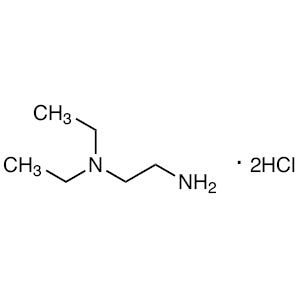
TCI D5860 N,N-Diethyl-1,2-ethanediamine Dihydrochloride is a short-chain aliphatic diamine supplied as the dihydrochloride salt and intended for organic synthesis work in the laboratory. The molecule carries two nitrogen centres of distinctly different character: a free primary amine group available for reaction, and a diethylated tertiary amine group at the opposite end, joined by a very compact ethylene bridge. This combination makes it a non-heterocyclic building block that researchers frequently use to attach basic side chains to a target molecular framework, whether in medicinal chemistry research, coordination chemistry, or the development of amine-based functional materials.
The principal reason researchers select the dihydrochloride salt form is storage stability and ease of handling. Free diamines are generally strongly basic, hygroscopic, sharply odorous, and readily absorb carbon dioxide from the air, so their purity declines over the course of storage. In the salt form, both nitrogen atoms are already protonated, so the material presents as a solid that is far easier to weigh accurately on an analytical balance, is not prone to evaporation, and is more manageable in the working environment. The differentiated reactivity of the two nitrogen centres also gives synthetic chemists a practical handle: the primary amine remains the reactive site, while the tertiary amine contributes the basic character built into the final structure.
In Indonesian laboratories, a reagent of this type is typically encountered in university and institutional research groups engaged in organic synthesis, in medicinal chemistry programmes exploring structure–activity relationships, and in materials or coordination chemistry work where amine functionality is required. Because it arrives as a stable salt, it suits laboratories that order reagents in modest quantities and need them to remain usable across an extended research programme rather than being consumed immediately after delivery.
TCI brochures (PDF)
- Solar Cell Materials 2026-04-21 · p. 7
Related TCI products
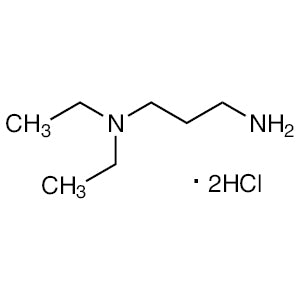
- TCI D5861 99310-71-1 N,N-Diethyl-1,3-propanediamine Dihydrochloride
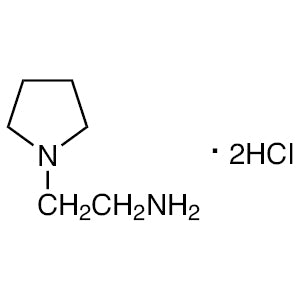
- TCI A3393 65592-36-1 2-(1-Pyrrolidinyl)ethanamine Dihydrochloride
- TCI D5617 52198-63-7 N,N-Dimethyl-1,3-propanediamine Dihydrochloride
- TCI D5251 49563-87-3 1,4-Diazabicyclo[2.2.2]octane Dihydrochloride
- TCI P2491 142-64-3 Piperazine Dihydrochloride
- TCI D5253 10517-44-9 1,3-Diaminopropane Dihydrochloride (Low water content)
- Medicinal chemistry side-chain installation — the free primary amine allows the diethylaminoethyl fragment to be grafted onto a lead scaffold, introducing a basic centre commonly explored during structure–activity relationship studies.
- Non-heterocyclic building block synthesis — the compact ethylene bridge between two differentiated nitrogen centres lets chemists extend a molecular framework by a short, well-defined, conformationally simple linker unit.
- Coordination chemistry and ligand preparation — the two nitrogen donors on a short backbone make the compound a convenient starting point for preparing chelating ligands after liberation of the free base.
- Amine-functionalised materials development — researchers use it to introduce tertiary amine basicity into functional material frameworks, where the pendant diethylamino group governs the material's basic behaviour.
- Reference and method development work — as a well-defined solid salt with a stated CAS number, it can be weighed reproducibly for developing and validating synthetic procedures in research laboratories.
| Brand | TCI |
|---|---|
| CAS number | 52198-62-6 |
| Molecular formula | — |
| Purity | — |
| Category | Chemistry > Building Blocks > Non-Heterocyclic Building Blocks |
| Pack sizes | please refer to the packaging options listed for this catalogue item |
| Physical form | solid, suitable for accurate weighing on an analytical balance |
| Storage | keep in a tightly closed container, protected from moisture |
- Chemical form: dihydrochloride salt of N,N-diethyl-1,2-ethanediamine
Store the material in its original tightly closed container, kept in a cool, dry place away from moisture and out of direct sunlight. Because amine salts are prone to picking up atmospheric water, containers should be resealed promptly after each use, and transfer is best performed with clean, dry spatulas and dry glass or plastic weighing vessels. Handle the compound inside a fume hood or a well-ventilated area, wearing a laboratory coat, safety goggles, and chemical-resistant gloves, and avoid contact with skin and eyes as well as inhalation of dust. Weigh out only the amount required for the experiment, keep the reagent away from strong acids and oxidising agents, and always consult the manufacturer's safety data sheet before use and before disposing of any residues.
—
Product Categories
Produk Terkait
-
N,N-Diethyl-1,3-propanediamineDihydrochloride TCI D5861
Regular price Rp 1.724.100,00Regular price -
2-(1-Pyrrolidinyl)ethanamineDihydrochloride TCI A3393
Regular price Rp 1.881.600,00Regular price -
N,N-Dimethyl-1,3-propanediamineDihydrochloride TCI D5617
Regular price From Rp 743.400,00Regular price -
1,4-Diazabicyclo[2.2.2]octaneDihydrochloride TCI D5251
Regular price From Rp 1.908.900,00Regular price -
PiperazineDihydrochloride TCI P2491
Regular price From Rp 848.400,00Regular price -
1,3-DiaminopropaneDihydrochloride(Lowwatercontent) TCI D5253
Regular price From Rp 1.405.950,00Regular price -
AcetamidineHydrochloride TCI A0008
Regular price From Rp 557.550,00Regular price -
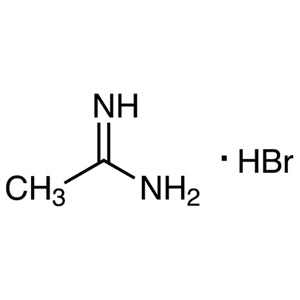
AcetamidineHydrobromide TCI A3292
Regular price From Rp 1.220.100,00Regular price

![1,4-Diazabicyclo[2.2.2]octane Dihydrochloride (CAS 49563-87-3) - TCI D5251 - AMI Scientific](http://amiscientific.com/cdn/shop/files/TCI2510D5251.jpg?v=1767108553&width=533)