Acetamidine Hydrobromide is a chemical compound widely used in laboratory settings as a building block for organic synthesis. It serves as a versatile reagent in various chemical reactions, particularly those involving amines that are prone to rapid reactions. Its role in the laboratory is crucial for researchers aiming to synthesize complex organic molecules and heterocyclic compounds. This compound is especially valuable in synthetic chemistry due to its reactivity and ability to participate in multiple reaction types.
The chemical properties of Acetamidine Hydrobromide make it a preferred choice for many laboratory applications. It is a white solid that dissolves easily in organic solvents such as ethyl acetate and acetone. Its stability under certain conditions allows for reliable use in controlled environments, though it is sensitive to moisture and air exposure. These characteristics make it suitable for use in both academic and industrial research settings. Its reactivity and versatility contribute to its popularity among chemists working on diverse synthetic projects.
In Indonesian laboratories, Acetamidine Hydrobromide is commonly used in chemical research, particularly in the fields of organic synthesis and the development of new compounds. It is a fundamental reagent in the synthesis of heterocyclic compounds and other bioactive molecules. Its availability and reliability make it a staple in many research laboratories across Indonesia, supporting both educational and industrial chemical research efforts.
TCI brochures (PDF)
- Perovskite Precursor: Lead Acetate Anhydrous 2025-01-16 · p. 2
- Perovskite Precursor for Solar Cell Purified Lead(II) Iodide 2023-12-28 · p. 2
- High Purity Perovskite Precursor Purified Lead(II) Bromide 2024-04-04 · p. 2
- Perovskite Precursor Tin(II) Iodide Tin(II) Bromide 2024-01-09 · p. 2
- Organic-Inorganic Perovskite Precursors 2026-09-01 · p. 5
- Solar Cell Materials 2026-04-21 · p. 7
Related TCI products
- TCI A0008 124-42-5 Acetamidine Hydrochloride
- TCI A2902 1452099-14-7 Acetamidine Hydroiodide (Low water content)
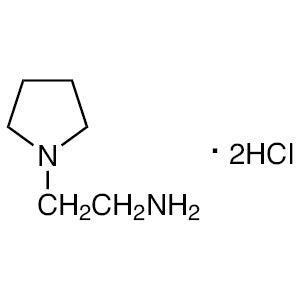
- TCI A3393 65592-36-1 2-(1-Pyrrolidinyl)ethanamine Dihydrochloride
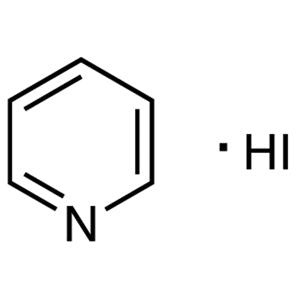
- TCI P2672 18820-83-2 Pyridine Hydroiodide
- TCI M0138 593-51-1 Methylamine Hydrochloride
- TCI I0096 5041-09-8 Isobutylamine Hydrochloride
- Organic synthesis is a key application where Acetamidine Hydrobromide is used to create complex molecules through various reaction mechanisms.
- Heterocyclic compound development benefits from its reactivity and ability to form stable intermediates during synthetic processes.
- Reagent for substitution reactions due to its ability to readily participate in nucleophilic and electrophilic interactions.
- Useful in condensation reactions where it acts as a nucleophile or electrophile depending on the reaction conditions.
- Essential in the preparation of bioactive compounds due to its structural similarity to amino acids and its ability to undergo functional group transformations.
| Brand | TCI |
|---|---|
| CAS number | 1040352-82-6 |
| Molecular formula | — |
| Purity | — |
| Category | Chemistry > Building Blocks > Non-Heterocyclic Building Blocks |
| Pack sizes | — |
| Physical form | White solid |
| Storage | Should be stored in a dry, cool place away from moisture and air exposure |
Acetamidine Hydrobromide should be stored in a dry, cool environment to prevent moisture absorption and degradation. It is best kept in a sealed container to minimize exposure to air, which can lead to hydrolysis or oxidation. Suitable containers include glass or plastic vessels with tight-fitting lids. Due to its reactivity, it should be handled in a well-ventilated area, preferably under a fume hood. Avoid contact with moisture during handling, as it can cause decomposition. Proper labeling and storage conditions are essential to maintain its chemical integrity and ensure safe use in laboratory settings.
—
Product Categories
Produk Terkait
-
AcetamidineHydrochloride TCI A0008
Regular price From Rp 610.050,00Regular priceRp 442.050,00Sale price From Rp 610.050,00 -
AcetamidineHydroiodide(Lowwatercontent) TCI A2902
Regular price From Rp 1.801.800,00Regular priceRp 1.275.750,00Sale price From Rp 1.801.800,00 -
2-(1-Pyrrolidinyl)ethanamineDihydrochloride TCI A3393
Regular price Rp 1.934.100,00Regular priceRp 1.368.150,00Sale price Rp 1.934.100,00 -
PyridineHydroiodide TCI P2672
Regular price Rp 2.279.550,00Regular priceRp 1.593.900,00Sale price Rp 2.279.550,00 -
MethylamineHydrochloride TCI M0138
Regular price From Rp 505.050,00Regular priceRp 352.800,00Sale price From Rp 505.050,00 -
IsobutylamineHydrochloride TCI I0096
Regular price From Rp 823.200,00Regular priceRp 575.400,00Sale price From Rp 823.200,00 -
GuanidineThiocyanate TCI G0230
Regular price From Rp 557.550,00Regular priceRp 405.300,00Sale price From Rp 557.550,00 -
FormamidineHydrochloride TCI F0103
Regular price From Rp 1.378.650,00Regular priceRp 979.650,00Sale price From Rp 1.378.650,00