10-Acetylphenothiazine is an organic compound widely utilized in scientific research, particularly in the fields of chemistry and materials science. This compound plays a crucial role in laboratory settings, especially in the development of organic redox flow batteries. Its molecular structure enables high reactivity, making it a valuable component in systems requiring stable oxidation and reduction properties. As a key material in battery research, it supports the creation of advanced energy storage solutions.
The unique chemical properties of 10-Acetylphenothiazine make it a preferred choice for researchers. It exhibits high efficiency in redox reactions, allowing for effective energy storage and release. Its stability under specific conditions further enhances its usability in long-term experiments. These characteristics contribute to its popularity in both academic and industrial research environments. The compound's ability to participate in redox processes with minimal degradation ensures reliable performance in various experimental setups.
In Indonesian laboratories, 10-Acetylphenothiazine is commonly used by researchers in energy, chemistry, and materials science. It is integral to studies focused on renewable energy sources and environmentally friendly battery technologies. Its availability supports ongoing efforts to develop sustainable energy solutions, making it a vital material for modern scientific research in the region.
TCI brochures (PDF)
- Battery Research Reagents 2026-09-18 · p. 7
- Building Blocks for Organic Semiconductor 2026-03-24 · p. 32
Related TCI products
- Organic Redox Flow Battery Development: This compound is ideal for creating and testing organic redox flow batteries due to its stable redox properties and high reactivity.
- Energy Storage Research: It supports the investigation of new energy storage systems by providing a reliable redox-active material for battery components.
- Material Science Studies: Researchers use it to explore the chemical behavior and structural properties of organic compounds in various environments.
- Environmental Energy Solutions: Its role in developing sustainable and renewable energy technologies makes it a key component in green energy research.
- Chemical Synthesis Experiments: It is used in synthetic processes to study reaction mechanisms and the formation of complex organic molecules.
| Brand | TCI |
|---|---|
| CAS number | 1628-29-1 |
| Molecular formula | — |
| Purity | — |
| Category | Materials Science > Battery Materials > Organic Redox Flow Battery Materials |
| Pack sizes | As per supplier specifications |
| Physical form | Solid (as per standard product description) |
| Storage | Store in a cool, dry place away from direct sunlight |
10-Acetylphenothiazine should be stored in a cool, dry environment to maintain its chemical stability and prevent degradation. It is recommended to keep the compound in a sealed container to minimize exposure to moisture and air. Due to its organic nature, it should be stored away from incompatible materials such as strong oxidizers or acids. Proper labeling of containers is essential for safe handling and to prevent accidental misuse. In laboratory settings, it is important to follow standard safety protocols, including the use of personal protective equipment when handling or transferring the compound. Regular monitoring of storage conditions ensures the material remains in optimal condition for use in research applications.
—
Product Categories
- Battery MaterialsOrganic Redox Flow Battery Materials [Battery Materials]Organic Active Materials (Others) [Battery Materials]
- Electronic MaterialsBattery MaterialsOrganic Redox Flow Battery Materials [Battery Materials]
- Material Building BlocksSmall Molecule Semiconductor Building BlocksSmall Molecule Semiconductor Building Blocks (Others)
Produk Terkait
-
10-[2-(2-Methoxyethoxy)ethyl]-10H-phenothiazine TCI M3068
Regular price Rp 3.365.250,00Regular priceRp 2.368.800,00Sale price Rp 3.365.250,00 -
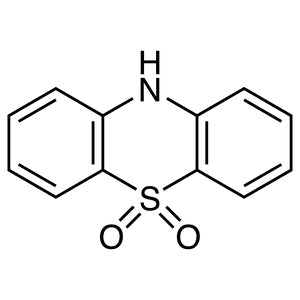
10H-Phenothiazine5,5-Dioxide TCI D6164
Regular price From Rp 3.285.450,00Regular priceRp 2.313.150,00Sale price From Rp 3.285.450,00 -
10-Hexylphenothiazine TCI H1608
Regular price From Rp 2.147.250,00Regular priceRp 1.517.250,00Sale price From Rp 2.147.250,00 -
3,7-Dibromo-10-hexylphenothiazine TCI D5222
Regular price From Rp 3.735.900,00Regular priceRp 2.628.150,00Sale price From Rp 3.735.900,00 -
10-Phenylphenothiazine TCI P2470
Regular price From Rp 2.623.950,00Regular priceRp 1.850.100,00Sale price From Rp 2.623.950,00 -
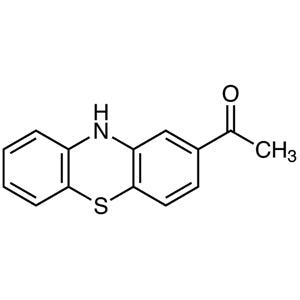
2-Acetylphenothiazine TCI A2815
Regular price From Rp 4.504.500,00Regular priceRp 3.165.750,00Sale price From Rp 4.504.500,00 -
2-(Trifluoromethyl)phenothiazine TCI T1407
Regular price Rp 3.048.150,00Regular priceRp 2.147.250,00Sale price Rp 3.048.150,00 -
12-Phenyl-12H-benzo[b]phenothiazine TCI P3081
Regular price From Rp 1.988.700,00Regular priceRp 1.405.950,00Sale price From Rp 1.988.700,00