![1320277-85-7 12-Phenyl-12H-benzo[b]phenothiazine - AMI Scientific](http://amiscientific.com/cdn/shop/files/TCI2510P3081.jpg?v=1767137088&width=1946)
![1320277-85-7 12-Phenyl-12H-benzo[b]phenothiazine - AMI Scientific](http://amiscientific.com/cdn/shop/files/TCI2510P3081.jpg?v=1767137088&width=1445)
12-Phenyl-12H-benzo[b]phenothiazine is a specialized chemical compound used in various laboratory applications, particularly in the fields of catalysis and photocatalysis. Its unique molecular structure enables it to interact with light and other reactants, making it a valuable tool for studying photo-induced chemical reactions. This compound is commonly used in research settings to explore the mechanisms of light-activated reactions and to develop new catalysts. Due to its ability to respond to light, it plays a significant role in advancing materials science and chemical engineering research.
The compound’s chemical properties make it a preferred choice for researchers working on photoredox reactions and functional material development. Its molecular complexity allows it to participate in a wide range of chemical transformations, especially under irradiation. The compound exhibits stability under certain conditions, though it is sensitive to high temperatures and light exposure. These characteristics make it ideal for experiments requiring controlled light activation and precise chemical interactions.
In Indonesian laboratories, 12-Phenyl-12H-benzo[b]phenothiazine is widely used by chemists and materials scientists for experiments involving photocatalysis, synthesis of complex compounds, and development of optically responsive materials. Its availability in the local market supports ongoing research efforts in these areas, ensuring that scientists have access to the necessary reagents for their work.
Advantages (TCI brochure)
- Excited by blue light
- Catalyzes carbon (sp3)-heteroatom bond formation
- Can also be used as a photocatalyst for metal-free organocatalyzed atom transfer radical polymerization (O-ATRP)
TCI brochures (PDF)
- Visible Light Photoredox Organocatalyst for Carbon (sp3)-Heteroatom Bond Formation 2026-09-10 · p. 1
- Visible Light Photoredox Catalysts 2026-04-28 · p. 4
- Organic Photoreaction Reagents 2025-02-13 · p. 4
- Photocatalytic Reaction Studies: This compound is ideal for investigating light-induced chemical reactions due to its ability to absorb and respond to light, making it suitable for studying photochemical mechanisms.
- Development of Functional Materials: Its unique molecular structure allows it to be used in the synthesis of materials with specific optical properties, aiding in the creation of advanced functional materials.
- Redox Reaction Research: The compound’s participation in redox processes makes it a valuable reagent for studying electron transfer mechanisms in chemical systems.
- Synthesis of Complex Organic Compounds: Its reactivity under light exposure enables it to be used in the synthesis of complex organic molecules, supporting organic chemistry research.
- Material Science Applications: It is used to develop materials that respond to light, contributing to advancements in optoelectronic and photonic materials.
From the TCI brochure
- Carbon (sp3)-heteroatom bond formation (X = O, NR, S) under blue LED with P3081 as catalyst
| Brand | TCI |
|---|---|
| CAS number | 1320277-85-7 |
| Molecular formula | — |
| Purity | — |
| Category | Chemistry > Catalysis and Inorganic Chemistry > Photocatalysts [Catalysis] |
| Pack sizes | — |
| Physical form | — |
| Storage | Store in a cool, dark place away from light and heat |
Data from the TCI brochure
| λmax | 376 nm |
|---|---|
| ES1/2* | -2.08 V |
| ET1 1/2* | -2.12 V |
Source: TCI brochure RR189 (2026-09-10)
This compound should be stored in a cool, dark environment to prevent degradation due to light exposure. It is recommended to use amber-colored glass containers to minimize light interaction. The material is sensitive to high temperatures, so maintaining a stable storage temperature is essential. Proper ventilation should be ensured when handling the compound to avoid inhalation of vapors. It is important to keep the compound away from incompatible substances to prevent any potential chemical reactions. Always use appropriate personal protective equipment when handling this material to ensure laboratory safety.
References cited in the TCI brochure
- Dan Liu. Design, Synthesis, and Application of Highly Reducing Organic Visible-Light Photocatalysts Organic Letters, 2018. doi:10.1021/acs.orglett.8b02420
- Shotaro Shibutani. Organophotoredox-Catalyzed Decarboxylative C(sp 3 )–O Bond Formation Journal of the American Chemical Society, 2020. doi:10.1021/jacs.9b12335
- Rino Kobayashi. Decarboxylative N-Alkylation of Azoles through Visible-Light-Mediated Organophotoredox Catalysis Organic Letters, 2021. doi:10.1021/acs.orglett.1c01745
- Sajjad Dadashi‐Silab. Phenyl Benzo[ b ]phenothiazine as a Visible Light Photoredox Catalyst for Metal‐Free Atom Transfer Radical Polymerization Chemistry – A European Journal, 2017. doi:10.1002/chem.201605574
Produk Terkait
-
10-Phenylphenothiazine TCI P2470
Regular price From Rp 2.571.450,00Regular price -
12H-Benzo[b]phenothiazine TCI B6562
Regular price From Rp 1.298.850,00Regular price -
10-(4-Methoxyphenyl)-10H-phenothiazine TCI M3639
Regular price From Rp 2.625.000,00Regular price -
2-(Trifluoromethyl)phenothiazine TCI T1407
Regular price Rp 2.995.650,00Regular price -
10-Acetylphenothiazine TCI A3154
Regular price From Rp 3.021.900,00Regular price -
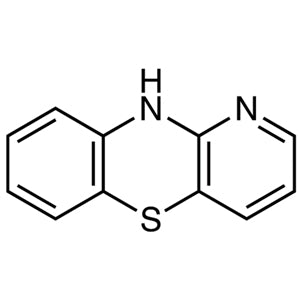
1-Azaphenothiazine TCI A2862
Regular price From Rp 505.050,00Regular price -
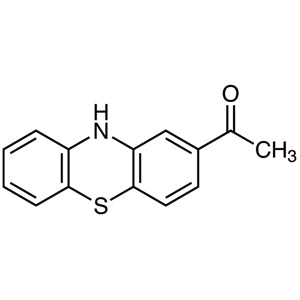
2-Acetylphenothiazine TCI A2815
Regular price From Rp 4.452.000,00Regular price -
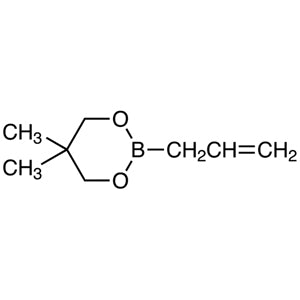
2-Allyl-5,5-dimethyl-1,3,2-dioxaborinane(stabilizedwithPhenothiazine) TCI A2574
Regular price From Rp 3.021.900,00Regular price

![12H-Benzo[b]phenothiazine (CAS 258-08-2) - TCI B6562 - AMI Scientific](http://amiscientific.com/cdn/shop/files/TCI2510B6562.jpg?v=1768816071&width=533)