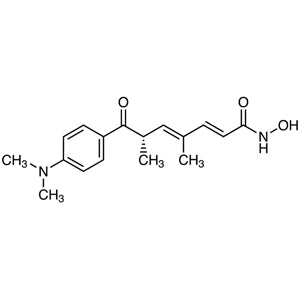
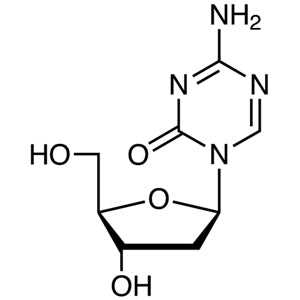
TCI A3193, with the CAS number 304896-28-4, is a chemical compound widely used in the field of epigenetics for molecular biology research. This compound plays a crucial role in the study of histone modifications, particularly in the context of inhibiting histone deacetylase (HDAC) enzyme activity. In laboratory settings, it is a key reagent for experiments aimed at understanding the mechanisms of genetic regulation through epigenetic changes. Its presence in various research protocols helps scientists explore the complex interactions between gene expression and environmental factors.
The compound is known for its chemical stability, making it suitable for use in a wide range of laboratory conditions. It exhibits good solubility in organic solvents such as ethyl acetate and acetone, which facilitates its application in diverse analytical methods. These properties contribute to its reliability and consistency, making it a preferred choice for researchers who require precision and reproducibility in their experiments. The high purity and consistent quality of TCI A3193 ensure that it meets the rigorous standards of scientific research.
In Indonesian laboratories, this compound is commonly used in health, biomedical, and higher education research. It supports studies related to genetic diseases, chronic illnesses, and the development of new drugs. Its availability enhances the capacity of local research institutions to conduct advanced scientific investigations, contributing to the growth of scientific knowledge and technological innovation in the region.
TCI brochures (PDF)
- Epigenetics Research Reagents 2024-11-22 · p. 1
- Epigenetic Research: This compound is ideal for studying histone modifications and their impact on gene expression, offering a reliable tool for understanding cellular regulation.
- Drug Development: It supports the development of new therapeutics by targeting HDAC enzymes, which are implicated in various diseases.
- Molecular Biology Studies: Its role in inhibiting HDAC makes it valuable for experiments investigating the effects of epigenetic changes on cellular processes.
- Health and Biomedical Research: It is used in studies focused on genetic disorders and chronic diseases, aiding in the discovery of potential treatment strategies.
- Academic Research: Universities and research institutions rely on this compound for teaching and research in molecular biology and epigenetics.
| Brand | TCI |
|---|---|
| CAS number | 304896-28-4 |
| Molecular formula | — |
| Purity | — |
| Category | Life Science > Molecular Biology > Epigenetics |
| Pack sizes | — |
| Physical form | — |
| Storage | Store in a cool, dry place away from direct sunlight |
This compound should be stored in a cool, dry environment, away from direct sunlight and sources of heat. It is recommended to use airtight containers to prevent exposure to moisture and air, which could affect its stability. Due to its chemical nature, it should be handled with appropriate personal protective equipment, such as gloves and safety goggles, to ensure laboratory safety. Proper ventilation is essential when working with this substance to minimize inhalation risks. It is important to follow standard laboratory safety protocols to maintain a safe and controlled environment during handling and experimentation.
—
Produk Terkait
-
Zebularine TCI Z0022
Regular price From Rp 3.021.900,00Regular priceRp 2.128.350,00Sale price From Rp 3.021.900,00 -
(-)-TrichostatinA TCI T3633
Regular price Rp 9.195.900,00Regular priceRp 6.445.950,00Sale price Rp 9.195.900,00 -
TrichostatinA TCI T2477
Regular price From Rp 10.440.150,00Regular priceRp 7.316.400,00Sale price From Rp 10.440.150,00 -
O~6~-Benzylguanine TCI B4208
Regular price From Rp 1.220.100,00Regular priceRp 868.350,00Sale price From Rp 1.220.100,00 -
Butein TCI B3803
Regular price From Rp 3.100.650,00Regular priceRp 2.184.000,00Sale price From Rp 3.100.650,00 -
N-(2-Aminophenyl)-4-[1-[2-(3-thienyl)ethyl]-1H-1,2,3-triazol-4-yl]benzamide TCI A2897
Regular price Rp 3.578.400,00Regular priceRp 2.517.900,00Sale price Rp 3.578.400,00 -
Acetyldinaline TCI A2501
Regular price From Rp 1.801.800,00Regular priceRp 1.275.750,00Sale price From Rp 1.801.800,00 -
5-Aza-2'-deoxycytidine TCI A2232
Regular price From Rp 3.419.850,00Regular priceRp 2.406.600,00Sale price From Rp 3.419.850,00