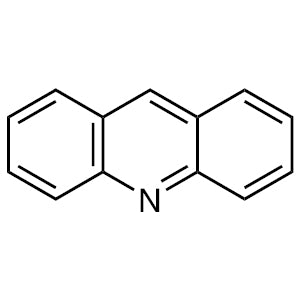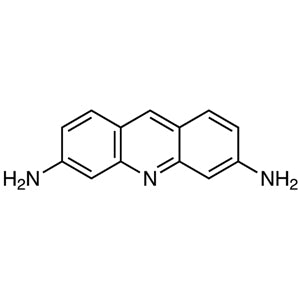
Acridine-3,6-diamine (CAS 92-62-6) is a chemical compound classified under the heterocyclic category. It serves as a fundamental building block in organic chemistry and pharmacology, playing a crucial role in the synthesis of complex molecules. This compound is widely used in laboratory settings to construct molecular structures with biological activity, including pharmaceuticals and dyes. Its versatility makes it an essential tool for researchers aiming to develop new compounds with specific functional properties.
The compound's structure features two amino groups at positions 3 and 6, which contribute to its reactivity and ability to undergo substitution and conjugation reactions. These characteristics make it highly suitable for the synthesis of pharmacologically active compounds, such as antitumor and antiviral agents. Additionally, its stable heterocyclic framework allows for further functionalization, enhancing its applicability in various chemical processes.
In Indonesian laboratories, Acridine-3,6-diamine is commonly utilized in organic chemistry, pharmacology, and biochemical research. Its role in creating complex molecular structures supports both academic and industrial research. The compound's chemical properties make it a valuable resource for exploring molecular mechanisms and developing new therapeutic agents. Its consistent performance and reliability in laboratory applications ensure its continued use in scientific investigations.
TCI brochures (PDF)
- Building Blocks for Organic Semiconductor 2026-03-24 · p. 32
Related TCI products
- Organic synthesis applications benefit from Acridine-3,6-diamine due to its reactivity and ability to form complex molecular structures.
- Pharmacological research utilizes this compound to develop drugs with targeted biological activities, such as antitumor and antiviral agents.
- Biochemical studies employ Acridine-3,6-diamine to investigate molecular interactions and functional group modifications.
- Dye synthesis applications take advantage of its chemical structure to create colored compounds with specific properties.
- Structural analysis in chemical research relies on its stable heterocyclic framework for accurate molecular modeling and characterization.
| Brand | TCI |
|---|---|
| CAS number | 92-62-6 |
| Molecular formula | — |
| Purity | — |
| Category | Chemistry > Building Blocks > Heterocyclic Building Blocks |
| Pack sizes | Available in various quantities as per supplier specifications |
| Physical form | Solid |
| Storage | Store in a cool, dry place away from light and moisture |
Acridine-3,6-diamine should be stored in a cool, dry place, away from direct light and moisture to maintain its chemical stability. It is recommended to use airtight containers to prevent exposure to air and humidity, which could affect its reactivity. In laboratory settings, it is important to handle the compound with appropriate personal protective equipment, such as gloves and safety goggles, to ensure safety. The compound is generally non-hazardous under normal conditions but should be handled with care to avoid contamination. Proper labeling and storage conditions are essential to preserve its integrity and ensure safe usage in research applications.
—
Produk Terkait
-
Acridine(purifiedbysublimation) TCI A3436
Regular price From Rp 1.458.450,00Regular price -
Acridine TCI A0294
Regular price Rp 3.472.350,00Regular price -
AcridineHydrochloride TCI A0131
Regular price Rp 2.545.200,00Regular price -
N,N,N',N'-Tetrakis(4-methoxyphenyl)-9H-carbazole-3,6-diamine TCI T3642
Regular price Rp 9.778.650,00Regular priceRp 6.853.350,00Sale price Rp 9.778.650,00 -
1,3,4-Thiadiazole-2,5-diamine TCI T3544
Regular price Rp 3.048.150,00Regular priceRp 2.147.250,00Sale price Rp 3.048.150,00 -
Phenazine-2,3-diamine TCI D4492
Regular price Rp 2.411.850,00Regular priceRp 1.702.050,00Sale price Rp 2.411.850,00 -
4,5,6,7-Tetrahydro-1,3-benzothiazole-2,6-diamine TCI D4343
Regular price Rp 689.850,00Regular priceRp 497.700,00Sale price Rp 689.850,00 -
Melem TCI M3538
Regular price Rp 3.683.400,00Regular priceRp 2.591.400,00Sale price Rp 3.683.400,00