![52234-82-9 Trimethylolpropane Tris[3-(aziridin-1-yl)propionate] - AMI Scientific](http://amiscientific.com/cdn/shop/files/TCI2510A3270.jpg?v=1767084030&width=1946)
![52234-82-9 Trimethylolpropane Tris[3-(aziridin-1-yl)propionate] - AMI Scientific](http://amiscientific.com/cdn/shop/files/TCI2510A3270.jpg?v=1767084030&width=1445)
Trimethylolpropane Tris[3-(aziridin-1-yl)propionate] is a complex chemical compound widely used in laboratory settings for its unique reactivity and structural versatility. As a heterocyclic building block, it plays a crucial role in the synthesis of various organic compounds, particularly those involving aziridine ring-opening reactions. This compound is essential for researchers aiming to create molecules with specific functional groups and molecular architectures. Its chemical structure, featuring three aziridinyl groups attached to a trimethylolpropane core, makes it a valuable tool in synthetic chemistry.
The compound’s high reactivity and ability to participate in multiple chemical transformations make it a preferred choice in advanced chemical research. Its aziridine moieties are highly reactive and can be selectively modified through various chemical reactions, enabling the development of new compounds with tailored properties. The compound’s stability under controlled laboratory conditions further enhances its usability, allowing for consistent results in experiments. Its versatility supports a wide range of applications, from pharmaceutical development to polymer science.
In Indonesian laboratories, Trimethylolpropane Tris[3-(aziridin-1-yl)propionate] is commonly used in organic chemistry research. It is a key reagent in the synthesis of complex molecules, especially in the development of new drugs and materials. Its role in creating functionalized compounds makes it an indispensable component in both academic and industrial research settings in Indonesia.
Related TCI products
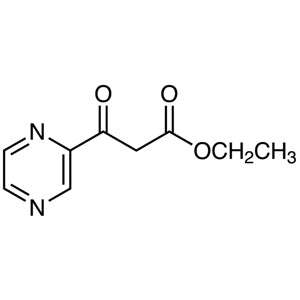
- TCI E1271 62124-77-0 Ethyl 3-Oxo-3-(pyrazin-2-yl)propionate
- TCI E1073 13669-10-8 Ethyl 3-Oxo-3-(2-thienyl)propionate
- TCI E0784 20120-24-5 Ethyl 3-(Morpholino)propionate
- TCI T4350 39423-51-3 Trimethylolpropane Poly(oxypropylene)triamine (Mw = ca 440)
- TCI T0949 15625-89-5 Trimethylolpropane Triacrylate (stabilized with MEHQ)
- TCI T0912 3290-92-4 Trimethylolpropane Trimethacrylate (stabilized with MEHQ)
- Organic synthesis is a primary application where this compound is used to create complex molecules with specific functional groups.
- Polymer science benefits from its ability to form cross-linked structures, making it useful in the development of advanced materials.
- Pharmaceutical research utilizes its reactivity to synthesize drug candidates with tailored properties and molecular structures.
- Heterocyclic compound synthesis relies on its aziridine groups for the formation of diverse ring structures in organic reactions.
- Industrial chemical production uses it as a building block for the creation of specialty chemicals and functional materials.
| Brand | TCI |
|---|---|
| CAS number | 52234-82-9 |
| Molecular formula | — |
| Purity | — |
| Category | Chemistry > Building Blocks > Heterocyclic Building Blocks |
| Pack sizes | Available in various quantities as per supplier specifications |
| Physical form | Solid or liquid depending on the specific formulation |
| Storage | Store in a cool, dry place away from moisture and direct sunlight |
This compound should be stored in a cool, dry environment to maintain its stability and prevent degradation. It is recommended to use airtight containers to protect it from moisture and air exposure. Due to its reactivity, it should be handled in a well-ventilated laboratory setting, ideally with appropriate personal protective equipment. Avoid direct contact with skin and eyes, and ensure proper disposal procedures are followed. Regular monitoring of storage conditions is essential to ensure the compound remains in optimal condition for use in laboratory applications.
—
Produk Terkait
-
Ethyl3-Oxo-3-(pyrazin-2-yl)propionate TCI E1271
Regular price Rp 2.464.350,00Regular priceRp 1.738.800,00Sale price Rp 2.464.350,00 -
Ethyl3-Oxo-3-(2-thienyl)propionate TCI E1073
Regular price Rp 557.550,00Regular priceRp 405.300,00Sale price Rp 557.550,00 -
Ethyl3-(Morpholino)propionate TCI E0784
Regular price Rp 1.033.200,00Regular priceRp 738.150,00Sale price Rp 1.033.200,00 -
TrimethylolpropanePoly(oxypropylene)triamine(Mw=ca440) TCI T4350
Regular price Rp 1.510.950,00Regular priceRp 1.072.050,00Sale price Rp 1.510.950,00 -
TrimethylolpropaneTriacrylate(stabilizedwithMEHQ) TCI T0949
Regular price Rp 505.050,00Regular priceRp 352.800,00Sale price Rp 505.050,00 -
TrimethylolpropaneTrimethacrylate(stabilizedwithMEHQ) TCI T0912
Regular price Rp 477.750,00Regular priceRp 333.900,00Sale price Rp 477.750,00 -
TrimethylolpropanePhosphite TCI T0816
Regular price Rp 3.710.700,00Regular priceRp 2.594.550,00Sale price Rp 3.710.700,00 -
Trimethylolpropane TCI T0480
Regular price Rp 452.550,00Regular priceRp 316.050,00Sale price Rp 452.550,00