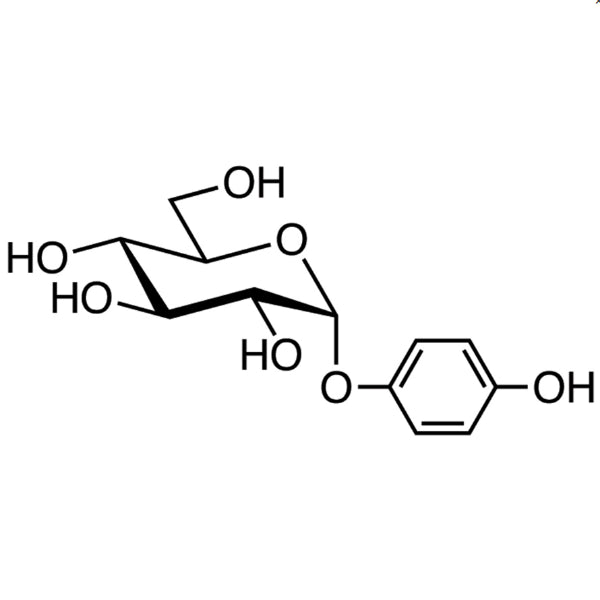

Alpha-Arbutin, with CAS number 84380-01-8, is a chemical compound widely used in pharmaceutical and biochemical research. It plays a crucial role in laboratory settings where scientists investigate its antioxidant properties, anti-inflammatory effects, and potential applications in skincare formulations. As a key reagent, it supports various experimental protocols, including in vitro and in vivo studies aimed at understanding its biological activity and therapeutic potential. Its presence in research laboratories is essential for advancing knowledge in medicinal chemistry and drug development.
Alpha-Arbutin is preferred due to its chemical stability and solubility in organic solvents such as ethyl acetate and ethanol. These properties make it ideal for use in synthesis reactions and purification processes. Its thermal stability ensures that it remains effective under a range of laboratory conditions, simplifying storage and handling. Additionally, its consistent chemical behavior allows for reliable results in experiments, making it a trusted material for researchers. The combination of these characteristics ensures that alpha-arbutin is a versatile and dependable reagent in experimental settings.
In Indonesian laboratories, alpha-arbutin is commonly used in pharmaceutical, cosmetic, and biochemical research. It is a preferred choice for scientists working on drug discovery, skin care product development, and bioactive compound analysis. Its availability and reliability make it a staple in academic and industrial research facilities across the country. The compound's broad applications and consistent performance contribute to its popularity among researchers in Indonesia.
TCI brochures (PDF)
- Pharmaceutical Ingredients for Research and Experimental Use 2026-03-09 · p. 49
- Reagents for Biological Research 2025-03-11 · p. 50
- Pharmaceutical research for evaluating antioxidant and anti-inflammatory properties due to its chemical stability and solubility in organic solvents.
- Cosmetic formulation development to test its efficacy as an active ingredient in skincare products because of its bioavailability and skin compatibility.
- Biochemical studies to analyze its role in enzyme inhibition and cellular activity due to its consistent chemical behavior in experimental conditions.
- Drug synthesis processes as a starting material for the production of other bioactive compounds because of its reactivity and purity.
- Clinical research applications for assessing its potential therapeutic effects in dermatological treatments due to its stability and ease of handling.
| Brand | TCI |
|---|---|
| CAS number | 84380-01-8 |
| Molecular formula | — |
| Purity | — |
| Category | Life Science > Biochemicals and Reagents > Pharmaceutical Research Reagents |
| Pack sizes | Available in various quantities as per standard laboratory reagent packaging |
| Physical form | Solid powder |
| Storage | Store in a cool, dry place away from direct sunlight and moisture |
Alpha-Arbutin should be stored in a cool, dry environment to maintain its chemical stability and prevent degradation. It is recommended to use airtight containers to protect it from moisture and contaminants. Due to its solubility in organic solvents, it should be kept away from incompatible substances to avoid unintended reactions. Proper labeling of storage containers is essential for safety and traceability. Laboratory personnel should handle the compound with care, using appropriate personal protective equipment when necessary. Regular monitoring of storage conditions ensures that the material remains suitable for use in experimental research.
—
Product Categories
Produk Terkait
-
Arbutin TCI A0522
Regular price From Rp 505.050,00Regular priceRp 368.550,00Sale price From Rp 505.050,00 -
6alpha-Methylprednisolone TCI M1665
Regular price From Rp 2.359.350,00Regular priceRp 1.665.300,00Sale price From Rp 2.359.350,00 -
alpha-Hexylcinnamaldehyde TCI H0685
Regular price From Rp 530.250,00Regular priceRp 370.650,00Sale price From Rp 530.250,00 -
Allantoin TCI A0211
Regular price Rp 795.900,00Regular priceRp 572.250,00Sale price Rp 795.900,00 -
Triethylhexanoin TCI T4161
Regular price From Rp 795.900,00Regular priceRp 572.250,00Sale price From Rp 795.900,00 -
Avobenzone TCI B3382
Regular price From Rp 928.200,00Regular priceRp 664.650,00Sale price From Rp 928.200,00 -
AsiaticAcid TCI A2475
Regular price Rp 3.445.050,00Regular priceRp 2.424.450,00Sale price Rp 3.445.050,00 -
StearylGlycyrrhetinate TCI S0988
Regular price From Rp 1.483.650,00Regular priceRp 1.053.150,00Sale price From Rp 1.483.650,00