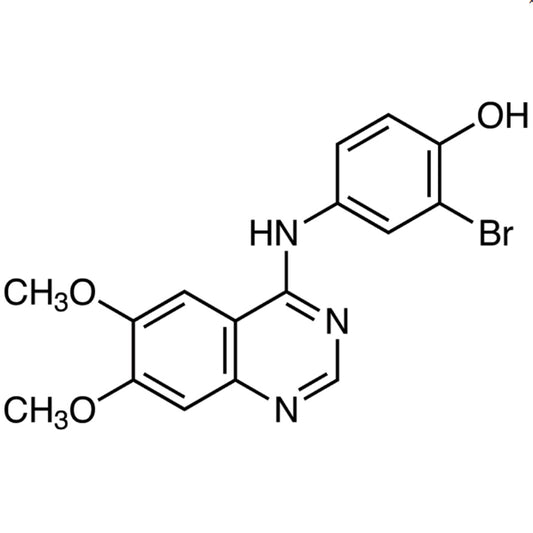
TCI A3352 AMI-331 Hydrochloride is a chemical compound widely utilized in scientific experiments, particularly in the fields of cell biology and neuroscience. This compound plays a crucial role in laboratory research by facilitating the study of cellular signaling pathways and neurodegenerative mechanisms. Its ability to modulate protein activity makes it an essential tool for investigating complex biological processes. Researchers rely on this compound to activate or inhibit specific signaling pathways within cells, enabling a deeper understanding of cellular behavior and disease progression.
The compound is known for its chemical stability and solubility in organic solvents such as ethyl acetate and acetone, which enhances its versatility in various analytical and biochemical methods. These properties make it a preferred choice for laboratories requiring reliable and consistent results. Additionally, its compatibility with standard laboratory techniques ensures that it can be easily integrated into existing workflows without compromising experimental accuracy.
In Indonesian laboratories, TCI A3352 AMI-331 Hydrochloride is particularly relevant for research in public health, pharmacology, and biotechnology. It is commonly used in academic and research institutions to support studies related to neurological disorders, drug development, and cellular function. Its availability and performance make it a trusted reagent for both basic and applied research in the region.
Advantages (TCI brochure)
- Lengthens the circadian rhythm period in plants (Figure 2).
- Inhibits rGST-CKL4 activity with IC50 of 0.7 µM (Figure 1).
TCI brochures (PDF)
- Circadian Period-Lengthening CK1 Inhibitor for Plants(LL073E) 2025-03-27 · p. 1
- Plant Hormones 2025-01-30 · p. 1
- Agrochemical Ingredients for Research and Experimental Use 2026-01-08 · p. 9
- Plant Research Reagents 2026-02-24 · p. 14
- Reagents for Biological Research 2025-03-11 · p. 55
- Cell Signaling Research: This compound is ideal for studying signal transduction pathways, allowing researchers to manipulate and observe cellular responses in controlled environments.
- Neurodegenerative Disease Studies: It supports investigations into the molecular mechanisms underlying neurodegenerative conditions, aiding in the development of therapeutic strategies.
- Protein Activity Modulation: Its ability to activate or inhibit specific proteins makes it valuable for understanding enzyme function and regulatory networks within cells.
- Drug Discovery and Development: It is used to test the effects of compounds on cellular pathways, contributing to the identification of potential therapeutic agents.
- Biochemical Assays: Its solubility and stability make it suitable for use in a variety of biochemical assays, enhancing the accuracy and reproducibility of experimental results.
From the TCI brochure
- Phosphorylation research by CK1 in plants
- Circadian rhythm research in plants
| Brand | TCI |
|---|---|
| CAS number | Not provided |
| Molecular formula | — |
| Purity | — |
| Category | Life Science > Cell Biology > Cell Signaling and Neuroscience |
| Pack sizes | — |
| Physical form | — |
| Storage | Store in a cool, dry place away from direct sunlight |
Data from the TCI brochure
| IC50 | 0.7 µM (rGST-CKL4, casein and AMI-331 mixed in reaction buffer, incubated 2 hours) |
|---|---|
| AMI-331 concentration (Figure 1) | 0, 1, 10, 100 µM (rGST-CKL4 with casein, 2 hours incubation) |
| AMI-331 concentration (Figure 2) | 0 µM, 0.4 µM, 1.2 µM, 2.4 µM (recombinant seedlings with LUC gene inserted into CCA1 promoter, constant light 0 to 96 h) |
Source: TCI brochure LL073 (2025-03-27)
TCI A3352 AMI-331 Hydrochloride should be stored in a cool, dry place, away from direct sunlight and sources of heat. It is recommended to use airtight containers to prevent moisture absorption and contamination. Due to its chemical stability, it does not require refrigeration under normal laboratory conditions. However, it should be handled with care to avoid exposure to skin or inhalation. In laboratories, it is essential to follow standard safety protocols, such as using appropriate personal protective equipment (PPE) when handling the compound. Proper labeling and storage practices ensure the compound remains safe and effective for use in various experimental applications.
References cited in the TCI brochure
- Takahiro N. Uehara. Casein kinase 1 family regulates PRR5 and TOC1 in the Arabidopsis circadian clock Proceedings of the National Academy of Sciences, 2019. doi:10.1073/pnas.1903357116
- Ami N Saito. Generation of strong casein kinase 1 inhibitor of Arabidopsis thaliana , 2019. doi:10.1101/642884
Produk Terkait
-
trans-Zeatin TCI Z0012
Regular price Rp 6.520.500,00Regular price -
Kinetin TCI K0009
Regular price From Rp 955.500,00Regular price -
CholineChloride TCI C0329
Regular price From Rp 530.250,00Regular price -
Imatinib TCI I0906
Regular price From Rp 1.326.150,00Regular price -
Adenine TCI A0149
Regular price From Rp 1.696.800,00Regular price -
XyleminDihydrochloride TCI X0080
Regular price From Rp 2.518.950,00Regular price -
WHI-P180Hydrochloride TCI W0021
Regular price Rp 3.340.050,00Regular price -
WHI-P154 TCI W0013
Regular price From Rp 2.491.650,00Regular price