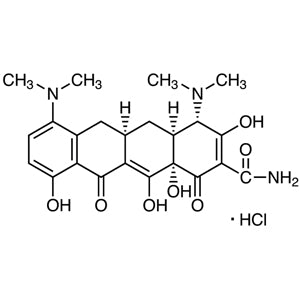
Alexidine Dihydrochloride is a chemical compound widely used in laboratory settings for its versatility in synthetic reactions. It serves as a key building block in the synthesis of complex organic and heterocyclic compounds. This reagent is particularly valuable for its ability to participate in various chemical transformations, including reduction and oxidation processes. Its role in forming complex chemical bonds makes it an essential tool for chemists working on diverse research projects.
The compound is known for its stable chemical properties under controlled conditions, yet it remains reactive to environmental factors such as temperature and catalysts. Its solubility in organic solvents like ethyl acetate and acetone enhances its usability in laboratory procedures. The high purity of Alexidine Dihydrochloride ensures accurate and reliable results in experiments, making it a preferred choice for precision-driven applications.
In Indonesian laboratories, Alexidine Dihydrochloride is commonly used in chemical research, particularly in academic and research institutions. It is a staple in organic synthesis and is frequently employed in both teaching and experimental settings. Its availability and reliability make it a go-to reagent for researchers and students alike.
TCI brochures (PDF)
- Antimicrobials and Antitumor Agents for Research and Experimental Use 2025-04-24 · p. 7
- Pharmaceutical Ingredients for Research and Experimental Use 2026-03-09 · p. 7
- Organic synthesis where Alexidine Dihydrochloride acts as a versatile reagent for forming complex molecular structures.
- Reduction and oxidation reactions due to its ability to participate in electron transfer processes.
- Heterocyclic compound synthesis as it facilitates the formation of ring structures in organic chemistry.
- Chemical bonding experiments where the compound helps in creating stable and reactive intermediates.
- Teaching and research applications in Indonesian academic institutions for hands-on chemical experimentation.
| Brand | TCI |
|---|---|
| CAS number | 1715-30-6 |
| Molecular formula | — |
| Purity | — |
| Category | Chemistry > Building Blocks > Non-Heterocyclic Building Blocks |
| Pack sizes | Available in various quantities as per standard laboratory supply |
| Physical form | Solid powder |
| Storage | Store in a cool, dry place away from direct sunlight |
Alexidine Dihydrochloride should be stored in a cool, dry environment to maintain its chemical stability. It is recommended to keep the compound in airtight containers to prevent moisture absorption and contamination. Due to its reactivity, it should be handled with care, using appropriate personal protective equipment such as gloves and safety goggles. Avoid exposure to high temperatures and direct sunlight to ensure long-term stability. In laboratory settings, it is important to store it separately from incompatible substances to prevent any unwanted chemical interactions. Always follow standard safety protocols when working with this compound to ensure a safe and controlled environment.
—
Product Categories
- Biochemicals and ReagentsAntibioticsAntibiotics (Chemical Structure Class)
- Biochemicals and ReagentsEnzymes, Enzyme Inhibitors, Enzyme SubstratesEnzyme Inhibitors [Biochemicals and Reagents]
- Biochemicals and ReagentsPharmaceutical Research Reagents (for Experimental Use)Antimicrobial Ingredients (for Research and Experimental Use)
- Cell BiologyCell Signaling and NeuroscienceKinase/Phosphatase Biology
- MicrobiologyAntibioticsAntibiotics (Chemical Structure Class)
- Pharmaceutical Development and Drug Discovery ResearchPharmaceutical Research Reagents (for Experimental Use)Antimicrobial Ingredients (for Research and Experimental Use)
- Pharmaceutical Development and Drug Discovery ResearchAntibioticsAntibiotics (Chemical Structure Class)
Produk Terkait
-
CyclosporinA TCI C2408
Regular price From Rp 1.351.350,00Regular priceRp 960.750,00Sale price From Rp 1.351.350,00 -
SpectinomycinDihydrochloridePentahydrate TCI S0584
Regular price Rp 2.041.200,00Regular priceRp 1.442.700,00Sale price Rp 2.041.200,00 -
ChlorhexidineDihydrochloride TCI C1254
Regular price From Rp 1.192.800,00Regular priceRp 849.450,00Sale price From Rp 1.192.800,00 -
Wortmannin TCI W0007
Regular price Rp 11.632.950,00Regular priceRp 8.150.100,00Sale price Rp 11.632.950,00 -
Ubenimex TCI U0111
Regular price From Rp 4.796.400,00Regular priceRp 3.369.450,00Sale price From Rp 4.796.400,00 -
Anisomycin TCI A2613
Regular price From Rp 4.266.150,00Regular priceRp 2.998.800,00Sale price From Rp 4.266.150,00 -
MinocyclineHydrochloride TCI M2288
Regular price From Rp 3.870.300,00Regular priceRp 2.721.600,00Sale price From Rp 3.870.300,00 -
Geldanamycin TCI G0334
Regular price Rp 7.737.450,00Regular priceRp 5.426.400,00Sale price Rp 7.737.450,00