N-(1-Adamantyl)acrylamide (TCI A3438) is a chemical compound widely used as a building block in the synthesis of complex molecules. This compound plays a crucial role in laboratory settings, particularly in polymerization reactions and molecular modification processes. Its unique molecular structure, featuring an adamantyl chain, provides both stability and reactivity, making it a versatile tool for chemists. The adamantyl group enhances the compound’s ability to participate in various chemical reactions, allowing for the creation of new materials and compounds with tailored properties.
The chemical properties of N-(1-Adamantyl)acrylamide make it a preferred choice for researchers. Its reactivity allows it to form bonds with a variety of functional groups, enabling the synthesis of polymers, pharmaceuticals, and industrial chemicals. The adamantyl group contributes to the compound’s molecular stability, ensuring it remains effective under a range of reaction conditions. These characteristics make it a valuable reagent for organic chemistry and advanced material development.
In Indonesian laboratories, N-(1-Adamantyl)acrylamide is commonly used in scientific research, especially in the fields of organic chemistry and material science. It is a fundamental component in experiments aimed at developing new polymers, drugs, and chemical materials. Its availability and reliability make it a popular choice among researchers and academic institutions in Indonesia.
Advantages (TCI brochure)
- Coexisting CD and AD moieties lead to supramolecular host-guest interactions.
TCI brochures (PDF)
- Wizard Monomer® for Supramolecular Polymer Gels 2025-03-03 · p. 1
- Monomers 2025-05-28 · p. 11
Related TCI products
- TCI D6062 201610-44-8 N-(3,4-Dihydroxyphenethyl)acrylamide
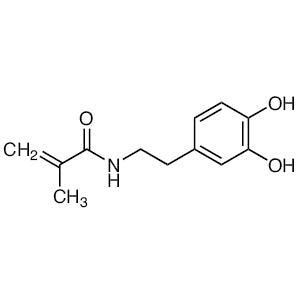
- TCI D5907 471915-89-6 N-(3,4-Dihydroxyphenethyl)methacrylamide
- TCI B6288 13304-62-6 N-Benzylacrylamide
- TCI M1526 16887-36-8 1-Adamantyl Methacrylate (stabilized with MEHQ)
- TCI A0139 79-06-1 Acrylamide Monomer
- TCI T3826 874363-18-5 N-[3-(4,4,5,5-Tetramethyl-1,3,2-dioxaborolan-2-yl)phenyl]acrylamide
- Polymer synthesis and modification where reactive functional groups are required for chain extension and cross-linking.
- Organic chemistry research involving the creation of complex molecules with specific structural features.
- Development of new pharmaceutical compounds through functional group attachment and molecular tailoring.
- Industrial chemical production where stable and reactive building blocks are essential for process efficiency.
- Material science experiments focused on creating advanced polymers with enhanced mechanical and thermal properties.
From the TCI brochure
- Synthesis of supramolecular polymer gel (Wizard Gel®) together with Wizard Monomer® CD, acrylamide monomer and an initiator in water at rt to 80 °C
| Brand | TCI |
|---|---|
| CAS number | 19026-83-6 |
| Molecular formula | — |
| Purity | — |
| Category | Chemistry > Building Blocks > Non-Heterocyclic Building Blocks |
| Pack sizes | Available in various quantities as per standard laboratory supply options |
| Physical form | Solid, typically in powder or crystalline form |
| Storage | Store in a cool, dry place away from direct sunlight and moisture |
Data from the TCI brochure
| Kemasan | 500mg |
|---|
Source: TCI brochure FF105 (2025-03-03)
N-(1-Adamantyl)acrylamide should be stored in a cool, dry environment to maintain its chemical integrity. It is recommended to keep the compound in airtight containers to prevent exposure to moisture and air, which can affect its reactivity. Due to its chemical nature, it should be handled in a well-ventilated area, and appropriate personal protective equipment should be worn when working with it. Avoid contact with skin and eyes, and ensure proper disposal according to local regulations. Regular inspection of storage conditions is advised to ensure the compound remains in optimal condition for use in laboratory applications.
—
Produk Terkait
-
N-(3,4-Dihydroxyphenethyl)acrylamide TCI D6062
Regular price From Rp 2.623.950,00Regular priceRp 1.850.100,00Sale price From Rp 2.623.950,00 -
N-(3,4-Dihydroxyphenethyl)methacrylamide TCI D5907
Regular price From Rp 2.518.950,00Regular priceRp 1.776.600,00Sale price From Rp 2.518.950,00 -
N-Benzylacrylamide TCI B6288
Regular price Rp 2.439.150,00Regular priceRp 1.720.950,00Sale price Rp 2.439.150,00 -
1-AdamantylMethacrylate(stabilizedwithMEHQ) TCI M1526
Regular price From Rp 2.757.300,00Regular priceRp 1.927.800,00Sale price From Rp 2.757.300,00 -
AcrylamideMonomer TCI A0139
Regular price From Rp 505.050,00Regular priceRp 352.800,00Sale price From Rp 505.050,00 -
N-[3-(4,4,5,5-Tetramethyl-1,3,2-dioxaborolan-2-yl)phenyl]acrylamide TCI T3826
Regular price From Rp 2.730.000,00Regular priceRp 1.924.650,00Sale price From Rp 2.730.000,00 -
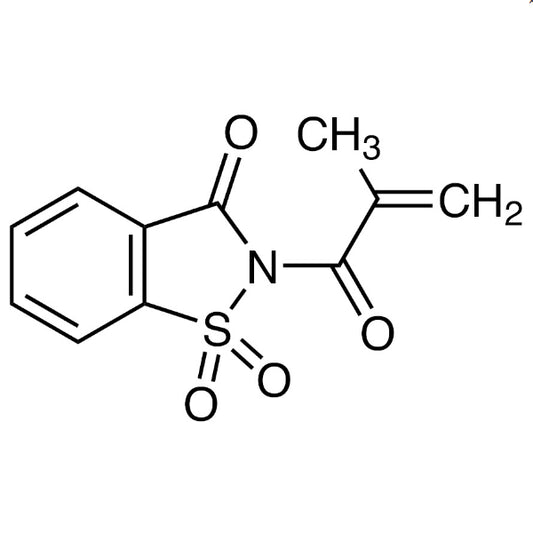
SaccharinMethacrylamide TCI A3463
Regular price From Rp 3.658.200,00Regular priceRp 2.573.550,00Sale price From Rp 3.658.200,00 -
N-Phenylacrylamide TCI P2093
Regular price From Rp 2.782.500,00Regular priceRp 1.961.400,00Sale price From Rp 2.782.500,00