2,2'-[Anthracene-9,10-diylbis(methylene)]dimalonic Acid is a chemical compound that serves as a fundamental building block in the synthesis of complex organic molecules. Its unique molecular structure features two malonic acid units connected by a methylene bridge and an anthracene core, making it a versatile intermediate in chemical reactions. This compound is widely used in laboratory settings to create compounds with specific optical and electronic properties, particularly in the development of fluorescent materials and advanced polymers. Its role in organic synthesis is critical due to its ability to participate in various reaction mechanisms, including substitution and condensation reactions.
The compound is valued for its chemical stability under controlled conditions, which ensures consistent performance during synthesis processes. Its molecular structure allows for multiple functionalization points, enabling chemists to tailor the properties of the final product. The stability and reactivity of this compound make it a preferred choice for researchers aiming to produce high-purity materials with predictable behavior. Additionally, its compatibility with a range of solvents and reagents enhances its utility in diverse synthetic pathways.
In Indonesian laboratories, this compound is commonly used in research related to optical materials, fluorescent compounds, and chemical composites. Scientists in academic and research institutions rely on its precise molecular structure to conduct experiments that require stable and reproducible results. Its application spans across multiple disciplines, including materials science and pharmaceutical research, where its chemical properties are leveraged to develop new substances with specialized functions.
Related TCI products
- Fluorescent Material Synthesis: This compound is ideal for creating fluorescent compounds due to its anthracene core, which is known for its photoluminescent properties.
- Optical Material Development: Its molecular structure enables the design of advanced optical materials with tailored light absorption and emission characteristics.
- Organic Compound Synthesis: The compound's reactivity and structural versatility make it a key reagent in the synthesis of complex organic molecules.
- Composite Material Research: Its ability to form stable chemical bonds with other molecules supports the development of new composite materials with enhanced properties.
- Electronic Material Innovation: The compound's electronic properties make it suitable for research into materials used in electronic devices and sensors.
| Brand | TCI |
|---|---|
| CAS number | 307554-62-7 |
| Molecular formula | — |
| Purity | — |
| Category | Chemistry > Building Blocks > Non-Heterocyclic Building Blocks |
| Pack sizes | Available in various quantities as per standard laboratory supply |
| Physical form | Solid |
| Storage | Store in a cool, dry place away from light and moisture |
This compound should be stored in a cool, dry environment, away from direct sunlight and moisture to maintain its chemical stability. It is recommended to use airtight containers made of glass or high-density polyethylene to prevent contamination and degradation. Due to its chemical nature, it should be handled in a well-ventilated area, and appropriate personal protective equipment, such as gloves and safety goggles, should be worn. Avoid exposure to incompatible substances, and ensure that storage conditions are consistent with standard laboratory safety protocols. Regular inspection of storage containers is advised to ensure the integrity of the material remains unaffected over time.
—
Produk Terkait
-
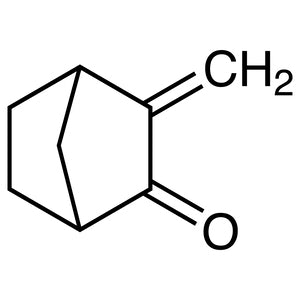
3-Methylene-2-norbornanone TCI M1656
Regular price Rp 11.898.600,00Regular priceRp 8.335.950,00Sale price Rp 11.898.600,00 -
Anthracene-9,10-dicarboxaldehyde TCI A2664
Regular price From Rp 4.081.350,00Regular priceRp 2.853.900,00Sale price From Rp 4.081.350,00 -
N-[Bis(methylthio)methylene]-p-toluenesulfonamide TCI B1389
Regular price Rp 2.121.000,00Regular priceRp 1.498.350,00Sale price Rp 2.121.000,00 -
2-Methylene-1,3-propanediol TCI M2473
Regular price From Rp 1.113.000,00Regular priceRp 793.800,00Sale price From Rp 1.113.000,00 -
Ethyl4-[[[Methyl(phenyl)amino]methylene]amino]benzoate TCI E1624
Regular price From Rp 1.643.250,00Regular priceRp 1.164.450,00Sale price From Rp 1.643.250,00