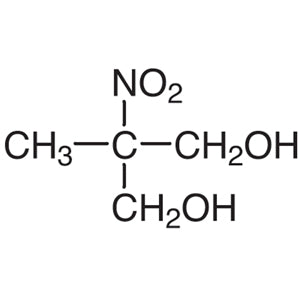
2-Methylene-1,3-propanediol is a chemical compound widely used in laboratory settings as a building block for organic synthesis. It serves as a versatile reagent in various chemical reactions, providing a foundation for the development of more complex molecular structures. Its role is critical in both research and product development, where precision and reliability are essential. This compound is particularly valued for its ability to participate in multiple reaction types, making it an indispensable tool in synthetic chemistry.
The compound's unique molecular structure, featuring two hydroxyl groups and a methylene bridge, allows it to engage in reactions such as esterification, hydrolysis, and addition. These properties make it a preferred choice for chemists seeking to build functional groups or modify existing molecular frameworks. Its reactivity and compatibility with a wide range of functional groups further enhance its utility in synthetic pathways. Additionally, its polar nature enables it to dissolve in common organic solvents, facilitating its use in diverse experimental conditions.
In Indonesian laboratories, 2-Methylene-1,3-propanediol is commonly found in organic chemistry research, especially in pharmaceutical, material science, and chemical industry applications. Its high purity and stability under laboratory conditions ensure consistent results, making it a reliable component in both academic and industrial research settings. Its relevance continues to grow as researchers explore new synthetic routes and applications in various scientific fields.
Related TCI products
- Organic synthesis is a key application where this compound is used to build complex molecular structures due to its reactivity and functional group versatility.
- Pharmaceutical research benefits from its use in the development of new drug molecules, as it can participate in critical synthetic steps.
- Material science applications leverage its ability to form stable intermediates, contributing to the creation of advanced polymers and coatings.
- Chemical industry processes utilize its reactivity to produce specialty chemicals and intermediates for various industrial uses.
- Analytical chemistry employs it as a standard in calibration and as a reagent in reaction mechanisms studies due to its predictable behavior.
| Brand | TCI |
|---|---|
| CAS number | 3513-81-3 |
| Molecular formula | — |
| Purity | — |
| Category | Chemistry > Building Blocks > Non-Heterocyclic Building Blocks |
| Pack sizes | Available in various quantities as per standard laboratory supply |
| Physical form | Liquid |
| Storage | Store in a cool, dry place away from direct sunlight and incompatible materials |
This compound should be stored in a cool, dry environment, away from direct sunlight and sources of heat. It is recommended to keep it in a tightly sealed container to prevent evaporation and contamination. Due to its polar nature, it is advisable to use glass or polyethylene containers that are chemically inert. Proper labeling of containers is essential for safety and identification. In laboratory settings, it should be handled with appropriate personal protective equipment, including gloves and safety goggles, to ensure safe handling. Regular monitoring of storage conditions is necessary to maintain its stability and effectiveness for use in chemical reactions.
—
Produk Terkait
-
2-(Bromomethyl)-2-(hydroxymethyl)-1,3-propanediol TCI B4057
Regular price From Rp 1.644.300,00Regular price -
2-Bromo-2-nitro-1,3-propanediol TCI B1247
Regular price From Rp 1.008.000,00Regular price -
2-Butyl-2-ethyl-1,3-propanediol TCI B0922
Regular price From Rp 477.750,00Regular price -
3-Phenoxy-1,2-propanediol TCI P1335
Regular price From Rp 3.287.550,00Regular price -
2-Phenyl-1,3-propanediol TCI P1249
Regular price From Rp 1.485.750,00Regular price -
1,3-Propanediol TCI P0486
Regular price From Rp 477.750,00Regular price -
2-Methyl-1,3-propanediol TCI M1114
Regular price From Rp 557.550,00Regular price -
2-Methyl-2-nitro-1,3-propanediol TCI M0639
Regular price From Rp 2.121.000,00Regular price