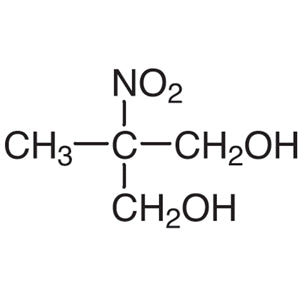
2-Methyl-2-nitro-1,3-propanediol is a chemical compound widely used in laboratory settings for the synthesis of complex organic molecules. As a building block in chemical reactions, it serves as a versatile reagent that can participate in multiple reaction pathways. Its unique molecular structure allows it to act as a hydroxyl donor or react with various functional groups, making it an essential tool in synthetic chemistry. This compound is commonly found in both academic and industrial laboratories, where it supports the development of new chemical products and materials.
The compound's key properties include the presence of a nitro group, which imparts electron-withdrawing characteristics and enhances its reactivity in electrophilic reactions. Its stable molecular structure ensures it remains effective under a range of experimental conditions, contributing to its reliability in laboratory applications. The reactivity and adaptability of 2-Methyl-2-nitro-1,3-propanediol make it a preferred choice for chemists seeking to explore diverse synthetic strategies. Its ability to integrate into various chemical systems further solidifies its role in modern chemical research.
In Indonesian laboratories, 2-Methyl-2-nitro-1,3-propanediol is extensively used in chemical research, particularly in the synthesis of organic compounds and the development of new chemical products. It is a valuable resource for both educational and research institutions, supporting a wide range of chemical investigations. Its availability and functional versatility make it a key component in the chemical toolkit of Indonesian scientists and students alike.
- Organic synthesis of complex molecules due to its reactivity and ability to participate in multiple reaction pathways.
- Development of new chemical products through its role as a hydroxyl donor and functional group modifier.
- Educational use in chemistry courses to demonstrate synthetic strategies and reaction mechanisms.
- Research in pharmaceutical and industrial chemistry for the creation of novel compounds and materials.
- Support for analytical chemistry applications where precise chemical reactions are required for compound characterization.
| Brand | TCI |
|---|---|
| CAS number | 77-49-6 |
| Molecular formula | — |
| Purity | — |
| Category | Chemistry > Building Blocks > Non-Heterocyclic Building Blocks |
| Pack sizes | Available in various sizes as per supplier specifications |
| Physical form | Liquid |
| Storage | Store in a cool, dry place away from direct sunlight |
This compound should be stored in a cool, dry place, away from direct sunlight and incompatible materials. It is recommended to use airtight containers to prevent moisture absorption and contamination. Due to its reactivity, it should be handled in a well-ventilated area, with appropriate personal protective equipment such as gloves and safety goggles. Avoid exposure to heat or open flames to ensure safe storage. Regular inspection of storage conditions is advised to maintain the integrity of the compound. Always follow standard laboratory safety protocols when handling reactive chemicals.
—
Produk Terkait
-
2-Bromo-2-nitro-1,3-propanediol TCI B1247
Regular price From Rp 1.008.000,00Regular price -
2-(Hydroxymethyl)-2-nitro-1,3-propanediol TCI H0271
Regular price From Rp 717.150,00Regular price -
2-(Bromomethyl)-2-(hydroxymethyl)-1,3-propanediol TCI B4057
Regular price From Rp 1.644.300,00Regular price -
2-Butyl-2-ethyl-1,3-propanediol TCI B0922
Regular price From Rp 477.750,00Regular price -
3-Phenoxy-1,2-propanediol TCI P1335
Regular price From Rp 3.287.550,00Regular price -
2-Phenyl-1,3-propanediol TCI P1249
Regular price From Rp 1.485.750,00Regular price -
1,3-Propanediol TCI P0486
Regular price From Rp 477.750,00Regular price -
2-Methylene-1,3-propanediol TCI M2473
Regular price From Rp 1.060.500,00Regular price