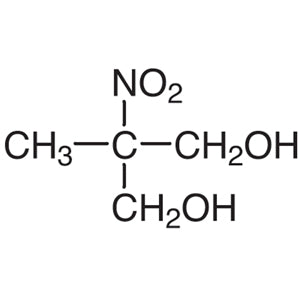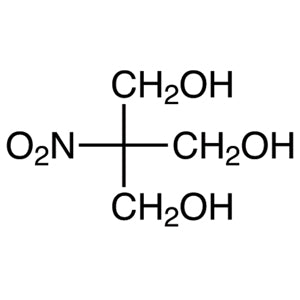
2-(Hydroxymethyl)-2-nitro-1,3-propanediol is a chemical compound widely used in laboratory settings for the synthesis of complex molecules. As a building block in organic chemistry, it serves as a versatile intermediate that can be modified through various chemical reactions to create compounds with specific functional groups. Its unique structure makes it an essential component in the development of nitrogen-containing compounds and other organic derivatives. This compound is commonly utilized in both research and educational environments due to its reactivity and adaptability in synthetic pathways.
The compound is known for its chemical stability under controlled conditions, yet it exhibits high reactivity toward a wide range of reagents. This reactivity allows it to participate in substitution, reduction, and oxidation reactions, making it a valuable tool in synthetic chemistry. Its ability to undergo multiple reaction types makes it a preferred choice for chemists aiming to design and synthesize new compounds with industrial or pharmaceutical applications. The compound’s structural complexity further enhances its utility in advanced chemical processes.
In Indonesian laboratories, 2-(Hydroxymethyl)-2-nitro-1,3-propanediol is frequently used in organic chemistry research, particularly in the development of new compounds with potential medical or industrial applications. It is also employed in educational settings to teach students about chemical reactivity and the synthesis of complex molecules. Its presence in both academic and industrial research underscores its importance in the chemical sciences.
Related TCI products
- TCI B4057 19184-65-7 2-(Bromomethyl)-2-(hydroxymethyl)-1,3-propanediol
- TCI B1247 52-51-7 2-Bromo-2-nitro-1,3-propanediol
- TCI M0639 77-49-6 2-Methyl-2-nitro-1,3-propanediol
- TCI B0922 115-84-4 2-Butyl-2-ethyl-1,3-propanediol
- TCI P1335 538-43-2 3-Phenoxy-1,2-propanediol
- TCI P1249 1570-95-2 2-Phenyl-1,3-propanediol
- Organic synthesis of nitrogen-containing compounds due to its reactivity and structural versatility.
- Development of pharmaceutical intermediates through substitution and oxidation reactions.
- Educational use in teaching chemical reactivity and synthetic pathways to students and researchers.
- Research in industrial chemistry for the creation of new materials and functional compounds.
- Application in the synthesis of complex organic molecules requiring multiple functional group modifications.
| Brand | TCI |
|---|---|
| CAS number | 126-11-4 |
| Molecular formula | — |
| Purity | — |
| Category | Chemistry > Building Blocks > Non-Heterocyclic Building Blocks |
| Pack sizes | Available in various quantities as per supplier specifications |
| Physical form | Liquid or solid, depending on the specific formulation |
| Storage | Store in a cool, dry place away from direct sunlight and incompatible materials |
This compound should be stored in a cool, dry environment, away from direct sunlight and sources of heat. It is recommended to use airtight containers made of materials compatible with its chemical properties to prevent contamination and degradation. Due to its reactivity, it should be handled with care, using appropriate personal protective equipment such as gloves and safety goggles. It should not be stored near incompatible substances like strong oxidizers or acids. Regular monitoring of storage conditions is advised to ensure the compound remains stable and safe for use in laboratory applications.
—
Produk Terkait
-
2-(Bromomethyl)-2-(hydroxymethyl)-1,3-propanediol TCI B4057
Regular price From Rp 1.644.300,00Regular price -
2-Bromo-2-nitro-1,3-propanediol TCI B1247
Regular price From Rp 1.008.000,00Regular price -
2-Methyl-2-nitro-1,3-propanediol TCI M0639
Regular price From Rp 2.121.000,00Regular price -
2-Butyl-2-ethyl-1,3-propanediol TCI B0922
Regular price From Rp 477.750,00Regular price -
3-Phenoxy-1,2-propanediol TCI P1335
Regular price From Rp 3.287.550,00Regular price -
2-Phenyl-1,3-propanediol TCI P1249
Regular price From Rp 1.485.750,00Regular price -
1,3-Propanediol TCI P0486
Regular price From Rp 477.750,00Regular price -
2-Methylene-1,3-propanediol TCI M2473
Regular price From Rp 1.060.500,00Regular price