Anthracene-9,10-dicarboxaldehyde is a chemical compound widely used as a building block in the synthesis of complex organic molecules. It belongs to the category of non-heterocyclic building blocks and is known for its aromatic structure, which makes it a valuable reagent in various chemical reactions. In the laboratory, this compound plays a crucial role in the development of new compounds with specific functional groups, enabling researchers to design and create molecules with tailored properties. Its versatility and reactivity make it a staple in organic chemistry laboratories, particularly in Indonesia, where it is used in both academic and industrial research settings.
This compound is preferred due to its stability under controlled conditions and its ability to participate in a wide range of chemical reactions, including condensation and substitution. Its molecular structure allows for high reactivity, making it suitable for applications that require precise chemical transformations. The compound’s ability to form stable intermediates during synthesis also enhances its utility in multi-step organic processes. These properties make it an essential tool for chemists working on the development of pharmaceuticals, advanced materials, and other specialized chemical products.
In Indonesian laboratories, Anthracene-9,10-dicarboxaldehyde is commonly used in organic synthesis and research projects. It is particularly popular in academic institutions and research centers where it is employed to create complex aromatic compounds. Its availability in various packaging options ensures that it can be easily stored and used according to the specific needs of different experiments. This accessibility contributes to its widespread use in both teaching and research environments.
TCI brochures (PDF)
- Covalent Organic Framework (COF) Linkers 2026-05-18 · p. 5
- Building Blocks for Organic Semiconductor 2026-03-24 · p. 9
Related TCI products
- TCI B2854 66-98-8 4,4'-Biphenyldicarboxaldehyde
- TCI T3212 37882-75-0 Thieno[3,2-b]thiophene-2,5-dicarboxaldehyde
- TCI T3146 467429-73-8 Triptycene-9,10-dicarboxaldehyde
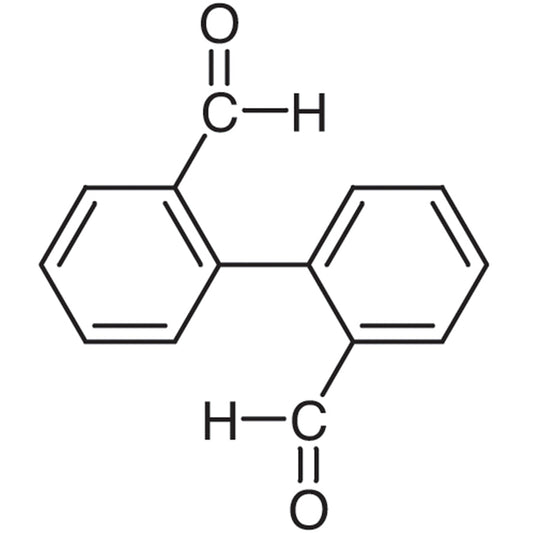
- TCI B2056 1210-05-5 Biphenyl-2,2'-dicarboxaldehyde
- TCI N0994 7424-70-6 9-(1-Naphthyl)anthracene
- TCI B5022 24672-76-2 9,10-Bis(4-methoxyphenyl)anthracene
- Synthesis of complex aromatic compounds requiring a highly reactive building block
- Development of pharmaceuticals through multi-step organic reactions
- Creation of advanced materials with tailored chemical properties
- Research in organic chemistry for the design of new functional molecules
- Educational use in teaching organic synthesis techniques to students
| Brand | TCI |
|---|---|
| CAS number | 7044-91-9 |
| Molecular formula | — |
| Purity | — |
| Category | Chemistry > Building Blocks > Non-Heterocyclic Building Blocks |
| Pack sizes | Available in various sizes to suit different experimental needs |
| Physical form | Solid (exact form may vary depending on supplier) |
| Storage | — |
Anthracene-9,10-dicarboxaldehyde should be stored in a cool, dry place away from direct sunlight and sources of heat. It is recommended to keep the compound in a tightly sealed container to prevent exposure to moisture and air. Due to its chemical nature, it should be handled in a well-ventilated area, and appropriate personal protective equipment should be worn when working with it. Storage conditions should maintain a stable temperature to ensure the compound remains in optimal condition for use. Proper labeling of containers is essential to ensure safe handling and prevent accidental exposure.
—
Product Categories
- Material Building BlocksCovalent Organic Frameworks (COFs) LinkersAldehyde Linkers [Covalent Organic Frameworks (COFs) Linkers]
- Material Building BlocksSmall Molecule Semiconductor Building BlocksAnthracenes, Anthraquinones [Small Molecule Semiconductor Building Blocks]
- Polymer/Macromolecule ReagentsCovalent Organic Frameworks (COFs) LinkersAldehyde Linkers [Covalent Organic Frameworks (COFs) Linkers]
Produk Terkait
-
4,4'-Biphenyldicarboxaldehyde TCI B2854
Regular price From Rp 1.961.400,00Regular priceRp 1.371.300,00Sale price From Rp 1.961.400,00 -
Thieno[3,2-b]thiophene-2,5-dicarboxaldehyde TCI T3212
Regular price From Rp 1.351.350,00Regular priceRp 960.750,00Sale price From Rp 1.351.350,00 -
Triptycene-9,10-dicarboxaldehyde TCI T3146
Regular price From Rp 4.108.650,00Regular priceRp 2.872.800,00Sale price From Rp 4.108.650,00 -
Biphenyl-2,2'-dicarboxaldehyde TCI B2056
Regular price Rp 4.028.850,00Regular priceRp 2.817.150,00Sale price Rp 4.028.850,00 -
9-(1-Naphthyl)anthracene TCI N0994
Regular price From Rp 743.400,00Regular priceRp 519.750,00Sale price From Rp 743.400,00 -
9,10-Bis(4-methoxyphenyl)anthracene TCI B5022
Regular price From Rp 1.961.400,00Regular priceRp 1.371.300,00Sale price From Rp 1.961.400,00 -
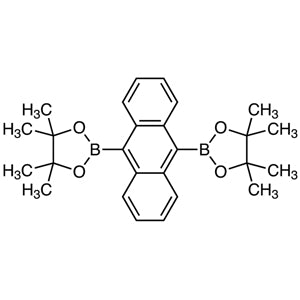
9,10-Bis(4,4,5,5-tetramethyl-1,3,2-dioxaborolan-2-yl)anthracene TCI B4562
Regular price From Rp 13.963.950,00Regular priceRp 9.780.750,00Sale price From Rp 13.963.950,00 -
2,2'-[Anthracene-9,10-diylbis(methylene)]dimalonicAcid TCI A3770
Regular price From Rp 4.426.800,00Regular priceRp 3.095.400,00Sale price From Rp 4.426.800,00